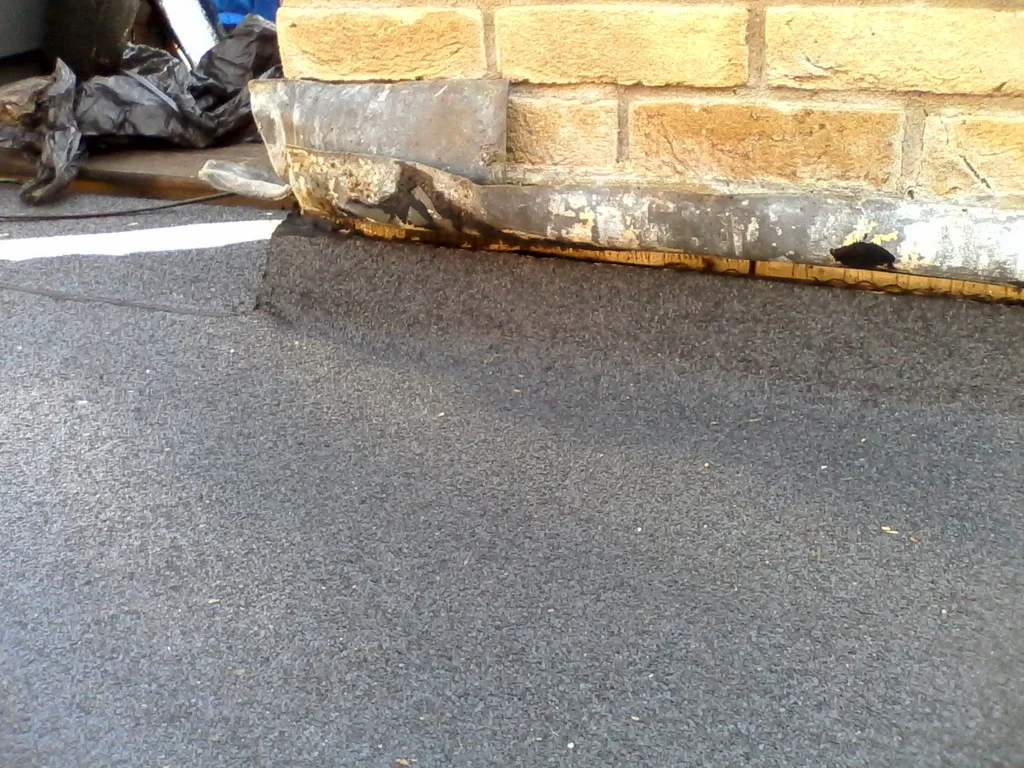
When someone asks me about the total investment required for a new flat roof, the honest answer is that the price depends less on the felt itself and more on what I find underneath it. A small project with a sound timber deck is a very different job from a structure where the boards are soft, the falls are incorrect, insulation is missing, and water has been sitting behind the upstands for years.
Across Brighton, Hove, Worthing and the surrounding Sussex area, I often provide local flat roofing services where I inspect surfaces that look tired, but the real cost question is hidden below the membrane. That is why I never judge the price properly from a photograph alone. The roof covering is only one layer of the system.
What usually affects flat roof replacement cost
The biggest cost factors are the roof size, access, the condition of the deck, the type of waterproofing system, insulation requirements, drainage details and how many junctions need proper finishing. A simple square garage roof is usually more straightforward than a rear extension roof with parapet walls, rooflights, awkward outlets and lead flashing against old brickwork.
In my experience, these are the details that change the price most:
- Roof area: larger roofs use more material, but very small roofs can still be labour-heavy because edge details take time.
- Deck condition: if the plywood or OSB is rotten, soft or delaminated, it must be replaced before new felt goes down.
- Insulation: a warm roof system costs more than a basic overlay, but it can solve condensation and thermal bridging problems.
- Falls and drainage: roofs with ponding water may need tapered insulation or local deck correction.
- Access: scaffolding, narrow terraces, rear access and parking restrictions can affect labour and setup costs.
- Flashings and upstands: parapet walls, door thresholds, soil pipes, rooflights and wall abutments all need careful detailing.
Why the cheapest quote can become expensive later
A flat roof can be made to look neat on day one even when the preparation underneath is poor. I have lifted plenty of failed systems where the previous installer simply torched new felt over damp boards, cracked asphalt, old mineral felt or rotten decking. It saves money at the start, but it usually shortens the life of the installation dramatically.
The problem with flat roofing is that small shortcuts are not always visible. Poorly sealed laps, weak perimeter details, trapped moisture, insufficient upstands and badly dressed lead flashing can all remain hidden until the first proper storm. Once water gets below the membrane, it can spread sideways across the deck before showing as a ceiling stain inside.
For a long-term result, I normally want to know whether the existing structure is structurally sound, whether the falls are working, whether the outlet is correctly positioned and whether the roof has been leaking long enough to damage the substrate. That inspection tells me whether the job is a simple replacement or a more involved rebuild.
SBS torch-on felt and realistic lifespan
For many domestic flat roofs in Sussex, SBS torch-on felt is still a very practical system when installed correctly. SBS-modified bitumen remains flexible, copes well with normal movement and gives good durability on garages, extensions, dormers, porches and bay roofs.
The important part is not just choosing SBS felt. It is the full build-up. A proper system normally includes a prepared deck, suitable primer where needed, underlay layers, a mineral cap sheet, correctly formed laps, sealed edges and well-detailed flashings. The felt should not simply be treated as a roll of waterproof material thrown over the roof.
A well-installed SBS torch-on felt system can often last around 20 to 25 years, sometimes longer if the roof has good falls, clear drainage and sheltered exposure. Poor installation, standing water and weak edges can reduce that lifespan sharply.
When a repair is enough and when replacement makes more sense
I do not automatically recommend replacing a flat roof just because it has a leak. Sometimes the issue is localised: a split at a corner, a failed outlet, a loose flashing, a puncture, or a small section where capillary action is pulling water under an exposed edge.
A repair may be enough when the membrane is generally flexible, the laps are still bonded, the deck feels firm underfoot and the leak has a clear single cause. In those cases, a targeted repair can be perfectly sensible.
Replacement becomes more realistic when I see widespread blistering, brittle felt, repeated patch repairs, rotten decking, long-term ponding water, sagging boards, failed insulation, or leaks appearing in several different places. At that stage, repairing one area often only moves the problem somewhere else.
The hidden cost of ponding water
Ponding water is one of the first things I check on a flat roof. A small amount of water shortly after heavy rain is normal, but water that sits for days usually means the structure lacks proper fall or the deck has started to deflect.
Standing water does not just look bad. It keeps the membrane wet, increases thermal stress, encourages algae and debris build-up, and can slowly soften older bitumen surfaces. In winter, freeze-thaw movement can make weak seams worse. In summer, trapped heat and water can accelerate blistering.
If ponding is caused by poor falls, the replacement cost may include tapered insulation or deck correction. This adds to the price, but it is often what separates a proper replacement from another roof that fails early.
Warm roof systems and why insulation changes the price
On heated rooms, especially rear extensions and dormers, I often recommend thinking carefully about insulation. A cold roof construction can create condensation problems because warm moist air from inside the property reaches the cold underside of the deck. Homeowners sometimes think they have a leak, but the real issue is condensation forming inside the roof build-up.
A warm roof system places insulation above the structural deck, keeping the deck warmer and reducing the risk of condensation. It costs more because there are extra layers, more detailing and sometimes changes to roof height, fascia depth, outlets and thresholds.
For extension roofs where damp patches appear during cold weather rather than after rain, it is worth considering whether the problem is a leak, condensation, or both. For this type of project, my detailed breakdown of flat roof costs in Brighton and Hove gives a useful starting point for understanding typical build-ups and cost factors.
Why Sussex properties need careful edge detailing
Brighton, Hove and Worthing properties deal with strong coastal wind and regular driving rain. On flat roofs, the main field of the membrane often lasts longer than the edges. The failures I see most often are at wall junctions, drip edges, parapet walls, outlets and around old lead flashing.
Victorian and Edwardian properties can make this more complicated because the brickwork is often porous, the parapet walls are exposed and the original roof levels may have been altered several times. Water can travel through old mortar joints, behind felt upstands or under badly fixed cappings before appearing inside the room below.
If a flat roof meets a parapet wall, the cost may need to include proper wall waterproofing, not just new felt on the horizontal roof area. Ignoring the wall detail can leave the homeowner with a new roof that still leaks.
Garage roofs are usually more predictable
Garage flat roofs are often easier to price because the shape is normally simple and the structure is usually separate from the main house. The main checks are whether the deck is sound, whether there is asbestos sheeting, whether the joists have sagged, and whether the roof drains properly.
Detached and row garages around Sussex often have old felt that has gone brittle after years of sunlight and standing water. If the boards are still firm, replacement can be fairly straightforward. If water has been leaking for years, the deck and sometimes the fascia edges may also need replacing.
For homeowners comparing options, I have a dedicated guide for specific pricing for garage roof renewals in Sussex, which is usually more relevant than a general house roof estimate.
What I look for before giving a realistic price
Before I price a flat roof replacement properly, I normally check more than the top surface. I look at how the roof drains, whether the felt has split at the edges, whether the boards move underfoot, whether the internal ceiling shows old staining, and whether any existing patches suggest repeated failures.
I also look at the surrounding details. A flat roof can fail because of the roof covering, but it can also fail because of cracked lead flashing, porous brickwork, blocked outlets, loose trims, failing fascia boards or water being pushed backwards by wind.
The most useful inspection questions are:
- Is the leak active only during rain, or does damp appear in cold weather as well?
- Is the roof holding water after rainfall?
- Are there soft areas underfoot?
- Has the roof already been patched several times?
- Are the edges and upstands high enough?
- Is water entering through the roof covering or through nearby masonry?
A practical way to think about cost
Rather than thinking only in square metres, I suggest thinking in layers. A basic replacement means removing or preparing the old covering and installing a new waterproofing system. A more complete replacement may involve new decking, insulation, tapered falls, new trims, leadwork, outlet improvements and fascia repairs.
That is why two roofs of the same size can have very different costs. One may only need a clean replacement. The other may need structural correction, moisture-damaged boards removed and the whole drainage approach improved.
The cheapest job is not always the one with the lowest number on the quote. The better value is the roof that deals with the real reason the old one failed.
Final advice before replacing a flat roof
If your flat roof is near the end of its life, get the cause of failure identified before choosing a system. If the old roof failed because of ponding water, poor ventilation, condensation or bad parapet detailing, simply installing new felt over the same weaknesses will not solve the problem for long.
A good flat roof replacement should give you more than a new surface. It should improve drainage, protect vulnerable edges, deal with moisture risk and suit the building it is installed on. On Sussex properties, especially older terraces and coastal homes, that level of detail matters.
If you are budgeting, an online calculator can give a rough idea in around 30 seconds, but the final price should always reflect what is actually happening on the roof, not just the visible size of it.