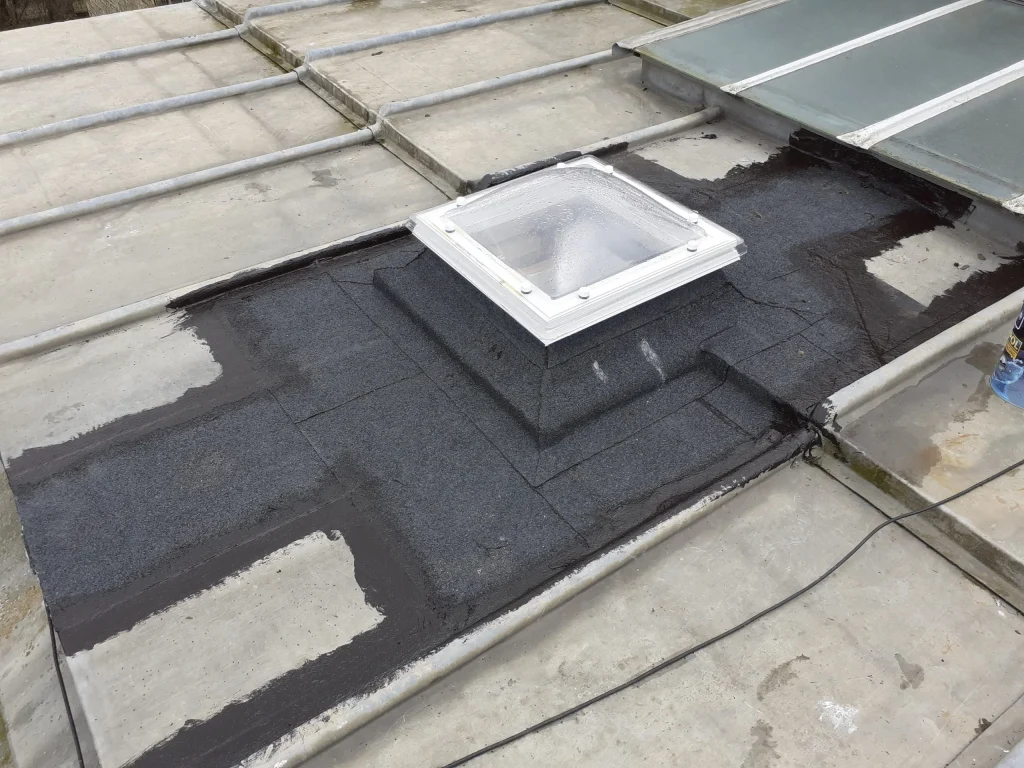
Hidden roof leak repair cost in Hove is harder to price than an obvious broken tile or cracked valley because the visible damp patch is not always directly below the fault. Sometimes I can see the cause quickly: a slipped tile, damaged lead flashing, broken valley detail, or a cracked roof covering. Other times, especially on older roofs, the water has travelled beneath layers that would normally be assessed during a proper replacement quotation before it appears inside the property.
In most cases, I try to deal with hidden leaks in a residential covering system in either a half-day slot or a full-day slot, depending on the access, roof type, whether the fault may involve lifting and relaying reusable tiles, and how many likely causes need checking. My aim is to find and repair the main suspected defects during that visit. But with old roofs that are already breaking down in several places, it is only honest to say that leak tracing is not always solved in one attempt.
Why hidden roof leaks are difficult to price
A hidden leak is different from a normal visible repair. If a roof tile is clearly missing, the job is usually straightforward. If a lead flashing has lifted away from a chimney, I can see the defect and repair the detail. But when water is entering somewhere higher up the roof and tracking sideways underneath tiles, felt, battens, or old mortar, the repair becomes more diagnostic.
That diagnosis affects the cost. I may need to inspect several possible weak points before deciding what is most likely causing the water ingress. On Hove properties, especially older Victorian and Edwardian houses, I often check valleys, parapet walls, chimney flashings, roof junctions, cracked tiles, loose ridge details, and old underfelt that no longer sheds water properly.
Obvious leaks versus hidden leaks
Some leaks are clear from the first inspection. Others are not. The difference matters because it changes how much time is needed.
Obvious leak examples
- A cracked or missing roof tile directly above the damp area.
- A broken valley where water is visibly escaping.
- Failed lead flashing around a chimney or wall abutment.
- A loose ridge or hip tile allowing wind-driven rain underneath.
- A flat roof split where the membrane failure is visible.
Hidden leak examples
- Water travelling sideways under old tiles before showing indoors.
- Moisture entering through several small defects rather than one large failure.
- Rain being driven behind tired flashing during strong coastal winds.
- Old roof felt failing underneath tiles, so water reaches the loft before appearing below.
- Parapet wall damp soaking through brickwork and being mistaken for a roof leak.
This is why I do not like pretending every leak can be priced exactly from one ceiling stain. The stain tells me water has arrived there; it does not always tell me where the roof has failed.
What affects hidden roof leak repair cost in Hove?
When I price hidden roof leak repair, I usually think in terms of time, access, and likelihood of finding the real source. The roof may only need one small repair, but finding the right place to repair can take careful inspection.
- Roof access: safe ladder access is quicker than work needing scaffolding or specialist access.
- Roof age: older roofs often have more than one weak point.
- Roof type: slate, tile, flat roofs, dormers, valleys, and parapet walls all leak differently.
- Weather exposure: Hove coastal wind can push rain into details that look acceptable in calm weather.
- Previous repairs: old sealant, patching, or cement repairs can hide the real defect.
- Internal symptoms: damp stains, loft moisture, mould, and staining may point to different causes.
- Number of suspected areas: one clear defect is faster than several possible entry points.
How I usually approach a hidden leak
I start by working from the symptom back toward the roof. A damp patch near a chimney, for example, may come from flashing, porous brickwork, a failed soaker, cracked tiles nearby, or even condensation if the roof space has poor ventilation. I do not want to repair the easiest visible defect if the real cause is somewhere else.
On pitched roofs, I usually check the roof covering, the line of water flow, the condition of the underfelt, tile laps, lead details, valleys, gutter junctions, and any roof penetrations. On flat roofs, I pay attention to laps, edges, outlets, upstands, ponding water, and places where capillary action may pull moisture under the membrane.
If the leak is active or needs urgent attention, my priority water ingress visit in Brighton and Hove is usually the most relevant option for dealing with active water entry quickly.
Why half-day and full-day slots often make sense
For hidden leaks, a fixed tiny repair price can be misleading because the job may involve investigation as much as repair. That is why many hidden leak repairs are better handled in a half-day or full-day slot. It gives me time to inspect the main suspected areas, carry out practical repairs, and deal with more than one likely cause if needed.
In a half-day slot, I may be able to repair a localised flashing defect, replace cracked tiles, reseat slipped tiles, seal a small roof junction properly, or correct a clear valley or gutter-related issue. A full-day slot gives more time where the roof is older, access is slower, or several defects need attention at the same time.
The aim is not to spend time unnecessarily. The aim is to avoid guessing. Hidden leaks often punish rushed work because water will simply find the next weak route into the property.
When I may need to return
Most hidden leaks can be narrowed down and repaired once the main suspect areas are dealt with. But sometimes, especially on old roofs that are generally deteriorating, one repair does not expose the full story until the next heavy rain.
If a roof has several failing details, the first visit may stop the most obvious water entry point, but another weak area may still leak later. This is most common when the roof covering, mortar, underfelt, flashings, and gutters are all old at the same time. In those cases, I explain the situation clearly rather than pretending a temporary repair has turned an ageing roof into a new one.
Old roofs can make leak repair temporary
There is a point where hidden leak repair becomes more about buying time than permanently solving the roof. If the roof is genuinely breaking down, I will still try to stop the immediate leak where possible, but I will also tell the homeowner if the roof is approaching the stage where replacement is the more honest long-term answer.
Common signs that a repair may only be temporary include:
- multiple cracked or delaminating tiles
- old underfelt torn or perished in the loft
- soft or damp battens
- repeated leaks in different areas
- loose ridge, hip, or verge details
- historic cement and sealant patching everywhere
- roof structure showing age-related movement
- water staining in more than one internal area
On roofs like this, I can often reduce or stop the current leak, but I cannot honestly promise that another area will not fail later. That is not poor repair work; it is the reality of a roof that has reached the end of its useful life.
Common hidden leak sources I find in Hove
Hove has a lot of older housing stock, and the coastal weather does not help tired roof details. Strong wind can drive rain under laps, around chimneys, and into small cracks that might not leak during light rain.
- Chimney flashings: old lead, cracked mortar, and poor soakers often cause leaks that appear away from the chimney breast.
- Valleys: damaged valley linings or blocked debris channels can push water beneath tiles.
- Parapet walls: porous brickwork, failed coping, or poor capping can send moisture into party walls.
- Old tile roofs: slipped, cracked, or poorly seated tiles can allow water onto failing underfelt.
- Flat roof edges: failed upstands, weak outlets, and ponding water can hide the entry point.
- Guttering defects: overflowing gutters can mimic roof leaks by soaking walls and roof edges.
Where parapet walls or firewall details are involved, my masonry capping and parapet moisture-control work may be useful because these details often create damp that looks like a normal roof leak.
How homeowners can help before I inspect
A few details from the homeowner can make hidden leak tracing more efficient. I do not expect anyone to climb onto the roof, but ground-level photos and internal observations often help.
- Take a photo of the damp patch inside.
- Note whether the leak happens during light rain or only heavy wind-driven rain.
- Check whether the leak appears immediately or several hours after rain starts.
- Look in the loft if it is safe and easy to access.
- Take photos of the roof area from ground level.
- Mention any previous repairs or recurring leak history.
- Check whether gutters overflow near the same area.
The timing of the leak is especially useful. A leak that appears only during strong wind can point to flashing, tile laps, or exposed roof junctions. A leak that appears slowly after long rain can suggest saturation, capillary movement, parapet moisture, or water tracking through older roof layers.
My practical view on hidden roof leak repair cost in Hove
Hidden roof leak repair cost in Hove is mainly about how long it takes to find and deal with the real cause. If the defect is obvious, the repair may be straightforward. If the roof is old, patched in several places, or failing across multiple details, the work may need a half-day or full-day slot and sometimes a return visit after further rain.
My approach is to repair the main suspected causes properly, explain what I have found, and be honest when the roof is no longer in reliable condition. Sometimes a hidden leak can be fixed neatly. Sometimes the repair is a temporary measure on a roof that is gradually reaching the point where replacement is unavoidable.