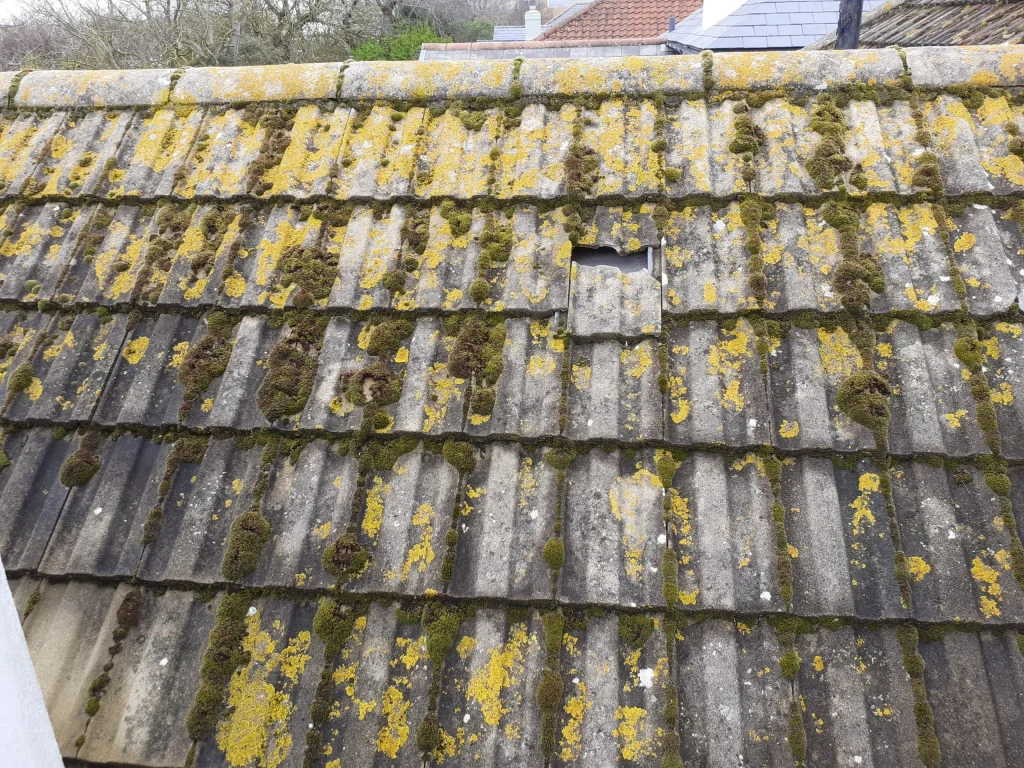
Strip and relay roof work in Brighton is usually needed when the existing tiles or slates can still be reused, but the layers underneath have started to fail. I see this most often on older terraced houses where the roof covering looks acceptable from the street, yet the underfelt has perished, the battens are weak, or wind-driven rain is starting to get beneath the roof covering.
The important point is this: strip and relay is not the same as simply patching a roof, and it is not always the same as a full new roof with completely new tiles. It sits between the two. The roof is stripped back, the hidden layers are inspected and renewed where needed, and suitable existing tiles or slates are relaid properly.
What strip and relay roof work actually involves
When I strip and relay a roof, the aim is to rebuild the working layers of the roof without automatically replacing every visible tile or slate. This can be a practical option when the covering still has useful life left but the roof system underneath is no longer reliable.
A typical strip and relay job may include:
- carefully removing the existing tiles or slates
- setting aside reusable roof coverings
- removing old battens and failed underfelt
- checking rafters, roof timbers, and weak areas
- installing new breathable roofing membrane
- fitting new treated battens
- replacing broken tiles or slates where needed
- relaying the roof covering to the correct gauge and lap
- checking ridges, verges, valleys, and flashing details
- improving ventilation where the roof design allows
The result should be a roof that keeps its original appearance where possible, but works more reliably underneath.
Why Brighton roofs are often suitable for strip and relay
Brighton has many Victorian and Edwardian properties with older tiled or slate roofs. On these homes, the original roof covering can sometimes still be serviceable, but the hidden layers have reached the end of their life. Old bitumen felt becomes brittle, battens can weaken, nail fixings corrode, and small gaps allow wind-driven rain to reach the roof space.
Coastal weather makes this worse. Strong wind can lift tired laps slightly, salt air can accelerate corrosion in fixings, and heavy rain can expose weaknesses around chimneys, parapet walls, and roof edges. A roof may look mostly intact, but still be allowing moisture ingress during bad weather.
When strip and relay makes sense
I normally consider strip and relay when the roof covering is not the main problem. If the tiles or slates are mostly sound, it can be wasteful to remove everything and fit a completely different roof covering. But if the underfelt and battens are failing, small repairs from the outside may only buy time.
Strip and relay can make sense when I find:
- old underfelt tearing or crumbling inside the loft
- sound tiles or slates with failing battens underneath
- repeated minor leaks across different areas
- loose tiles caused by tired fixings rather than broken covering
- wind-driven rain reaching the roof space
- roof covering that has slipped because battens have weakened
- old roofs where patch repairs no longer solve the underlying issue
This approach is often useful where the homeowner wants a long-term improvement but does not necessarily need every tile replaced.
When strip and relay is not enough
Strip and relay is not suitable for every roof. If too many tiles or slates are cracked, delaminating, badly weathered, or no longer strong enough to refit, then reusing them may be false economy. The labour still has to be done, so relaying poor-quality materials can lead to another failure sooner than expected.
I would be cautious about strip and relay if the roof has:
- large numbers of broken or porous tiles
- slates that are soft, thin, or delaminating
- major structural movement in the roof frame
- serious rafter damage or widespread rot
- badly distorted roof planes
- failed chimney or parapet details that need separate rebuilding
- previous poor repairs that have damaged the original covering
In those cases, a fuller replacement may be more honest than relaying materials that are already near the end of their working life.
The hidden layer matters more than homeowners realise
Most homeowners naturally look at the tiles first because that is what they can see. But when I inspect older roofs, the hidden layer often tells me more. The underfelt is there to help shed any water that gets past the roof covering, and the battens give the tiles or slates a secure fixing line. If those parts fail, the roof becomes unreliable even if the outside still looks fairly tidy.
Old underfelt can sag, split, or crumble. Once that happens, any water driven beneath the tiles can reach the loft instead of being directed safely down toward the eaves. Weak battens can also allow tiles to move in wind, which opens the roof further. Over time, small movement becomes a repeated leak problem.
What I check once the roof is stripped
The advantage of strip and relay is that it exposes the roof properly. Once the covering is removed, I can see problems that are impossible to judge accurately from the ground.
During the stripped stage, I usually check:
- whether rafters are straight and sound
- whether any timber is damp or soft
- whether old leaks have caused hidden decay
- whether the roof needs better ventilation
- whether chimney flashings have been leaking into the structure
- whether the eaves and fascia line are strong enough
- whether valleys or abutments need rebuilding
- whether parapet walls are contributing to damp
This stage is important because it is the best opportunity to correct defects before the roof is closed again.
Strip and relay on Brighton terraced houses
Terraced houses in Brighton often need careful handling because the roof may connect into shared structures, chimney stacks, party walls, and neighbouring roof coverings. I pay particular attention to the edges of the work. A roof can be relaid well in the middle but still leak if the junctions are poorly detailed.
On older pitched roofs, the details around chimneys, ridges, valleys, parapets, and verges matter just as much as the field tiles. If the property is a traditional terrace, my Brighton terraced house pitched roof repair service is the most relevant place to understand how these older roof structures are usually approached.
Lead flashing and wall junctions should not be ignored
One mistake I see with roof relaying is focusing only on the tiles and battens while leaving tired leadwork untouched. If the old flashing has lifted, split, cracked at mortar joints, or been covered with sealant in the past, the relaid roof can still leak around the same weak point.
Lead flashing is there to protect vulnerable junctions where the roof meets chimneys, walls, or parapets. These are common leak points in Brighton because wind-driven rain can be forced into small gaps. When strip and relay work is being done, it is sensible to assess whether the leadwork should be repaired or renewed at the same time.
Parapet walls can change the job
On some Brighton properties, what looks like a roof covering problem is partly a parapet wall problem. Porous brickwork, failed coping stones, cracked mortar, or poor capping can send moisture into the building even after the main roof covering has been improved.
If a roof is being stripped near a parapet or firewall, I check whether that wall is part of the moisture problem. Where damp is linked to a parapet detail, parapet wall waterproofing and felt capping may be more relevant than simply relaying tiles beside a damp wall.
Strip and relay versus patch repair
A patch repair deals with a local defect. Strip and relay deals with a roof system that is failing underneath. Both have their place.
A patch repair may be enough for one slipped tile, one cracked slate, a small flashing defect, or a localised leak with an obvious cause. Strip and relay becomes more sensible when the same roof keeps producing new leaks because the supporting layers are worn out.
The difference is important. If the roof has one defect, stripping the whole roof may be unnecessary. If the roof has widespread hidden failure, repeated patch repairs can become frustrating and expensive over time.
Strip and relay versus full replacement
Strip and relay keeps suitable existing roof coverings. Full replacement usually means new tiles, slates, or another complete covering system. The right choice depends on the condition of the existing materials.
I usually think about it like this:
- Strip and relay is suitable when the visible covering is mostly reusable but the felt, battens, or fixings are failing.
- Full replacement is better when the covering itself is too damaged, brittle, porous, or inconsistent to refit properly.
- Local repair is enough when the problem is isolated and the rest of the roof is still reliable.
The most expensive mistake is choosing the wrong level of work. Too little work leaves the roof leaking. Too much work wastes money where a more measured approach would have been enough.
My practical view on strip and relay roof work in Brighton
Strip and relay roof work in Brighton can be a very sensible option when the original roof covering still has value but the hidden layers underneath are failing. It is particularly relevant on older homes where the roof appearance is worth preserving, but the felt, battens, fixings, or ventilation need proper attention.
The key is honest assessment. I would not recommend relaying poor tiles just to reduce the material cost, and I would not recommend a full replacement if the existing covering is sound enough to reuse. The roof needs to be judged as a whole system: covering, battens, membrane, timber, flashing, ventilation, drainage, and local weather exposure.
For straightforward roof types, online calculators can sometimes help with rough cost expectations in around 30 seconds. For strip and relay work on older Brighton properties, I usually prefer a proper inspection because the condition of the reusable materials and hidden layers makes a big difference to the final recommendation.