Urgent Roof Repairs: What To Do Before a Small Leak Becomes Structural Damage
When homeowners search for urgent roof repairs, it usually means something has already gone wrong. Water may be dripping through a ceiling, tiles may have slipped during strong wind, or damp patches may have appeared suddenly after heavy rain.
One of the biggest misconceptions I regularly see is homeowners waiting too long because the leak looks minor. After 18 years repairing roofs across Brighton, nearby coastal properties around Hove, and Worthing, I can say with confidence that local leak and storm-damage issues rarely stay small for long, especially in Sussex coastal weather.
Strong winds, salt-heavy air, and wind-driven rain can accelerate deterioration much faster than many people expect. A minor failure around flashing, membrane laps, or a slipped slate can quickly lead to soaked insulation, timber decay, and expensive internal damage.
When Does a Roof Repair Become Urgent?
Not every issue above the ceiling is an emergency, but certain warning signs should be treated seriously.
I generally consider urgent roof repairs necessary when:
- Water is actively entering the property.
- Storm damage has exposed underlay or decking.
- Lead flashing has lifted, split, or pulled away from the wall.
- Large sections of membrane have torn or become loose.
- Ridge tiles or other components have become unstable.
- Ceilings begin bulging due to trapped moisture.
- Water starts affecting electrical fittings or loft insulation.
In many cases, the visible leak is simply the final exit point for water that has already been moving invisibly through the structure above.
Why Emergency Roof Leaks Often Spread Faster Than Expected
Water rarely falls straight down inside a roof.
One of the most difficult aspects of urgent roof repairs is that moisture can travel several metres away from the original failure point before becoming visible indoors. I regularly inspect homes where the ceiling stain appears in one room while the actual defect sits much higher up the slope.
Some of the most common causes of urgent failures I diagnose include:
- Wind-lifted flashing: Lead or membrane details separating after repeated thermal movement.
- Storm-damaged low-slope coverings: Older waterproofing systems splitting during temperature changes.
- Blocked rainwater channels and outlets: Overflow forcing water sideways through weak junctions.
- Failed parapet walls: Porous brickwork allowing hidden moisture penetration.
- Loose slates or tiles: Coastal wind uplift exposing vulnerable underlayers.
When leaks suddenly worsen during storms, homeowners often arrange a priority water-ingress visit so I can identify the failure point quickly before further structural damage develops.
Temporary Repairs vs Proper Urgent Roof Repairs
In an emergency, temporary weatherproofing may sometimes be necessary to stop active water ingress. However, I always explain that emergency patching should not be confused with a permanent repair.
Silicone sealants, temporary mastics, and quick surface coatings often fail because roofing materials continue expanding and contracting as temperatures change.
A proper urgent roof repair usually starts by identifying the root cause, which may require:
- Replacing damaged lead flashing.
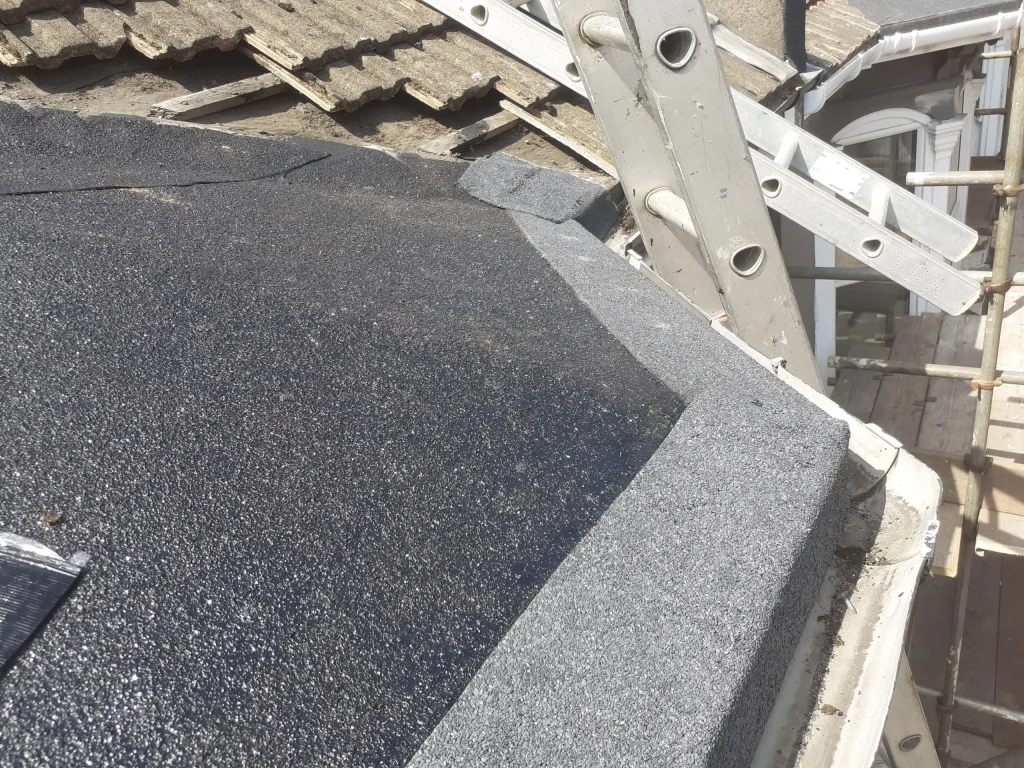
- Repairing SBS torch-on membrane systems.
- Replacing broken slates or tiles.
- Correcting drainage failures.
- Rebuilding defective junctions or mortar chases.
- Repairing storm-damaged roofline details.
My goal is always to stabilise the problem quickly while making sure the repair lasts, rather than temporarily hiding the symptoms.
How I Approach Urgent Roof Repairs
When dealing with emergency roofing issues, speed matters, but diagnosis matters just as much.
Before recommending any repair, I assess:
- Where water is actually entering.
- Whether the damage is structural or surface-level.
- If moisture has reached decking, rafters, or insulation.
- Whether scaffolding or safe ladder access is required.
- If condensation is contributing to the symptoms.
Sometimes a quick localised repair prevents thousands of pounds in future work. Other times, hidden deterioration means a larger solution makes more technical and financial sense.
If the covering has broader underlying problems, many homeowners first arrange a technical on-site assessment to understand the condition of the entire system before deciding what should happen next.
Why Sussex Roofs Often Need Fast Action
Properties across Brighton, Hove, and Worthing experience harsher conditions than many inland areas.
Strong coastal gusts force rain sideways into vulnerable joints. Salt corrosion gradually weakens metal components. Older Victorian and Edwardian homes naturally shift over time, creating movement around flashing, mortar details, and roof-edge areas.
This combination means small defects can escalate faster than homeowners expect, especially after repeated storms or long periods of heavy rain.
Final Thoughts on Urgent Roof Repairs
Urgent roof repairs are rarely just about stopping a visible drip. The real priority is preventing moisture from spreading deeper into the roof structure before expensive structural damage develops.
My advice is always simple: act early. Small failures are usually cheaper and easier to solve than problems left until timber, insulation, or ceilings become affected.
For most roofing services, I also provide an online calculator where homeowners can estimate likely costs themselves in around 30 seconds before arranging a survey or emergency repair.