Roof Repairs Hove: Why Accurate Diagnosis Matters More Than a Quick Fix
When homeowners search for roof repairs Hove, they are usually trying to solve a practical problem: a leak, slipped tiles, damp patches, storm damage, or uncertainty about whether a repair is still worthwhile. After working on properties across coastal homes in Hove for more than 12 years, I can say one thing confidently: many roofing problems are often misdiagnosed.
One of the biggest mistakes I see is homeowners being told they need a completely new covering when the actual problem may only involve a failed flashing detail, isolated tile movement, blocked drainage, or localised waterproofing failure. In many cases, a wider look at roofline drainage and rainwater flow gives a clearer picture before any major work is considered.
For me, proper repairs start with understanding why the defect happened in the first place rather than simply covering the visible symptoms. The condition of fascia boards and exposed roof-edge details can also play a major part in how water behaves around the property.
The Most Common Roof Repairs I Carry Out in Hove
Hove properties face specific challenges due to coastal weather exposure and ageing housing stock. Because of this, the repair work I carry out here is often very different from what may be needed further inland.
Some of the most common defects I deal with include:
- Slipped or broken roof tiles after high coastal winds.
- Lead flashing repairs around chimneys, parapets, and roof junctions.
- Low-slope waterproofing repairs where membrane systems begin to split or blister.
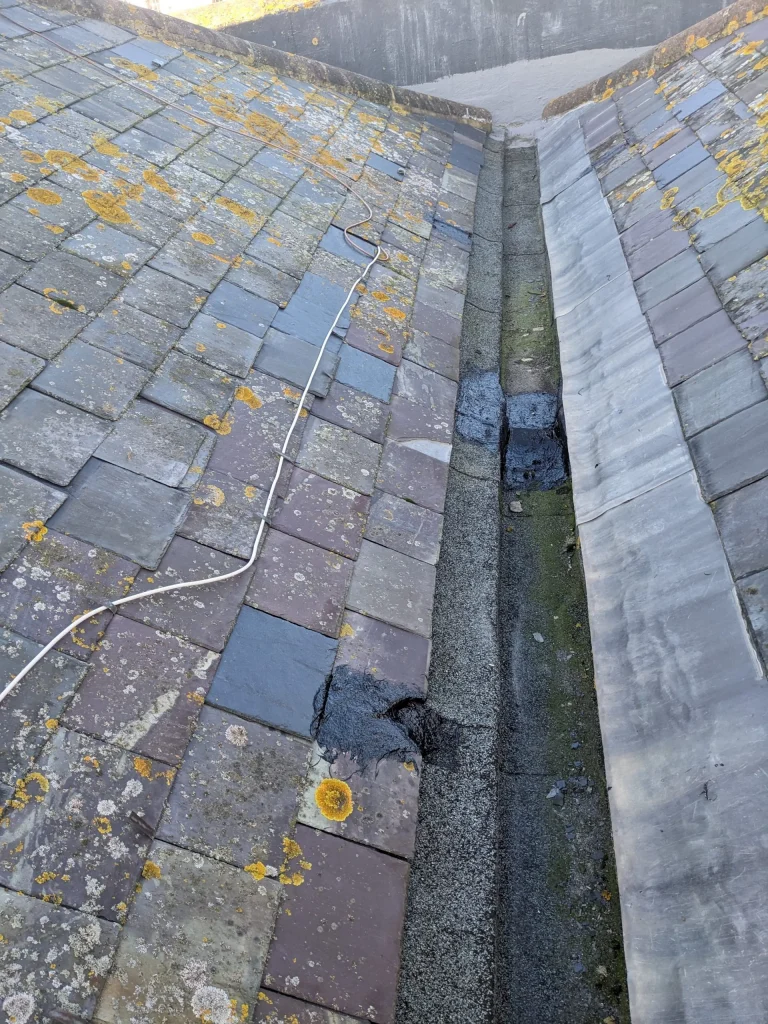
- Valley repairs where water concentrates heavily during rainfall.
- Roof-edge repairs caused by failing fascia boards or rainwater overflow.
- Mortar failures on ridge tiles and verge systems.
In older Victorian and Edwardian homes especially, movement develops slowly over decades. What looks like a sudden leak is often the final symptom of a weakness that has been developing quietly for years.
Why Roof Leaks Are Often Misdiagnosed
One thing I regularly explain to homeowners is that water rarely enters exactly where the internal stain appears.
Rainwater behaves unpredictably inside roof structures. It may:
- Travel along rafters before dripping internally.
- Move through insulation before becoming visible.
- Enter through flashing but appear near ceilings several metres away.
- Be caused by condensation rather than external weather failure.
This is why I avoid guessing. Before recommending major work, I first inspect whether the issue comes from failed materials, blocked drainage, structural movement, or simply poor ventilation.
If your property already has active water ingress, homeowners can quickly arrange a priority leak diagnosis visit so I can identify the actual failure point before moisture spreads further into plaster, insulation, or timber structures.
Roof Repairs on Flat Roofs vs Pitched Roofs
Not all repairs work the same way because low-slope and pitched systems fail differently.
Pitched covering repairs usually focus on:
- Replacing slipped tiles or damaged slate.
- Repairing chimney flashing.
- Fixing ridge bedding and mortar cracking.
- Resolving valley defects and junction problems.
Low-slope waterproofing repairs are often more technical because water sits directly on the membrane. My inspections usually focus on:
- Failed SBS membrane seams.
- Thermal cracking in older mineral systems.
- Ponding water around outlets.
- Compromised perimeter details and upstands.
Where deterioration has become more extensive, some homeowners first review my low-slope waterproofing cost guide to compare repair and replacement options realistically.
When Roof Repairs Make Sense — And When They Do Not
I believe in being completely honest with homeowners.
In many situations, repairs are absolutely worthwhile when:
- The defect is isolated.
- The surrounding structure remains sound.
- Water ingress has been identified early.
- Materials still have a reasonable remaining lifespan.
However, if repeated repairs are happening in multiple areas, structural timbers are deteriorating, or the waterproof system has reached the end of its service life, replacement may sometimes become the more economical long-term solution.
I never recommend replacement simply because a covering is old. I recommend it only when repair work stops making technical or financial sense.
Final Thoughts on Roof Repairs in Hove
Good repairs are not about applying quick patches and hoping for the best. They rely on proper diagnosis, understanding how water moves through a building, and identifying whether the defect is localised or part of a wider structural issue.
For many related services, I also provide instant online calculators where homeowners can estimate likely costs themselves in around 30 seconds before arranging an inspection.
Interested in this service?
Check out the complete details and get a quote on our main page.
Go to: Urgent Leak Booking