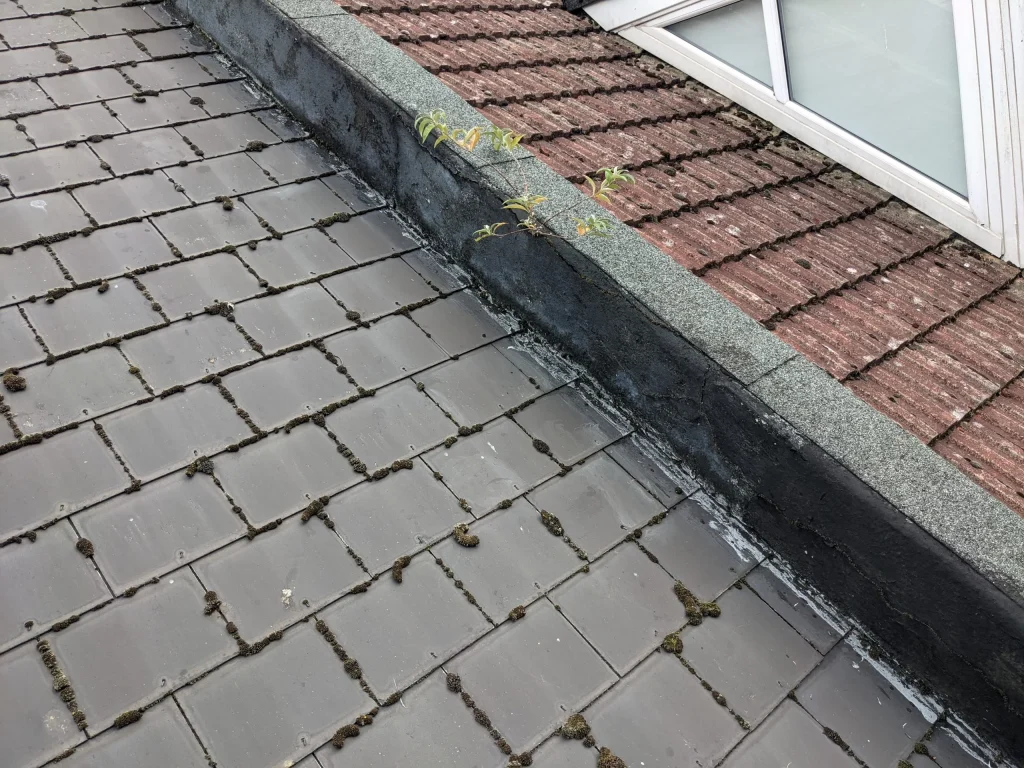
The myth of the 100-year slate roof
As a roofer working across Brighton and Hove, I hear the same sentence from homeowners almost every week: “But natural slate is supposed to last for a century!” They are absolutely right. The slate itself is incredibly resilient. However, the system holding those slates to your property definitely is not.
When I am called out to a Victorian property because of a sudden leak, the homeowner usually expects me to simply climb up, push a slipped slate back into place, and apply a bit of sealant. But what I typically uncover is a structure suffering from ‘nail sickness’ and failing timber. In these situations, patching the surface is just throwing money at a symptom. The real cure is a proper strip and relay.
Why do slates suddenly start slipping?
To understand why a strip and relay is so common in the local area, you have to look at how these historical properties were built. While I am often on-site performing a complete gutter replacement in Brighton, I always take a moment to inspect the lower slate courses for signs of movement. A hundred years ago, slates were fixed to timber battens using iron nails. Over decades of exposure to our coastal salt air and driving rain, those iron nails rust away to nothing. This is what we call ‘nail sickness’.
Once the nails corrode, there is nothing holding the slate in place except gravity and the friction of the slates around it. The next time we get a strong gale off the Channel, the wind gets under the slate, lifts it, and slides it right out. You can replace that one slate with a modern copper or galvanized fixing, but the thousands of other iron nails are also failing. It becomes an endless, expensive cycle of patch repairs.
What happens during a slate strip and relay?
Instead of constantly chasing leaks, a strip and relay addresses the root cause while preserving the historic character of your property. I carefully strip all the existing slates off and set the usable ones aside. We then expose the bare bones of the structure.
At this stage, the old, brittle bitumen felt is removed. We strip off the tired battens and inspect the structural rafters. Once everything is clean and solid, I install a modern, highly breathable membrane, a technology also essential for reliable flat roofing in Sussex. This is crucial for older properties, as it allows trapped condensation to escape from your loft while keeping wind-driven rain out. We then fix brand new, pressure-treated timber battens, set to the precise gauge required for your slates.
Finally, we relay the slates. For many of the Victorian properties I work on, especially when providing pitched roofing for Brighton terraced homes, managing the shared boundary lines, party walls, and lead flashings during this relay process is just as critical as laying the field slates themselves.
The reality of the salvage rate
One detail I am always completely honest about with my clients is the salvage rate. You cannot reuse every single slate. Slates are natural stone, and over decades of freezing and thawing, some will begin to delaminate—meaning they flake apart in layers. They also become quite brittle, and some will inevitably snap when we try to gently pry them away from the old battens.
In my experience, you should expect to lose about 20% to 30% of your original slates during a strip and relay. To make up the shortfall, I source matching reclaimed natural slates from local salvage yards. This ensures the property maintains a consistent, weathered appearance that complies with local conservation standards, and crucially, ensures the slates sit flush against one another so water cannot track upwards through capillary action.
Knowing when to stop patching
If your slate covering has only suffered isolated damage—perhaps a modern slate broke because a tradesman walked on it incorrectly—then a local repair is absolutely the right call. But if your slates are consistently slipping, your loft is dusty with crumbling felt, and your battens are sagging, it is time to look at the bigger picture.
Upgrading the hidden layers while keeping your beautiful original slates is often the most cost-effective long-term decision you can make for an older property. If you are tired of paying for temporary patch jobs after every storm, I am happy to inspect the condition and give you a realistic assessment of your salvage rate and timber condition. You can also find pricing calculators across my website to get a rough idea of project costs in about 30 seconds before we even speak.