Roof Service: Why Regular Roof Maintenance Costs Less Than Emergency Repairs
When homeowners search for roof service, they are often unsure what the term actually covers. Some assume it only matters when water is already coming through the ceiling, while others think it is no more than a quick visual inspection.
After 18 years working on roofs across Brighton, Hove, and Worthing, I have learned that proper roof care is mainly about prevention. That can mean spotting early drainage problems, arranging help with time-sensitive gutter blockages in Hove, or investigating where water ingress is really starting before it spreads through the structure. I regularly find small defects that could have been dealt with quickly months earlier but were left unnoticed until they became costly building problems.
Roofs rarely fail overnight. Most issues begin gradually through weather exposure, blocked drainage, thermal movement, or ageing materials that slowly weaken over time.
What Does a Roof Service Actually Include?
For me, a professional roof service means inspecting how the whole roof system performs rather than waiting for obvious leaks to appear.
A proper roof service may involve:
- Checking tiles, slates, and ridge systems for movement.
- Inspecting lead flashing around chimneys and wall junctions.
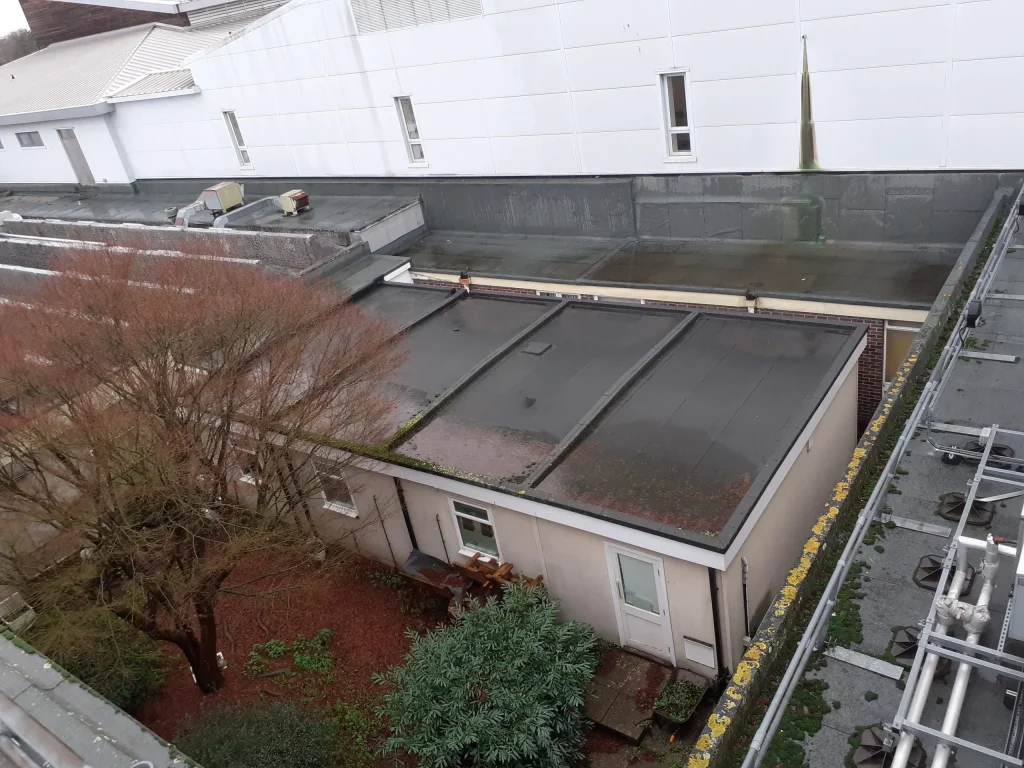
- Assessing flat roof felt for early signs of splitting or blistering.
- Inspecting gutters and outlets for blockages.
- Checking parapet walls and vulnerable roof edges.
- Identifying signs of trapped moisture or condensation.
- Assessing roofline components such as fascias and soffits.
Many roofing problems remain invisible from ground level. By the time staining appears inside the property, water may already have travelled through insulation or timber structures for weeks.
Why Roof Service Matters More in Sussex
Properties across Brighton, Hove, and Worthing experience conditions that place extra pressure on roofing materials.
Strong coastal winds, salt-laden air, and repeated temperature changes accelerate deterioration faster than in many inland areas. I regularly find:
- Lead flashing separating through thermal movement.
- Corrosion around fixings exposed to coastal salt.
- Blocked gutters causing overflow during storms.
- Felt edges lifting due to repeated wind uplift.
- Parapet walls absorbing moisture and causing hidden damp issues.
On older Victorian and Edwardian homes, structural movement over decades often adds additional stress to roof junctions.
Where drainage issues become part of the problem, homeowners sometimes also review my rainwater system installation options because poor water management often causes repeat roofing defects.
Flat Roof Service vs Pitched Roof Service
Flat roofs and pitched roofs require very different maintenance approaches.
Flat roof service generally focuses on:
- Checking SBS torch-on felt seams.
- Inspecting outlets for ponding water.
- Assessing perimeter trims and flashing junctions.
- Checking insulation performance and signs of trapped moisture.
Pitched roof service more commonly involves:
- Checking slipped tiles or slates.
- Inspecting ridge bedding and mortar condition.
- Examining flashing around chimneys and valleys.
- Assessing loft ventilation to distinguish leaks from condensation.
If I identify larger issues on a flat roof during servicing, many homeowners use my online flat roof pricing estimator to understand likely costs before deciding whether a targeted fix or a full replacement makes more sense.
Why Small Defects Become Expensive Problems
One thing I regularly explain to homeowners is that roofing systems are layered structures.
A small defect may seem harmless at first, but water rarely stays localised. Once moisture bypasses the waterproof layer, it can:
- Saturate insulation and reduce thermal efficiency.
- Cause timber rot inside hidden roof structures.
- Damage internal plasterwork and decorations.
- Create mould growth inside concealed spaces.
- Increase repair costs significantly over time.
In many situations, a relatively small issue discovered during servicing prevents much larger future costs.
My Approach to Roof Service
I never treat roof service as simply ticking boxes.
I focus on understanding how the roof is behaving, where weaknesses are developing, and whether the property faces risks that may not yet be visible internally. Where rainwater flow is part of the concern, planned gutter condition checks around Hove can help prevent roof-edge problems from returning after the main roof has been inspected.
Sometimes I recommend immediate repairs. Other times, I simply explain which areas should be monitored because no major work is necessary yet.
Final Thoughts on Roof Service
A proper roof service is not about finding reasons to replace a roof. It is about identifying technical weaknesses early enough to avoid expensive surprises later.
My advice is simple: prevention nearly always costs less than emergency work.
For most roofing services, I also provide instant online calculators where homeowners can estimate likely pricing themselves in around 30 seconds before arranging a survey.