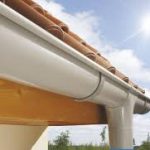
Why quality guttering and downpipe installation matters
When customers ask me about Guttering & Downpipe Installation Brighton Worthing, I always explain one thing first: guttering is not just a plastic trim around the edge of the roof. It is one of the main parts of the property that moves rainwater away from the building before it can cause damage.
In my 18 years on the roof, I have seen many homes where the roof covering itself was not the real problem. The trouble started because the guttering was badly fitted, the downpipes were in the wrong place, or the water was not being carried away properly. Once rainwater starts spilling over the front, running down brickwork, soaking render, or sitting behind fascia boards, the damage can slowly build up without the homeowner noticing straight away.
If you ask me, I will tell you straight: a guttering job is only as good as the details. The fall has to be right. The brackets have to be spaced properly. The joints need to line up cleanly. The outlets must be positioned where the water naturally wants to go. The downpipe cannot just be fixed wherever it looks convenient. It has to take the water away from the roof edge and discharge it sensibly.
Brighton, Worthing, Hove, and the surrounding Sussex areas get plenty of wind-driven rain. On a calm day, a weak gutter joint might look fine. During heavy rain with coastal wind behind it, the same weak point can overflow, twist, drip, or push water back toward the building. That is why I do not treat guttering as a quick cosmetic job. I look at how the whole rainwater system works.
Poor guttering installation often leads to stained walls, damp patches, rotten fascia boards, leaking joints, overflowing corners, and repeated repairs that never really solve the issue. Sometimes the gutter itself is not even broken; it has simply been installed too flat, too low, too high, or without enough support. That is the difference between fitting guttering and fitting guttering properly.
My approach is simple. I would rather take the time to install the system neatly and correctly than rush the job and leave you with problems after the first heavy rain. I want the gutter line to look clean, but more importantly, I want it to work. A tidy installation should protect your roof edge, your walls, your fascia boards, and the lower parts of your property from unnecessary water damage.
For me, quality workmanship means thinking beyond the visible pipe and the visible gutter. It means checking whether the existing fascia is strong enough, whether the old brackets have pulled away, whether the outlet position makes sense, and whether the downpipe has a clear route. If something is likely to cause a problem later, I would rather explain it to you before the work is done, not after water starts overflowing again.
How I approach a proper guttering and downpipe installation
When I arrive to look at your guttering, I do not only look at the length of plastic that needs replacing. I look at the full route the rainwater is supposed to take. Water should leave the roof cleanly, enter the gutter without overshooting, move toward the outlet, travel down the pipe, and discharge away from the building in a controlled way.
That sounds basic, but in real roofing work, this is where many problems begin. A gutter can be brand new and still fail if it has been fitted with poor fall, weak brackets, badly aligned joints, or an outlet that sits in the wrong place. I have seen new guttering overflow simply because the installer followed the old line without checking whether the old line was correct.
My first job is to understand why the existing system is being changed. Is it leaking from the joints? Is it overflowing in heavy rain? Is water running down the wall? Are the brackets loose? Has the fascia started to rot? Has the downpipe been blocked, undersized, or fitted in a poor position? Once I know the reason, I can install the new guttering in a way that solves the actual problem rather than just covering it up.
For Guttering & Downpipe Installation Brighton Worthing, the fall of the gutter is one of the most important details. Too little fall and the water sits in the gutter. Too much fall and the line can look untidy or create awkward stress around the outlet. I aim for a clean, practical fall that lets the water move properly while keeping the front of the property neat.
Bracket spacing also matters. If the brackets are too far apart, the gutter can sag when it fills with rainwater. A small sag can create a low point where water sits, especially after leaves and roof debris begin to collect. Over time, that puts pressure on joints and can make the gutter twist away from the fascia. I prefer to support the gutter properly from the start rather than rely on the plastic to hold its shape under load.
Before I fix anything new, I also check the fascia line. If the fascia board is soft, rotten, loose, or badly fixed, it is not a good base for new guttering. You can install the best gutter in the world, but if it is fixed into weak timber or failing uPVC support, it will not stay correct for long. I would rather tell you honestly what I find than fit new guttering onto a poor base and pretend everything is fine.
The joints and corners need care as well. Gutter joints are common leak points, especially when the sections are cut badly, forced into position, or left under tension. I fit the sections so they sit naturally, with the seals doing their job properly. A neat joint is not just about appearance. It reduces movement, dripping, and the chance of the gutter pulling apart during expansion and contraction.
Downpipes are just as important as the gutter itself. A downpipe should not be treated as an afterthought. I look at where the water collects, where the outlet should sit, how the pipe will be clipped, and where the water will finally discharge. If the downpipe empties into a poor drain, against a wall, or onto an area that sends water back toward the house, the installation is not complete in my eyes.
Here is my honest advice: replacing old guttering with new guttering is not automatically an upgrade. The upgrade comes from correct setting out, solid fixing, clean alignment, good support, and sensible water discharge. That is what I focus on when I carry out the work.
I know many homeowners only notice guttering when it starts dripping outside a window or overflowing above a doorway. That is completely normal. My job is to look beyond the obvious drip and make sure the whole system is working properly. If a repair is enough, I will say so. If the guttering has reached the point where replacement makes more sense, I will explain why in plain English.
How I approach a proper guttering and downpipe installation
When I arrive to look at your guttering, I do not only look at the length of plastic that needs replacing. I look at the full route the rainwater is supposed to take. Water should leave the roof cleanly, enter the gutter without overshooting, move toward the outlet, travel down the pipe, and discharge away from the building in a controlled way.
That sounds basic, but in real roofing work, this is where many problems begin. A gutter can be brand new and still fail if it has been fitted with poor fall, weak brackets, badly aligned joints, or an outlet that sits in the wrong place. I have seen new guttering overflow simply because the installer followed the old line without checking whether the old line was correct.
My first job is to understand why the existing system is being changed. Is it leaking from the joints? Is it overflowing in heavy rain? Is water running down the wall? Are the brackets loose? Has the fascia started to rot? Has the downpipe been blocked, undersized, or fitted in a poor position? Once I know the reason, I can install the new guttering in a way that solves the actual problem rather than just covering it up.
For Guttering & Downpipe Installation Brighton Worthing, the fall of the gutter is one of the most important details. Too little fall and the water sits in the gutter. Too much fall and the line can look untidy or create awkward stress around the outlet. I aim for a clean, practical fall that lets the water move properly while keeping the front of the property neat.
Bracket spacing also matters. If the brackets are too far apart, the gutter can sag when it fills with rainwater. A small sag can create a low point where water sits, especially after leaves and roof debris begin to collect. Over time, that puts pressure on joints and can make the gutter twist away from the fascia. I prefer to support the gutter properly from the start rather than rely on the plastic to hold its shape under load.
Before I fix anything new, I also check the fascia line. If the fascia board is soft, rotten, loose, or badly fixed, it is not a good base for new guttering. You can install the best gutter in the world, but if it is fixed into weak timber or failing uPVC support, it will not stay correct for long. I would rather tell you honestly what I find than fit new guttering onto a poor base and pretend everything is fine.
The joints and corners need care as well. Gutter joints are common leak points, especially when the sections are cut badly, forced into position, or left under tension. I fit the sections so they sit naturally, with the seals doing their job properly. A neat joint is not just about appearance. It reduces movement, dripping, and the chance of the gutter pulling apart during expansion and contraction.
Downpipes are just as important as the gutter itself. A downpipe should not be treated as an afterthought. I look at where the water collects, where the outlet should sit, how the pipe will be clipped, and where the water will finally discharge. If the downpipe empties into a poor drain, against a wall, or onto an area that sends water back toward the house, the installation is not complete in my eyes.
Here is my honest advice: replacing old guttering with new guttering is not automatically an upgrade. The upgrade comes from correct setting out, solid fixing, clean alignment, good support, and sensible water discharge. That is what I focus on when I carry out the work.
I know many homeowners only notice guttering when it starts dripping outside a window or overflowing above a doorway. That is completely normal. My job is to look beyond the obvious drip and make sure the whole system is working properly. If a repair is enough, I will say so. If the guttering has reached the point where replacement makes more sense, I will explain why in plain English.