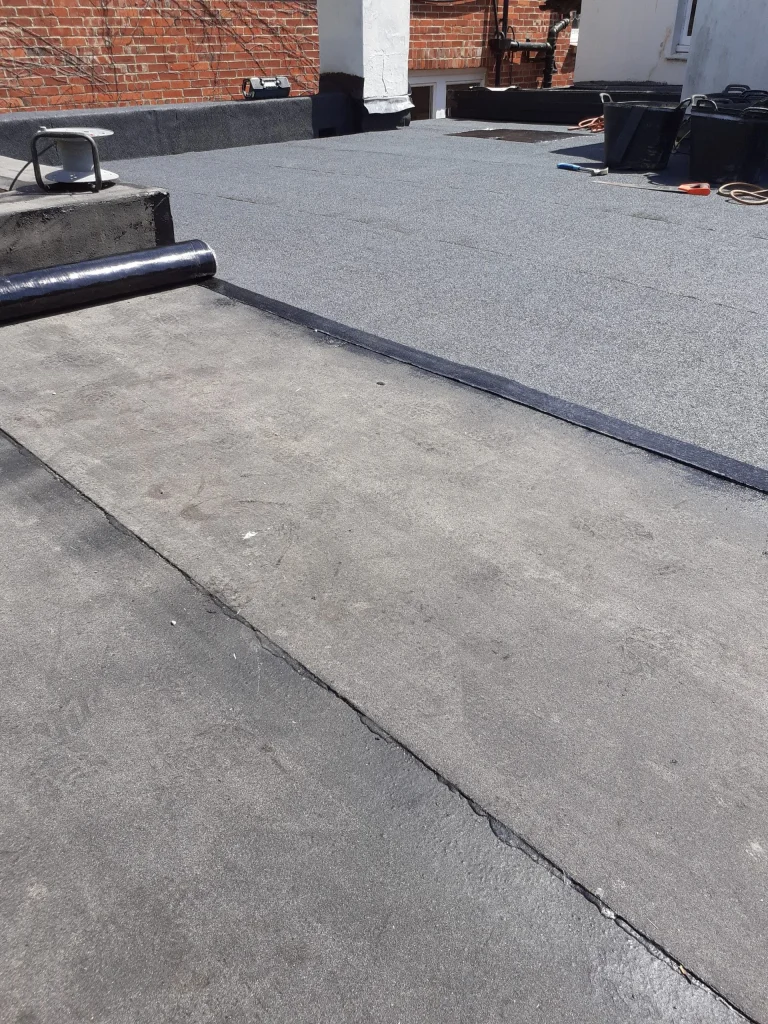
When to Replace a Garage Roof: The Signs Before a Leak Starts
Many property owners in Sussex only think about replacing a garage roof once water is already dripping onto their car, tools, or stored belongings. By that stage, the damage is often more widespread than the external covering itself. As a roofer, I see the early warning signs every week: small technical clues that show a roof is reaching the end of its useful life before it fails completely.
Waiting for visible water ingress is a costly mistake. The real indicators of failure are often structural, and spotting them early can save you from having to renew the covering before the timbers deteriorate as well as dealing with rotten decking and joists.
Technical Diagnosis: What to Look For
Here are the specific failure points I check during an inspection. These are clear signs that your outbuilding roof pricing and specification should be considered carefully before the damage spreads into the structure below.
1. The Felt Covering: Cracking and Blistering
Older felt systems, particularly those installed with pour-and-roll bitumen, become brittle over time. The sun’s UV rays bake out the plasticising oils, leading to:
- Alligator Cracking: A network of fine cracks across the surface, resembling crocodile skin. This indicates that the felt has lost its flexibility and can no longer cope with thermal movement, including expansion and contraction. Water can then penetrate through capillary action.
- Blisters or Bubbles: These are pockets of trapped air or moisture between the felt layers, or between the felt and the decking. As they heat up, they expand, stretching and weakening the membrane until it eventually splits.
- Mineral Loss: If you see a build-up of mineral granules from the cap sheet in your gutters, the protective top layer is eroding. Once that layer wears away, the core bitumen is exposed to direct UV degradation.
2. The Roof Decking: Sagging and Sponginess
This is a serious structural warning. Many older garage roofs in Brighton use chipboard or basic plywood for the deck, and both materials are highly vulnerable to moisture.
Even without an obvious internal leak, persistent humidity and condensation inside the garage can cause timber decking to absorb atmospheric moisture. It swells, loses rigidity, and starts to sag between the joists. If you can see visible dips where rainwater ponds, or if the surface feels spongy underfoot where access is safe, the decking has already failed. This sagging makes water pooling worse, which accelerates the decay of the felt above it.
3. The Joists: Timber Deflection
A sagging deck places continuous stress on the timber joists beneath it. Over time, moisture that gets through the felt and saturates the deck can transfer into the joists, leading to timber rot. If you look up from inside the garage and see a noticeable bow or dip in the main support timbers, the problem has moved beyond a simple re-covering job and into structural repair. This is usually the most expensive stage of failure to correct.
The Correct Replacement Process
An experienced trade-led replacement is not about covering over old problems. The only reliable way to create a long-term solution is to strip the failing build-up back, inspect the structure properly, and rebuild from a sound base.
- Full Strip-Off: We remove all old felt layers and, crucially, any failed timber decking. This is the only way to inspect the condition of the joists underneath properly.
- Joist Inspection: I check every joist for signs of rot, movement, or weakness. Any compromised timbers are either replaced or reinforced by sistering new joists alongside them.
- New Decking: We install new 18mm OSB3 tongue-and-groove decking, creating a strong, solid, and uniform base for the new waterproofing layer.
- High-Performance System: We then install a modern, two-layer SBS-modified torch-on felt system. The SBS modification gives the felt rubber-like flexibility, allowing it to handle Brighton’s temperature changes without cracking. This is the core of a two-layer SBS-modified system for outbuildings.
- Finishing Details: Finally, we install new uPVC fascias and soffits if the old timber ones are rotten. This gives the edge detail a complete, low-maintenance finish and helps protect the new structure from weather exposure. A proper weatherproof roofline upgrade is especially valuable in coastal conditions.
Assess Your Garage Roof Now
By understanding these technical signs, you can judge the condition of your garage roof more accurately than by simply looking for drips. A planned replacement based on cracked felt, ponding water, or a sagging deck is almost always more cost-effective than an emergency call-out after water has already damaged the structure. If you recognise these issues, you now know what is involved in a proper fix. You can use the free calculator on my website to get an instant, transparent price for the full job in about 30 seconds.