Choosing the Right Material for Your Flat Roof Garage
When I inspect a leaking outbuilding in the Sussex area, the culprit is rarely a sudden structural failure. Usually, it is a materials issue—specifically, the wrong membrane failing under the stress of thermal movement and coastal weathering. If you are planning a replacement, understanding the physics behind your roofing materials is critical to ensuring a watertight lifespan.
Evaluating Garage Roofing Materials: Pros and Cons
Most outbuildings are designed as unheated cold spaces. When considering modern felt systems, it is important to remember that the deck experiences extreme temperature fluctuations, causing the structural timber to expand and contract. Not all materials can handle this thermal movement without degrading, which often leads to signs of water ingress that require professional maintenance services to rectify.
1. GRP (Fibreglass)
Pros: Creates a hard, seamless finish that is highly impact-resistant.
Cons: GRP is extremely rigid. When installed on a surface spanning several meters, it struggles to accommodate thermal expansion. In coastal areas where temperature shifts can be sharp, I frequently see these systems suffering from micro-cracking and loud snapping noises as the timber moves beneath it.
2. EPDM (Rubber)
Pros: Highly flexible, seamless on smaller areas, and resistant to UV degradation.
Cons: EPDM is prone to shrinkage over time. It relies heavily on glued seams and edge trims which often fail due to capillary action drawing water underneath the membrane. It also has a distinct, sometimes unsightly industrial look that doesn’t always blend well with period properties.
3. Traditional Pour and Roll Felt (Oxidised Bitumen)
Pros: Cheap upfront cost.
Cons: This is an outdated system. Oxidised bitumen becomes brittle in winter and soft in summer. It lacks elasticity, leading to rapid cracking, blistering, and moisture ingress. I never recommend this for long-term waterproofing.
Why I Recommend Tecnatorch SBS Torch-On Mineral Felt (Charcoal)
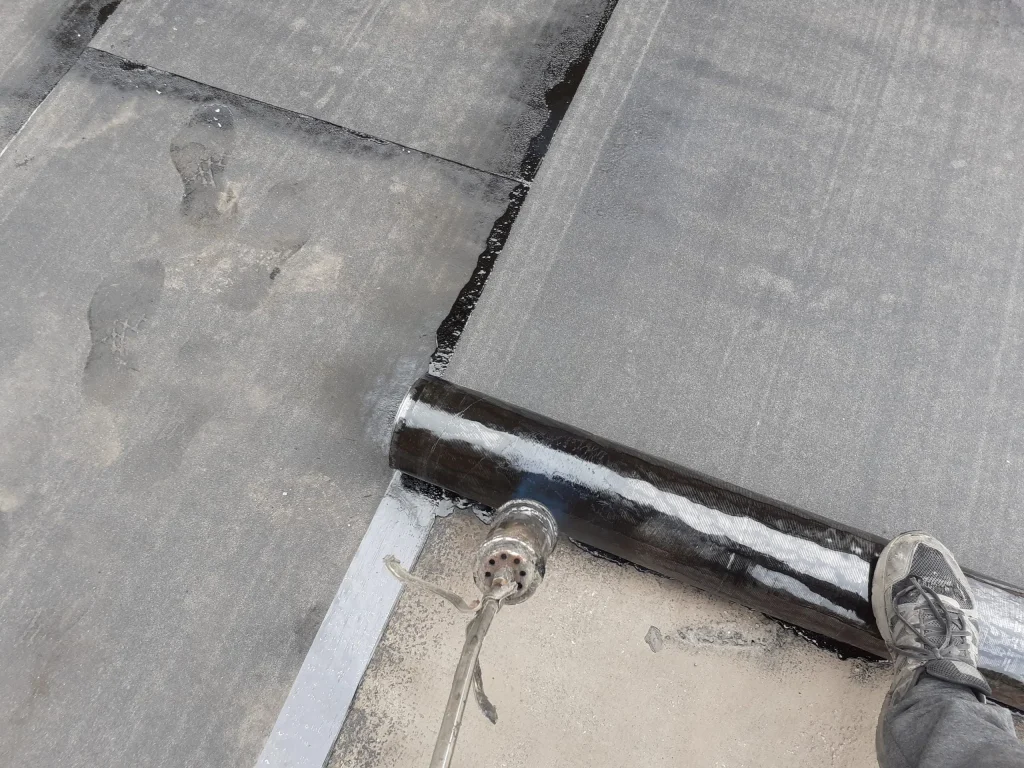
After 18 years in the trade—12 of those dealing directly with the aggressive coastal climate of the South Coast—my top recommendation for any outbuilding renovation project is a high-performance SBS-modified bitumen system, specifically the Tecnatorch SBS Torch-On Mineral Felt in Charcoal.
Here is the technical reasoning behind this choice:
- SBS Modification (Styrene Butadiene Styrene): The addition of synthetic rubber (SBS) into the bitumen transforms the felt. It achieves exceptional low-temperature flexibility (down to -20 degrees Celsius). When your timber expands and contracts, the Tecnatorch membrane stretches with it instead of tearing.
- Puncture and Shear Resistance: With a robust polyester carrier, this multi-layer system provides incredible tensile strength against wind uplift and impact from falling branches or debris.
- Charcoal Mineral Finish: The factory-applied slate mineral surface acts as a vital shield against UV degradation. The charcoal color not only looks sharp and traditional alongside local brickwork, but it also minimizes thermal shock compared to plain black membranes.
The Final Verdict
Upgrading your waterproofing isn’t just about rolling out a protective layer; it is about matching the material to the structural physics of your property. GRP is too rigid, EPDM shrinks, but an SBS torch-on system like Tecnatorch provides the perfect balance of flexibility, durability, and aesthetics.
Now that you understand the technical side of the materials, you don’t have to wait days for a quote. You can use the free online calculator on my website to get an exact, instant price estimate for materials and labor for your project in just 30 seconds.