Why Brighton Gutters Face Tougher Conditions Than Most
I spend a lot of my time on ladders looking at the front of Victorian terraces in Brighton and Hove. One thing I’ve noticed over 18 years is that local drainage systems have a much harder life than those just twenty miles inland. It isn’t just the rain; it is the combination of salt-heavy air, nesting seagulls, and the relentless south-westerly winds that whip off the Channel.
When I inspect a property, I often see homeowners focused on the condition of their matching replacement tiles while ignoring the very system designed to keep their masonry dry. In our coastal environment, a failure in routine maintenance and debris removal doesn’t just mean a bit of dripping water—it often leads to severe damp penetration through the porous old brickwork common in Sussex.
The ‘Silent’ Warning Signs of Gutter Failure
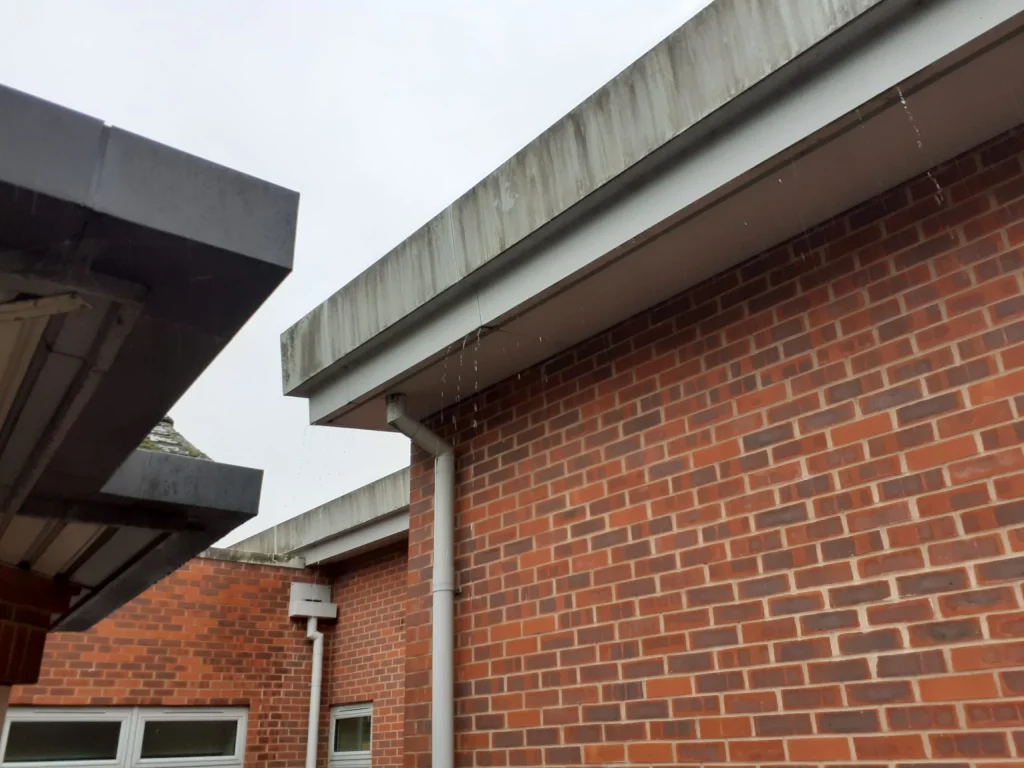
In my experience, you don’t always need a heavy downpour to see that your drainage is failing. I usually tell my clients to look for ‘tide marks’ or green algae staining on the brickwork directly behind the downpipes or joints. This is often caused by capillary action, where water seeps through a tiny gap in a joint and is pulled back toward the wall rather than falling to the ground.
- Peeling paint on fascias: This usually means water is overflowing the back of the channel, soaking the timber.
- Visible ‘silt’ lines: If you see dark streaks on the outside of the pipes, the system is likely blocked and overtopping during heavy rain.
- Rusted brackets: On older coastal homes, salt air eats through metal fixings, causing the run to lose its ‘fall’ (the slope towards the downpipe).
The Impact of Coastal Debris and Salt
Brighton is famous for its seagulls, but for me, they are a major cause of drainage blockages. They drop debris, nesting materials, and even food remains into the channels. When this mixes with the fine grit that washes off ageing slate roofs, it creates a heavy sludge that sets almost like concrete in the summer heat. This sludge blocks the outlets and puts immense weight on the brackets.
If your system is struggling to cope with these conditions, upgrading to a high-capacity drainage system can ensure the new setup is sized correctly for modern rainfall patterns. I often recommend deep-flow systems for properties in exposed parts of Hove or Worthing, as they can handle the volume of water we get during coastal storms.
Fascia Rot and Structural Damage
When drainage fails, the timber behind it—the fascia board—is the first thing to rot. I frequently see situations where a property owner thinks they just need a quick clean, but when I get up there, I find the brackets are barely holding onto soft, punky wood. If you ignore this, the rot can spread into the ends of the roof rafters, which is a much more expensive fix.
When I am renewing damaged timber fascias, I always ensure there is adequate ventilation. Many older coastal extensions suffer from damp not because of a leak, but because the roofline is sealed too tight, causing condensation to rot the timbers from the inside out.
Practical Next Steps for Your Property
Before you spend money on repairs, I always suggest a quick walk around your house during a rain shower. Look for where the water is ‘breaching’ the system. Is it a simple blockage at the outlet, or is the whole run sagging? Often, simply re-setting the fall can save you the cost of a full replacement.
If you are worried about the state of your roofline, I have built a few tools on this site to help. You can estimate the cost of repairs or replacements using my online calculators in about 30 seconds. For a more detailed look at why your walls are staying damp, I am always happy to provide a technical diagnosis during a physical inspection.