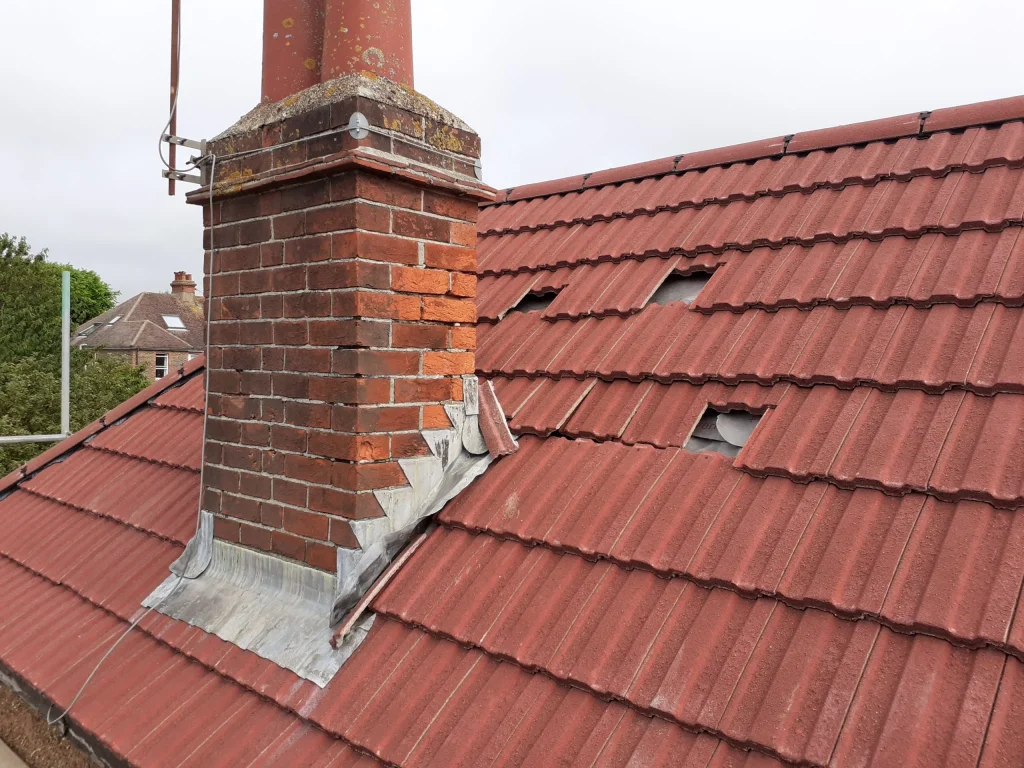
Matching Replacement Tiles to Brighton’s Original Roofing Stock
Finding the right replacement roof tiles for a Brighton property is rarely as simple as walking into a builder’s merchant and grabbing a pack off the shelf. The tiles covering most Victorian and Edwardian terraces across Hove, Kemp Town, and the surrounding streets were manufactured over a century ago using local clay compositions and firing techniques that no longer exist. When even a small section needs replacing, getting the colour, profile, and texture to blend convincingly requires knowing what you’re actually looking at up there.
Why Original Brighton Tiles Look the Way They Do
The deep reds, burnt oranges, and weathered browns you see across our local roofscapes come from the iron content in the clay and the wood-fired kilns used in their production. Modern machine-made tiles use gas kilns with precise temperature control, which produces consistent colouring but eliminates the subtle variations that give old roofs their character.
I often see homeowners buy what looks like a close match in the yard, only to find it stands out badly once it’s on the roof. The problem is viewing angle. Tiles look different lying flat on the ground than they do pitched at 35 degrees catching direct sunlight. Weathering also changes colour over decades—fresh tiles are always brighter than ones that have spent a century exposed to coastal salt and rain.
The Main Tile Types Across Brighton Properties
Knowing which type of tile you have narrows the search considerably:
- Plain clay tiles: The most common on Victorian terraces. Small, flat, and hung with a double-lap overlap. These require two layers visible at any point, so the battens are spaced at roughly 100mm gauge.
- Machine-made interlocking tiles: Found on later Edwardian and interwar properties. These have a single-lap design with side channels that lock together. Faster to lay, but harder to source exact profile matches now.
- Handmade clay tiles: Present on some higher-end Victorian properties. Slightly irregular shapes with distinctive camber. Reclaimed handmades are often the only way to achieve a believable match.
- Concrete interlocking tiles: Common on 1960s-1980s properties. Easier to match since many profiles are still in production, though colours fade differently from clay.
The Reclaimed Tile Question
Reclaimed tiles are often the best option for period Brighton properties, but they come with their own complications. A reclaimed tile that matches perfectly in colour may have hidden damage—hairline cracks from frost action, delamination starting beneath the surface, or nail holes in the wrong position for your existing batten spacing.
When I source reclaimed tiles for a repair, I check three things before accepting them:
- Ring test: A solid tile produces a clear ringing tone when tapped. A dull thud suggests internal cracking.
- Surface condition: Some weathering is fine, but if the surface is flaking or the nibs are crumbling, the tile won’t last another decade.
- Dimensional consistency: Old tiles vary in size. If the replacements are noticeably different in length, they’ll sit awkwardly against the existing courses.
Good reclaimed stock is increasingly hard to find. Demolition contractors know what period tiles are worth, and the supply shrinks every year as old buildings come down.
When New Tiles Are the Practical Choice
For larger areas of damage—or when the existing tiles are themselves failing across the whole roof—matching individual tiles becomes less important than considering a full replacement. Modern clay tiles won’t replicate the exact look of originals, but they perform better. They’re denser, more frost-resistant, and manufactured to consistent dimensions that make installation faster and more reliable.
If you’re replacing a significant section, I generally recommend doing the entire slope rather than patching half with new and leaving half with failing old tiles. The colour difference will always be visible, and you’ll face the same problem again in five years when the remaining originals deteriorate further.
Concrete vs Clay for Replacement
Concrete tiles cost roughly half as much as clay and are structurally sound, but they behave differently over time. Concrete absorbs more water, making it heavier when saturated—something to consider on older timber structures that may already be marginal. It also grows moss more readily, which some people like for the aged look but which accelerates surface breakdown in our damp coastal climate.
Clay tiles shed water faster and tend to self-clean more effectively in rain. For exposed positions facing the Channel, clay generally outlasts concrete by a significant margin.
Common Tile Problems I Find on Brighton Roofs
Beyond straightforward breakage from impact or storm damage, there are patterns of failure specific to our local conditions:
- Nail sickness: The original iron nails corrode over decades. When enough nails fail, tiles start slipping. You’ll see them sitting lower than their neighbours or kicked out of alignment after high winds.
- Delamination: Older tiles absorb moisture, which freezes and expands in winter. This forces the surface layer apart from the body of the tile. You’ll see flaking faces and exposed porous material beneath.
- Torching failure: The lime mortar bedding on verges and ridges breaks down. Wind-driven rain penetrates, wetting the battens and felt beneath.
- Moss lifting: Heavy moss growth actually levers tiles apart over time. The roots work into any crack, and the expansion as they grow can break nibs or lift laps enough to allow capillary water ingress.
Salt air accelerates all of these. A roof that might last 100 years inland often shows significant problems after 70 years in Brighton.
Working on Terraced Roofs With Shared Boundaries
Most Brighton terraces share party walls that extend above the roofline. Where your tiles meet your neighbour’s, there’s usually a lead flashing or a cement fillet covering the junction. Problems here are common—the cement cracks, the lead perishes, and water enters the gap between properties.
Replacing tiles near a party wall sometimes requires working on both sides of the boundary. If your neighbour’s tiles have slipped and are channeling water onto your roof, fixing your side alone won’t solve the problem. Understanding how these terraced pitched roof systems function as connected structures is essential before starting any repair.
What You Can Check From the Ground
Before calling anyone, spend ten minutes looking at your roof from street level with binoculars or a phone camera on zoom. You’re looking for:
- Tiles that have slipped down, leaving visible gaps
- Broken or missing tiles showing dark felt or timber beneath
- Ridge tiles with cracked or missing mortar joints
- Moss concentrated in valleys or behind chimneys where water pools
- Sagging rooflines that suggest structural movement beneath
If you spot obvious damage, photographing it before calling a roofer helps the conversation. I can often give a rough indication of what’s involved based on a clear photo, before arranging a ladder inspection.
Planning Your Next Steps
For minor repairs—a handful of slipped or cracked tiles—the job is usually straightforward. I replace the damaged tiles, refix the surrounding area if nail sickness is starting, and repoint any disturbed mortar. This kind of maintenance, done promptly, prevents water from reaching the felt and timber where real damage accumulates.
For more extensive problems, I always recommend a full inspection before committing to anything. What looks like a few broken tiles from the street sometimes turns out to be widespread nail failure or delamination that affects the whole slope. Knowing the true condition of the roof lets you make an informed decision about whether to patch, re-roof a section, or plan for a complete replacement over the coming years.
If you want to get a sense of potential costs before arranging an inspection, I’ve built pricing calculators on this site where you can estimate common roofing jobs in about 30 seconds. It’s a useful way to understand the scale of what you might be dealing with.