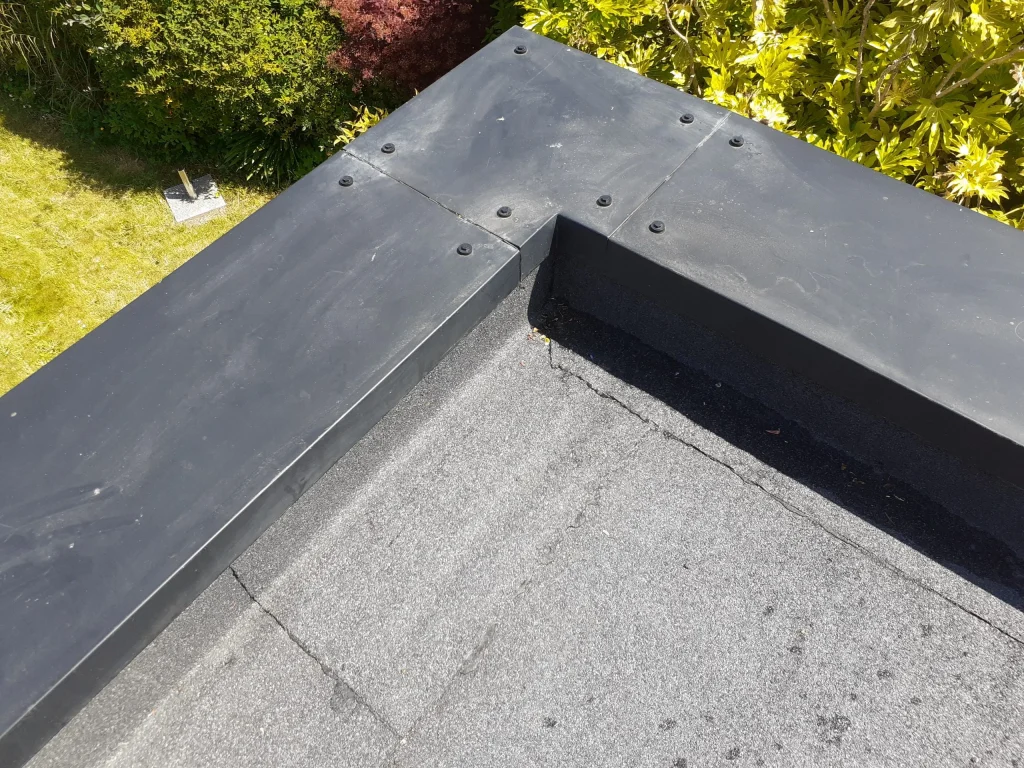
The Winter Call-Out: Is It a Leak or Just Condensation?
Every winter across Sussex, my phone rings with property owners convinced their low-slope covering has suddenly failed. Water is dripping from the ceiling, usually above a kitchen or bathroom. But when I climb up to inspect the deck, the waterproofing is often perfectly intact. No split membrane. No failed flashing. In many cases, the real culprit is poor insulation around older flat roof areas and vulnerable parapet and boundary wall details, which can lead to severe internal condensation.
After 18 years of diagnosing these issues around Brighton and Hove, I can confidently say that many apparent leaks are caused by the thermal design of the structure itself, rather than a simple failure of the external membrane. Shared masonry, roof-edge junctions and high-level parapet details can all make the diagnosis more complicated on older Sussex properties.
The Trap of the Traditional “Cold Roof”
Historically, flat roofs on Victorian terraced houses and mid-century additions were built as cold roofs. This means any insulation sits between the timber joists, leaving a freezing void directly under the timber roof deck.
The problem with this setup is that our homes produce a lot of warm, moist air, especially from cooking, showering and drying clothes indoors. This moisture rises, hits the freezing cold underside of the timber deck, and turns back into liquid water. Over time, this constant dripping destroys the plasterboard and quietly rots the structural timbers. It looks exactly like a genuine external leak, but the water is generated entirely inside the house.
The Modern Solution: Upgrading to a Warm Roof System
When I strip back a failing covering, I almost never recommend rebuilding it as a traditional cold roof. The most reliable method today is installing a warm roof system.
Instead of pushing fibreglass between the joists, rigid PIR insulation boards are installed directly on top of the timber deck, completely outside the structural void. A new waterproof membrane, such as an SBS torch-on system, is then applied over the insulation to create a more stable and durable build-up.
Why a Warm Roof Works Better
- Eliminates the dew point: The timber structure underneath stays closer to room temperature, meaning condensation cannot easily form on the underside of the deck.
- No ventilation gaps needed: Cold roofs require complex cross-ventilation to reduce the risk of timber decay, which is notoriously difficult to achieve on older Sussex properties surrounded by shared walls and awkward junctions.
- Reduces thermal bridging: Heat no longer escapes so readily through the timber joists, helping to lower heating demand and create a more comfortable living space.
When Should You Upgrade Your Insulation?
I always tell homeowners that you cannot simply add insulation boards onto an old, failing covering and expect a long-term result. The correct time to improve the insulation is during a full strip-back and renewal of the existing flat roof build-up.
Why? Because upgrading to a warm roof requires a high-quality vapour control layer beneath the insulation to stop internal moisture migrating upwards. If you skip this critical step, moisture can become trapped inside the insulation boards, making them ineffective and eventually contributing to premature deck failure.
I see this issue most frequently above kitchen and rear addition roof areas. A family will invest heavily in a beautiful new kitchen but overlook the thermal performance of the covering above it. A few winters later, black mould starts appearing in the corners, and the plaster begins to bubble.
Final Thoughts from a Sussex Roofer
If you are dealing with damp patches on your ceiling and suspect poor insulation is to blame, do not rush to patch the membrane with temporary sealant. The issue often lies deeper in the thermal design of the structure itself.
Upgrading to a warm roof system can solve both the condensation problem and the waterproofing problem in one project. If you want the diagnosis checked properly, it is worth getting advice from an experienced Sussex roof specialist who understands how older coastal properties behave in winter.
If you are wondering what this kind of upgrade might cost for your property, I have built a quick online calculator on the website where you can estimate pricing in about 30 seconds before arranging a physical inspection.