18 Years on the Tools, 12 Years on Brighton’s Roofs
My name is Jan Sagi, and for over a decade, I have called this vibrant coastal city my home. With 18 years of hands-on experience in exterior building repairs, moving to the Sussex coast significantly shifted my perspective on property maintenance. When homeowners search for a local tradesman, they are often looking for someone addressing a sudden water leak in Hove or the surrounding areas. However, being a true local expert means understanding how our unique maritime climate impacts older structures over time.
A waterproofing system in this region faces challenges that inland properties simply do not encounter. The combination of historic architecture and harsh sea weather creates specific structural demands. After twelve years working across Hove and Worthing, I have learned that long-term protection is rarely about a quick patch; it requires reading the building’s movement and identifying the root cause of moisture ingress.
The Reality of Coastal Roofing and Salt Corrosion
When I began repairing Sussex properties twelve years ago, the speed of salt-induced degradation was immediately apparent. Salt-laden air relentlessly attacks porous brickwork and mortar joints. Materials that might last forty years inland can fail in half that time on the seafront. I frequently see lead flashing that has fatigued from extreme temperature swings and wind, allowing driving rain to penetrate the structure through capillary action. This moisture often travels along internal timbers, appearing as a damp stain on a ceiling far from the actual defect.
Victorian Terraced Housing: Shared Roofs, Shared Problems
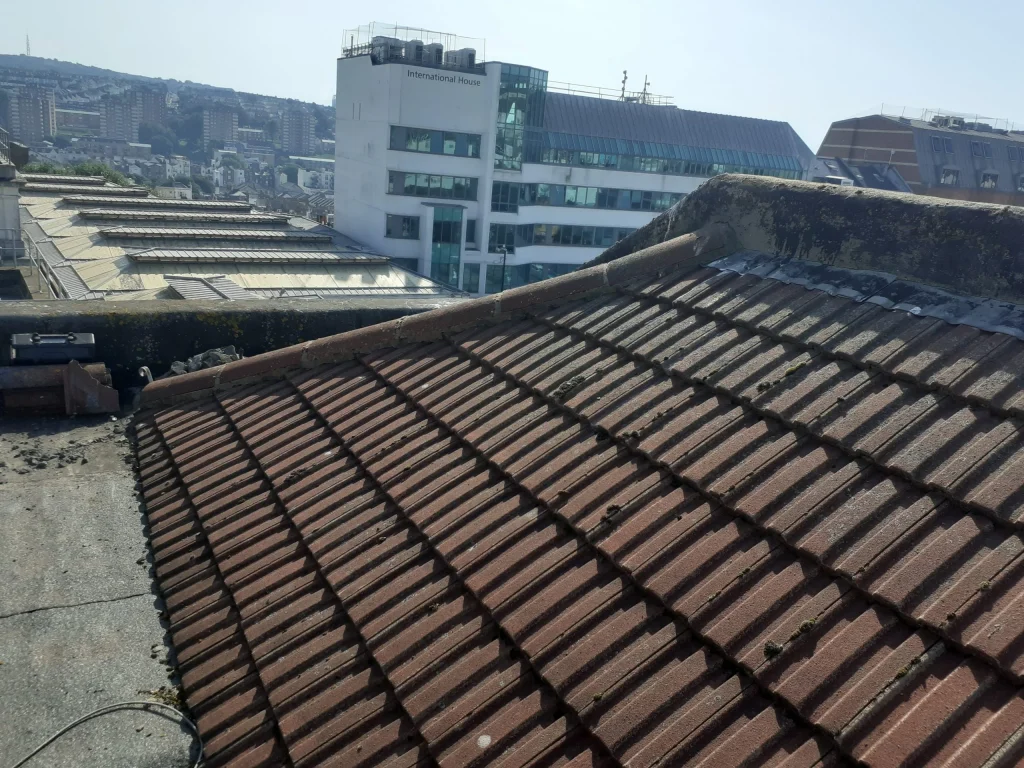
Much of my work involves Victorian and Edwardian terraced homes. While these buildings define the local character, their century-old timber frames mean substrate movement is inevitable. As the deck shifts over the decades, rigid materials often crack. The most vulnerable areas on these period properties are the parapet walls and firewalls separating the houses.
These exposed masonry walls absorb significant amounts of rainwater. If the coping stones or upstands fail, water drops straight into the party wall. If you are concerned about your shared chimney or ridge line, understanding how slated or tiled coverings on period properties manage thermal expansion is vital before starting major works.
Flat Roof Failures: Why Diagnosis Matters
From kitchen extensions to dormers, low-slope structures are common here. In my 18 years on the tools, these are the areas where I see the most frequent misdiagnoses. Homeowners often notice a leak and assume the entire surface has failed, but the reality is often more nuanced.
Sometimes, older asphalt or brittle felt systems simply snap as the building contracts in cold weather. In these cases, I recommend high-performance SBS torch-on membranes. These rubber-modified materials are designed to flex with the local weather conditions without tearing, providing a much more durable seal than traditional pour-and-roll methods.
However, many issues are actually caused by poor ventilation rather than a failed deck. Without proper airflow, warm air rises and condenses on the cold underside of the structure. Distinguishing between condensation and a genuine leak is crucial. If thermal bridging is the culprit, adding new layers won’t solve the dampness; you must address the airflow first.
Honest Diagnostics Over Sales Pitches
As an independent specialist, my reputation depends on accurate diagnosis. I do not use sales teams; I am the one climbing the ladder to inspect why fascia boards are deteriorating or why water is bypassing your drainage system. I prefer to explain the mechanical failure, whether it is ponding water on a seam or a slipped slate letting in a draught.
If you have an unidentified issue, it is best to have it checked before structural timbers begin to rot. I regularly perform detailed checks, and you can easily book a professional structural assessment of your property to determine the necessary steps without any sales pressure.
Final Thoughts
Choosing a reliable tradesman means finding someone who understands the local building stock inside out. Over 12 years, I have seen every type of storm damage and failed temporary repair imaginable. A quality fix should always withstand the next coastal gale. If you are curious about potential costs, the pricing calculators on my website provide an honest estimate in seconds before we even speak.