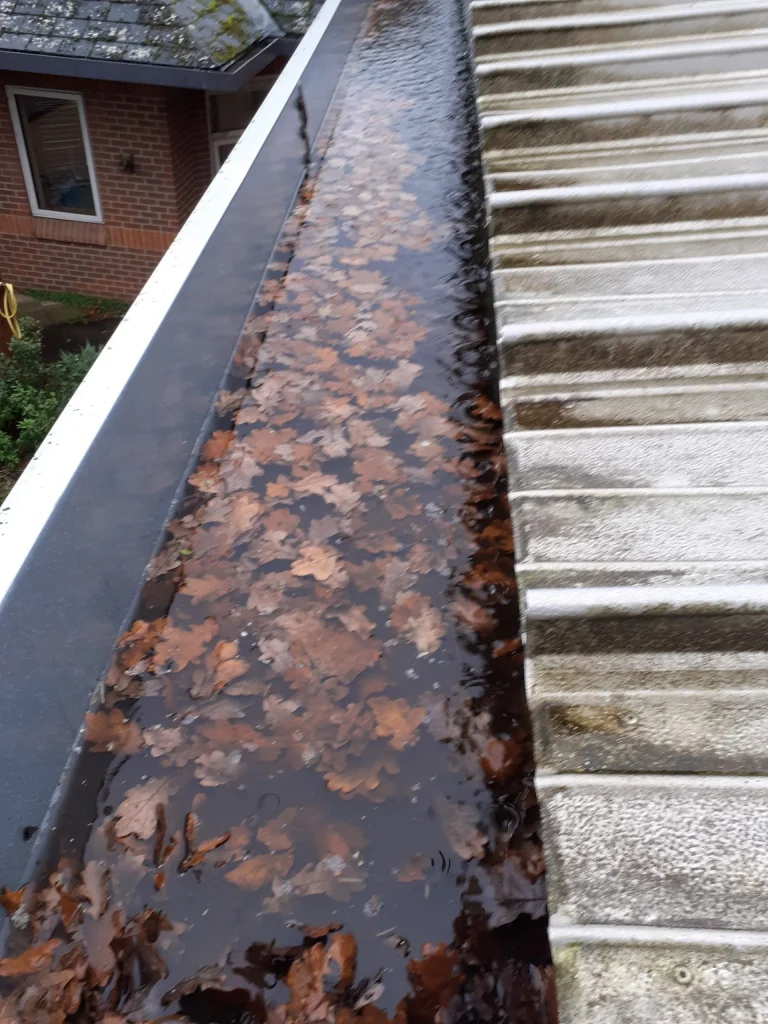
Emergency Gutter Clearing Hove: Why Fast Action Prevents Expensive Roof Damage
When homeowners look for emergency gutter clearing in Hove, it is often because water has already started spilling over during heavy rain. After 12 years working across Hove and Brighton, I have seen how quickly blocked rainwater systems can create problems that look much more serious than they first appear. Overflow is not just a cosmetic issue; it can lead to penetrating damp, saturated brickwork, decayed roofline timber, and hidden leaks around the edge of the building.
In coastal areas, gutters are commonly blocked by moss from neighbouring roofs, loose mortar from older Victorian chimneys, seagull nesting debris, leaves, and compacted sludge. For homeowners trying to prevent these problems before they become urgent, planned rainwater system maintenance can help identify early signs of poor flow, weak brackets, and debris build-up. Once water loses its proper drainage route, gravity forces it into parts of the property that were never designed to stay wet.
When the existing system is damaged, badly aligned, or beyond a simple clean, it may also be useful to compare likely rainwater system renewal costs before deciding whether cleaning, repair, or replacement is the most sensible option.
What Actually Happens When Gutters Overflow?
Emergency gutter problems are not simply about water spilling over the front edge. The real concern starts when standing water tracks behind the gutter line and begins soaking into roof edges, fascias, brickwork, and wall junctions.
On older Victorian and Edwardian houses in Hove, overflowing gutters frequently cause:
- Water penetration behind roofline boards, which can lead to timber decay.
- Persistent damp patches around party walls and chimney breasts.
- Saturated cavity walls caused by repeated overflow during heavy rain.
- Deterioration at the eaves where drip details or edge protection have failed.
- Blocked downpipes that force water to back up toward roof coverings.
I often find that homeowners are treating internal damp symptoms when the actual cause is a completely blocked drainage route pushing rainwater into the property fabric.
Why Emergency Gutter Clearing Matters More in Hove
Hove presents specific roofing and drainage conditions because of coastal weather exposure. Salt-laden air accelerates corrosion on older brackets and metal fixings, while strong south-westerly winds push debris into corners, outlets, and hopper heads.
One common issue I regularly diagnose is wind-driven overflow. During storms, partially blocked gutters cannot move water away fast enough. Instead of draining correctly, rainwater cascades over parapet junctions, fascia lines, and wall interfaces. Over time, this repeated saturation creates hidden moisture ingress that homeowners often mistake for a separate roof defect.
For wider context on how local weather, roof edges, and waterproofing details interact, my local roof condition guidance explains why drainage and roof coverings often need to be assessed together rather than treated as completely separate issues.
If blocked rainwater goods have already caused active water ingress, homeowners can arrange a priority water-ingress diagnosis so I can trace whether the problem comes from drainage failure, flashing defects, or the roof materials themselves.
How I Usually Handle Emergency Gutter Clearing Jobs
Unlike standard maintenance visits, emergency gutter clearing is often time-sensitive because the property is already experiencing overflow, damp staining, or visible water movement where it should not be happening.
In most cases, I carry out emergency gutter clearing within a half-day booking slot, which homeowners can book through my website. This works well because blocked drainage usually needs prompt intervention rather than waiting weeks for availability.
During a typical emergency visit, I will:
- Inspect gutter runs and test water flow.
- Remove compacted moss, leaves, and sediment build-up.
- Check for failed brackets or poor alignment.
- Inspect downpipes for hidden obstructions.
- Assess whether overflow has already affected roof edges or roofline timber.
Where drainage problems have already damaged the system or restricted the downpipes, I may recommend a more complete rainwater goods installation assessment to reduce the risk of repeated overflow during future storms.
When Gutter Clearing Alone Is Not Enough
One important point I always explain honestly is that clearing debris does not solve every moisture problem. Sometimes the blockage is only part of a wider issue, and sometimes the visible overflow is a symptom rather than the root cause.
What appears to be a blocked gutter issue can sometimes turn out to be:
- Failed lead flashing around parapets.
- Water tracking behind porous brickwork.
- Membrane failure near drainage outlets.
- Condensation incorrectly diagnosed as a leak.
This is why I investigate the source of the problem rather than simply removing debris and leaving. I prefer solving the actual cause once instead of returning repeatedly for the same symptoms.
Final Thoughts on Emergency Gutter Clearing in Hove
If your gutters are overflowing during heavy rain, I would strongly recommend dealing with the issue quickly. Water damage rarely improves on its own. In many cases, a blocked rainwater system can be cleared within a single half-day emergency slot before it develops into timber decay, damp walls, or internal leaks.
For many roofing and drainage services, I also provide instant online pricing calculators on my website, allowing homeowners to estimate likely costs themselves in around 30 seconds before arranging a visit.