The Mechanics of a Permanent House Roof Leak Repair
When a severe storm rolls in from the Sussex coast and water starts dripping through your ceiling, a dependable house roof leak repair becomes an immediate priority. In my 18 years in the trade—12 of them focused on the structural challenges of Brighton, Hove, and Worthing—I have seen many homeowners pay for quick patch jobs that fail as soon as the wind changes direction. A lasting repair starts with proper water-ingress tracing, not simply hiding a gap with cheap mastic.
Why I Reject Chemical Sealants for Structural Repairs
The most common mistake I see when called to a leaking property is the overuse of silicone, liquid rubber, or brush-on sealants. They may reduce visible water ingress for a few weeks, but they cannot cope with the relentless thermal movement of an older Sussex property covering. As structural timbers expand in summer heat and contract during freezing winter nights, rigid chemical products crack, split, and lose adhesion.
Once a hairline fracture forms, capillary action takes over, actively drawing rainwater upward and behind the failed sealant. For a permanent house leak repair, I rely on mechanical physical barriers—dressed Code 4 lead, high-performance SBS-modified bitumen, and correctly graded roofing timber. Where the wider surface is ageing but still structurally sound, a restoration-led condition assessment can also help decide whether targeted work is more sensible than full replacement.
Restoring Pitched Roofs: Slates, Tiles, and Leadwork
On traditional Victorian and Edwardian pitched roofs, leaks rarely happen in the middle of a perfectly good run of tiles. Failures almost always occur at the junctions. If you have a slipped natural slate, the underlying issue is often nail sickness, where the original iron nails have rusted away because of coastal salt corrosion. Pumping the void full of expanding foam is a cowboy tactic. The correct repair involves carefully extracting the surrounding slates and securing the replacement with copper nails or a bespoke lead tingle, so the covering remains breathable and flexible.
When water penetrates around chimney stacks, abutments, or bay windows, lead stepped flashings are usually the weak point. Over time, the mortar holding the lead into the brick chase deteriorates. My repair protocol involves fully stripping the old lead, cutting a deeper and cleaner chase into the masonry, dressing new lead to allow thermal expansion, and securing it with lead wedges before pointing it with a specialist elastomeric mortar. This approach is based on locating the true entry point rather than treating the damp patch inside as the source of the problem.
Tackling Parapet Walls and Shared Chimneys
Many terraced houses in Sussex suffer from chronic dampness that looks like a roof leak but is actually caused by saturated masonry on party walls. Solid brick firewalls act like giant sponges when exposed to driving rain. Water can track down through porous brickwork, bypass the slates entirely, and appear as damp patches on bedroom ceilings.
When I diagnose this type of thermal bridging and moisture transfer, simply replacing a few tiles will not solve the problem. The most effective mechanical intervention is a protective parapet capping detail that wraps the exposed top of the masonry in a high-performance SBS membrane before the coping stones are re-bedded. This severs the downward path of the water and helps keep the internal structure dry.
Executing Flat Roof Felt Repairs
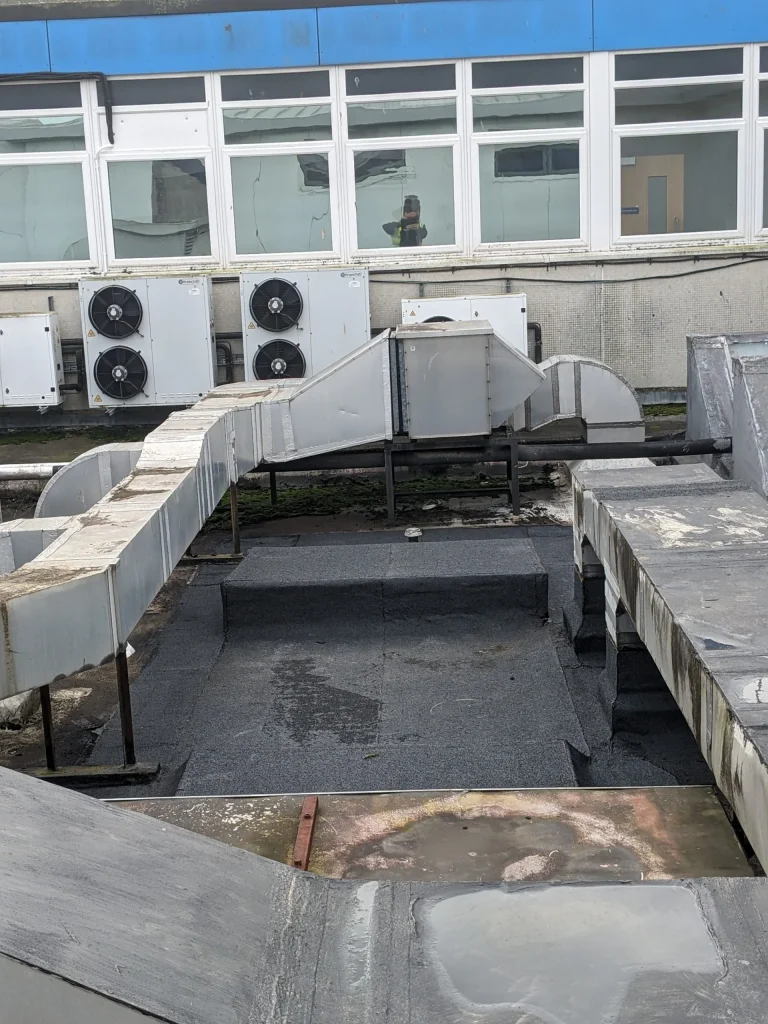
Flat roofs require strict respect for building physics. If an older felt surface splits at a seam, you cannot simply paint over it with bitumen primer. Moisture may already be trapped inside the underlying insulation and decking. When the sun heats the surface, that trapped moisture vaporises, expands forcefully, and can blow a new patch straight off the deck.
For a reliable low-slope felt repair, I cut away the perished membrane to expose the structural decking. Once I have verified that the timber is dry and free from wet rot, I apply a targeted SBS-modified bitumen patch. Using a torch-on method, I ensure the new material achieves a complete monolithic bleed with the existing felt, melting the two layers together into a single seamless waterproof barrier.
Instant Online Pricing and Technical Diagnostics
You deserve total transparency when investing in your home’s structural integrity. You should not have to wait weeks for a contractor to produce an arbitrary price. That is why I have built a precise online calculator directly into my website. In just 30 seconds, you can input your property’s specifications and receive an instant, no-commitment cost estimate for almost any roofing service.
If you are dealing with active water ingress and need a permanent mechanical fix, calculate your costs online and book a priority diagnostic visit. I will identify the root cause and carry out a repair designed to withstand the harshest Sussex weather.