Local Roofing Services in Sussex: Why the Diagnosis Matters More Than the Repair
When a property owner searches for local roofing services, they usually want one clear thing: someone nearby who can understand the roof, identify the real cause of the problem, and fix it properly without wasting time. In Brighton, Hove, Worthing, and across the surrounding Sussex coast, that local knowledge matters because roofs here often fail in patterns that are not obvious from the ground.
I do not treat local roofing work as a simple list of isolated repairs. A slipped tile, a damp bedroom wall, a bubbling low-slope membrane problem, or overflowing rainwater system can all look like separate issues, but they often come from the same underlying cause: poor water management, failed detailing, thermal movement, or moisture getting behind the building envelope. My job is to identify that root cause before recommending any work.
Why Local Roof Knowledge Is Different in Sussex
Roofs in coastal Sussex have to deal with salt-laden air, strong south-westerly winds, driving rain, and older building stock. Many Victorian and Edwardian terraced houses around Brighton and Hove were built with roof structures that naturally move over time. That movement affects slates, ridge lines, chimney flashings, parapet walls, and timber rooflines.
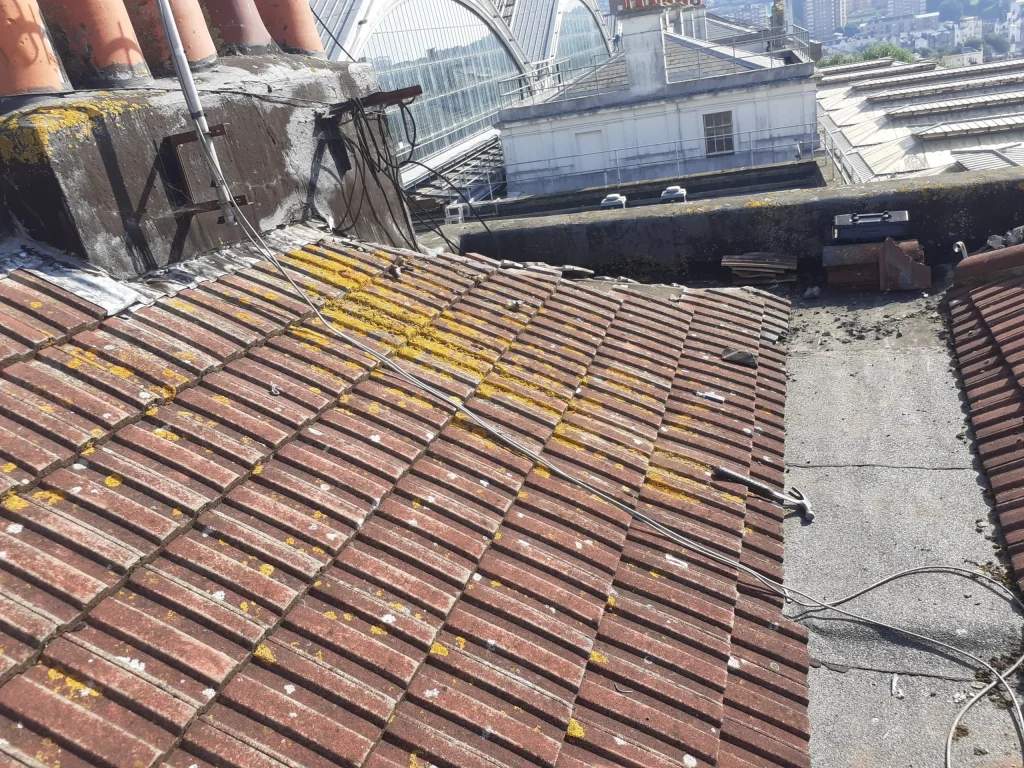
That is why I look closely at junctions, flashings, and water paths rather than assuming the nearest visible defect is the whole problem. Where a leak appears close to a wall, chimney, or raised edge, a careful flashing detail diagnosis can be more useful than a quick surface patch.
A general contractor may see a leak and seal the nearest crack. I look at how water is travelling. Moisture can enter through cracked mortar joints, porous brickwork, failed leadwork, loose ridge bedding, blocked outlets, or capillary action at a badly finished upstand. This is why local roofing services should always include proper inspection, not just surface-level repair. For persistent leaks, a focused water ingress troubleshooting visit helps separate symptoms from the true source of the problem.
What I Check During a Local Roof Inspection
When I inspect a roof, I work through the roof system as a whole. I want to know whether the problem is active water ingress, trapped condensation, structural movement, poor ventilation, or drainage failure.
- Roof coverings: I check tiles, slates, felt laps, ridge details, valleys, verges, and signs of wind uplift.
- Leadwork and abutments: I inspect chimney flashings, wall junctions, soakers, stepped lead, and pointing.
- Flat roof membranes: I look for splits, blistering, shrinkage, failed edge trims, ponding water, and weak upstands.
- Drainage paths: I check whether gutters, outlets, and downpipes are moving water away from the building fast enough.
- Roofline timbers: I look for rot behind fascias, soft soffits, failed ventilation, and moisture staining.
- Internal symptoms: I compare ceiling stains, mould patterns, loft ventilation, insulation gaps, and damp patches.
This type of inspection prevents unnecessary work. A ceiling stain below a flat roof does not automatically mean the whole roof covering has failed. In some Sussex homes, the real issue is condensation caused by cold bridging or blocked airflow. In others, the water may be bypassing the roof through a parapet wall rather than entering through the membrane itself.
Flat Roof Services Need Proper Detailing
Flat roofs are one of the areas where local roofing services must be technically accurate. A flat roof does not fail only because the felt is old. It fails because water stands too long, the deck moves, the membrane shrinks, the edge trim lifts, or the upstand detailing lets wind-driven rain underneath.
For modern flat roofs, I normally work with SBS-modified torch-on felt systems because they remain flexible under thermal movement. That flexibility is important on the Sussex coast, where a roof can expand under summer heat and then face cold rain and wind in the same season. If your property has a flat roof that is blistering, lifting at the edges, or holding water, my Brighton and Hove low-slope covering service explains the type of system I use and how pricing is calculated.
Why Party Walls, Parapets, and Chimneys Cause Hidden Leaks
One of the most common problems I see in local roofing work is water entering through vertical masonry rather than through the main roof covering. This is especially common on terraced houses with shared party walls, parapets, old render, or exposed brickwork.
Rain does not always fall straight down. In Brighton and Hove, wind can drive water sideways into small cracks, open mortar joints, or failed coping stones. Once moisture enters the masonry, it can track down behind the roof covering and appear inside the property as if the flat roof or pitched roof has failed.
Where the issue is chronic dampness along a party wall or parapet, a normal patch repair is usually not enough. In those cases, I may recommend parapet and firewall waterproof capping to stop water bypassing the roof surface and entering through porous masonry.
Local Roofing Services Should Be Practical, Not Guesswork
A good local roofer should be able to explain exactly what has failed, why it failed, and what repair will stop it happening again. I avoid vague explanations like “the roof is old” because age alone is not a diagnosis. Some older slate roofs can be maintained for years if the timber structure is sound and the weak details are repaired correctly. Some newer flat roofs fail early because the wrong materials or poor junction details were used.
The practical question is always the same: where is water entering, how is it moving, and what detail must be corrected to stop it permanently?
Local Service Also Means Faster, Clearer Pricing
Because I work locally across Sussex, I understand the typical access issues, roof types, waste disposal requirements, and weather exposure affecting properties in Brighton, Hove, and Worthing. That helps me give clearer guidance before any work starts.
I also believe homeowners should not have to wait days just to understand whether a repair is affordable. For most roofing services on my website, I provide an online calculator where you can estimate the price yourself in around 30 seconds. After that, I can inspect the roof, confirm the exact cause, and provide a fixed quote based on the real condition of the property.
Choosing Local Roofing Services That Solve the Real Problem
The best local roofing service is not the one that simply reacts to the visible damage. It is the one that understands the building, the weather exposure, the materials, and the way water behaves on Sussex roofs. Whether the issue is a flat roof, pitched roof, parapet wall, drainage failure, or hidden damp, I focus on accurate diagnosis first and repair second.
If you are unsure what your roof needs, start by using the relevant online calculator on my website. It will give you a quick price indication, and then I can inspect the roof properly to confirm the most sensible repair or replacement option.