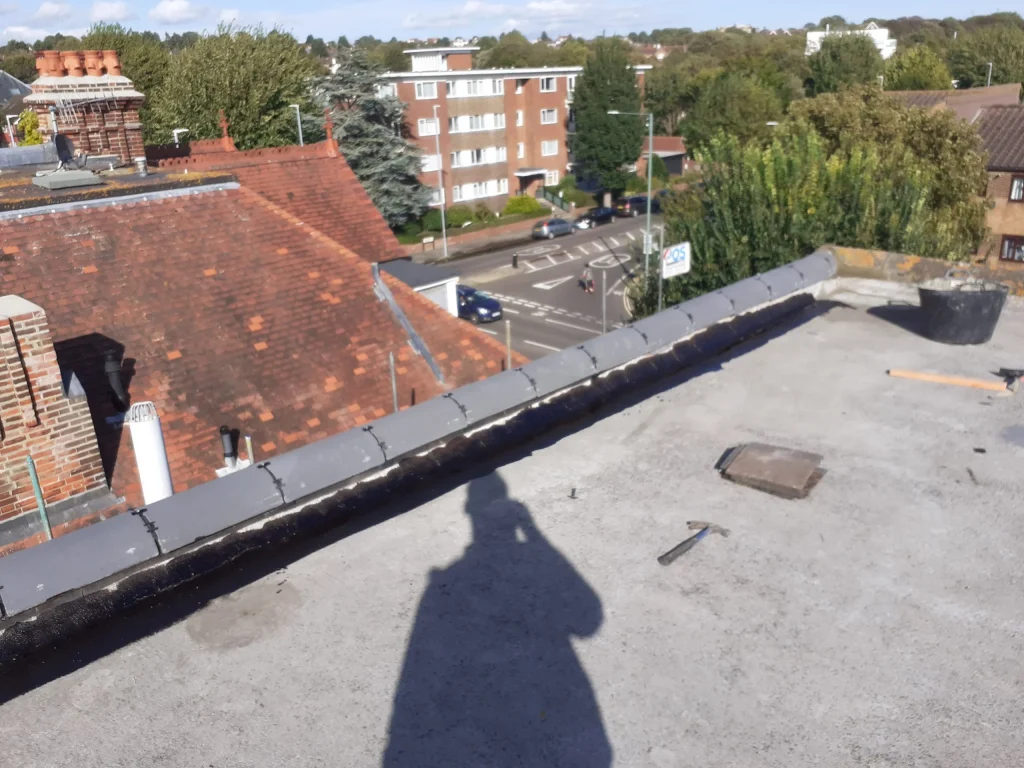
Why a Roof Leak Should Never Be Treated as a Surface Problem
When homeowners search for a roofer to fix leak in Brighton, Hove, or Worthing, the immediate assumption is often simple: there must be a broken tile or a small gap somewhere letting water through. In reality, after 18 years working on roofs—12 of them specifically across Sussex—I can tell you that roof leaks are rarely straightforward. What looks like a minor drip inside your property is often the visible symptom of a much larger moisture pathway hidden within the roof structure.
The most important part of my job is not simply replacing a damaged material. It is identifying why the waterproofing system failed in the first place. Without proper diagnosis, leaks often return months later, usually worse than before.
The Three Most Common Leak Mechanisms I Find in Sussex Homes
Properties in Sussex experience specific environmental stresses that create predictable leak patterns. Coastal wind exposure, salt-laden air, and older building stock all affect how roofs deteriorate.
1. Wind-Driven Rain Entering Through Micro Gaps
Many homeowners imagine rain falls vertically. Along the Sussex coastline, it rarely does. Strong lateral winds force water beneath tiles, ridge systems, and flashing junctions. Even a tiny opening around a chimney stack or roof valley can allow driven rain to penetrate beneath the external covering.
This becomes particularly common on Victorian and Edwardian terraced homes, where aged mortar bedding begins separating from lead flashings. The leak may appear in an upstairs bedroom ceiling while the actual failure sits several metres higher up the roof slope.
2. Failed Junctions Around Roof Penetrations
Roofs rarely fail in the middle of a roof slope. Water almost always enters where materials meet.
- Chimney stacks
- Roof valleys
- Dormer cheeks
- Rainwater downpipe systems and plumbing outlets
- Bay window roof junctions
Lead flashing fatigue caused by thermal movement is especially common. During summer, roofing materials expand significantly. During winter, they contract. Over years, rigid mortar joints crack, allowing moisture to penetrate hidden structural voids.
If your leak appears close to a bay window or lower front roof projection, I often recommend inspecting the flashing and deck structure around these areas. Problems here frequently require specialist intervention on waterproofing for bay window extensions, particularly on period properties where movement and settlement have distorted the original structure.
3. Blocked Drainage Creating Reverse Water Flow
One of the least understood causes of roof leaks is poor water management. Gutters and outlets blocked with moss or debris create standing water. Once drainage slows down, water begins moving sideways through capillary action and can even travel underneath roofing layers.
I regularly see flat roofs that technically still have intact felt coverings but fail because trapped water repeatedly floods vulnerable edges and seams. In many cases, the root cause turns out to be failing drainage rather than the roof membrane itself.
Why Emergency Patching Often Fails
A lot of contractors rely on temporary patching compounds, liquid sealants, or quick silicone fixes. While these may temporarily reduce visible water ingress, they rarely solve the underlying structural problem. If the issue stems from debris build-up, clearing blocked rainwater channels is often a more effective first step than applying sealants.
Silicone and liquid coatings degrade under UV exposure and struggle with thermal expansion. Once temperatures fluctuate, microscopic fractures form. Wind-driven moisture then penetrates behind the repair and often spreads unnoticed into timber rafters and insulation.
When I repair a leak, I focus on restoring the roof’s waterproof mechanics rather than hiding symptoms. Depending on the structure, this may involve:
- Replacing compromised lead flashings
- Installing new SBS-modified torch-on felt systems
- Replacing saturated timber decking
- Correcting drainage falls
- Improving ventilation to eliminate condensation misdiagnosed as leaks
Condensation or Leak? Many Homeowners Get This Wrong
One of the biggest misconceptions I encounter is mistaking condensation for a roof failure. During colder months, poorly ventilated lofts produce heavy moisture build-up. This moisture condenses underneath breathable membranes and eventually drips onto ceilings.
The symptoms often look identical to an active leak:
- Brown ceiling staining
- Damp insulation
- Mould growth around corners
- Cold damp patches after storms
Before recommending repairs, I always investigate whether the issue is actual water ingress or a ventilation imbalance. Replacing a perfectly functional roof when the real problem is trapped moisture wastes thousands of pounds unnecessarily.
What Happens If You Delay Fixing a Roof Leak?
Delaying repairs rarely saves money. Water infiltration compounds quickly because roofs are layered systems.
Once moisture enters, it can:
- Saturate insulation and reduce thermal performance
- Cause timber rot inside rafters and battens
- Corrode fixings and leadwork
- Damage internal plaster and electrics
- Create mould growth within concealed cavities
If you are dealing with sudden water ingress after heavy rainfall or storm damage, I strongly recommend arranging a priority water-ingress diagnosis before hidden structural damage spreads.
How I Diagnose a Roof Leak Properly
I do not guess. Proper leak detection follows a structured process:
- External visual survey of roof coverings and junctions
- Assessment of drainage systems and overflow points
- Thermal movement analysis around flashings
- Inspection of loft spaces for hidden moisture tracking
- Checking whether symptoms indicate condensation instead of ingress
In many cases, the visible ceiling stain is simply the final exit point for water that travelled invisibly through the roof structure for weeks or even months.
Final Thoughts
If you are searching for a roofer to fix leak in Sussex, focus on diagnosis rather than quick patch repairs. A proper solution means identifying the real entry point, understanding how moisture moves through the building envelope, and fixing the structural cause—not just the symptom.
For most roofing services, I also provide a transparent online price calculator on my website, allowing homeowners to estimate costs themselves in around 30 seconds before booking a survey. If the leak is active or worsening, it is always better to investigate early before hidden timber damage turns a minor repair into a major rebuild.