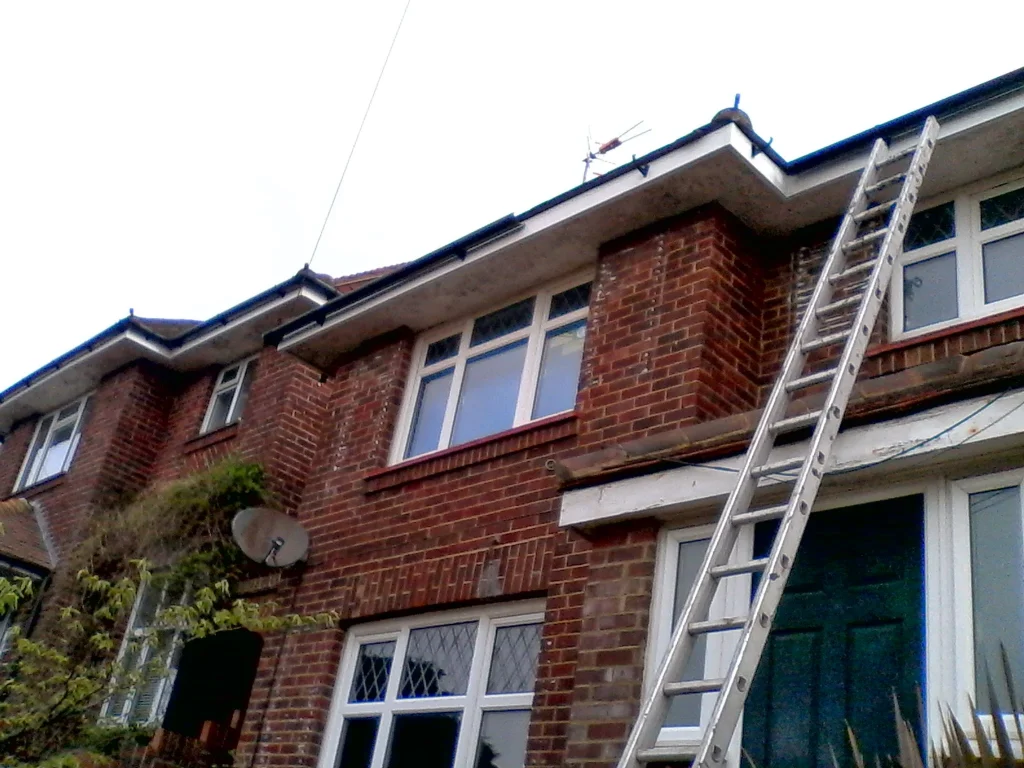
The Unsung Hero of Your Roofline: Understanding the Fascia Board
As a roofer with over 18 years of experience, I’ve seen firsthand how small, often-overlooked details can have a huge impact on a property’s health. The fascia board is a perfect example. It’s that long, straight board running along the lower edge of your roof, and it does much more than just provide a tidy finish. It supports the bottom row of tiles and, crucially, carries all the guttering. In a coastal climate like ours in Brighton and Hove, a failing fascia is an open invitation for water damage.
Key Signs Your Fascia Boards Need Replacing
Regularly inspecting your roofline can save you significant expense down the line. It’s something I always do during a site visit. You don’t need to be an expert to spot the common warning signs. Look out for:
- Flaking and Peeling Paint: This is often the first sign that the protective layer has failed and the timber beneath is exposed to moisture.
- Soft or Rotting Wood: If you can press a screwdriver into the wood with little resistance, rot has already set in. This compromises the board’s structural integrity.
- Evidence of Pests or Nests: Rotting wood is an attractive home for insects and birds, which can cause further damage.
- Leaking or Sagging Guttering: Since your gutters are fixed to the fascia, if they start to pull away or sag, it’s a strong indication that the fascia board itself is weak and can no longer support the weight.
Timber vs. uPVC: My Professional Recommendation for Sussex Homes
Traditionally, fascia boards were made from timber. While wood has its aesthetic appeal, it requires constant and diligent maintenance—sanding, priming, and painting every few years—to protect it from our damp, salty air. Once moisture gets in, rot is inevitable.
For this reason, I almost exclusively recommend and install modern uPVC fascia boards. The benefits are undeniable for property owners in Sussex:
- Maintenance-Free: uPVC requires no painting and will not rot, warp, or discolour. A simple wipe-down is all that’s needed to keep it looking new.
- Durability: It is completely weatherproof and built to withstand the harshest coastal conditions without deteriorating.
- Aesthetics: Available in a range of colours and finishes, it provides a clean, sharp look that enhances your property’s exterior.
A Complete Roofline System
It’s important to remember that the fascia board is part of an interconnected system. It works alongside the soffit (the board you see from below) and the bargeboard. More importantly, it provides the secure foundation for your guttering. A new uPVC fascia installation is the perfect opportunity to ensure your drainage is effective by undertaking a professional guttering and downpipe installation at the same time, creating a fully sealed and maintenance-free roofline.
My Approach to Fascia Board Installation
When I replace fascia boards, I do it correctly. This involves completely removing the old timber boards, inspecting the rafter ends for any rot (and repairing them if necessary), and then fitting new, high-quality uPVC boards. This ensures your home is protected for decades to come.
I carry out this type of repair and installation myself, and I believe in complete price transparency. That’s why I have created an online calculator for my fascia replacement service. You can get an instant, no-obligation estimate in under a minute, right on my website, before you even decide to call.