Why Roofing Quotes Vary So Much for the Same Roof
When you ask for roofing quotes in Brighton, Hove or Worthing, you can easily receive three very different prices for what appears to be the same job. The materials may even look identical on paper: SBS-modified bitumen felt, breathable membrane, treated battens, code lead flashing, uPVC trims or matching slate. In practice, the difference is rarely just the material. It is usually the labour structure, risk allowance, access, experience level, and whether the person quoting the job is also the person who will actually carry out the work.
I price roof work differently because I deal with the process directly from inspection to completion. I am not pricing a chain of subcontractors, salespeople and office margins. That matters because a roof is not a standard product sitting on a shelf. It is a weather-exposed system, and the final cost depends on how accurately the roofer understands the structure before work starts. For homeowners who want early clarity, my online estimate and free survey process explains how I move from a preliminary price to a proper site-based quotation.
It also helps to understand what a written quotation should and should not include. My guide to spotting hidden gaps in a free roof estimate shows why two prices can look similar at first but cover very different levels of work.
What Is Really Inside a Roofing Quote?
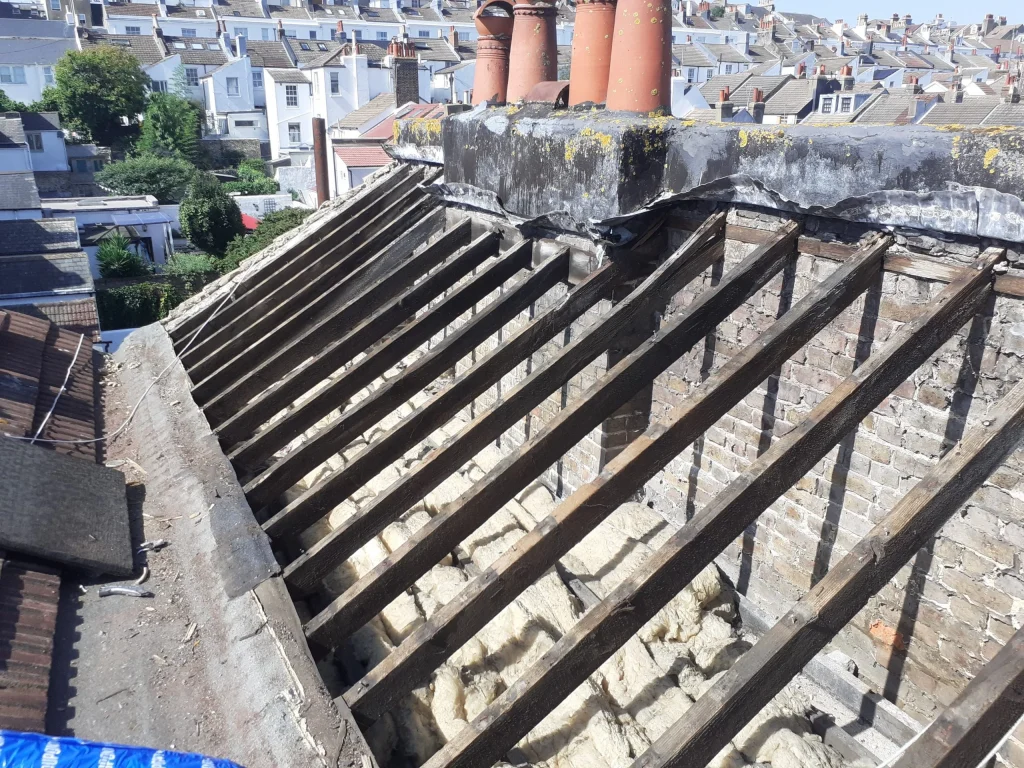
A proper roofing quote should not be a vague number written after a quick look from the pavement. It should reflect the actual roof build-up, likely failure points and working conditions. On Sussex properties, especially older terraced houses, I usually need to consider wind exposure, salt corrosion, tired mortar, uneven rafters, awkward access, shared party walls and previous water-ingress patchwork hidden beneath felt, tiles or flashing details.
Materials Are Only One Part of the Price
Two roofers may both quote for torch-on felt, but that does not mean the specification is the same. A proper low-slope waterproofing system may include a mechanically fixed base layer, vapour control layer, insulation if required, high-performance SBS cap sheet, welted edges, drip trims and correct upstands. A cheaper quote may only cover a basic overlay, which can trap moisture underneath and fail early through blistering, splitting or poor adhesion.
For common failures on low-slope coverings, I usually compare whether the area needs a localised fix, a suitable overlay, or a full strip and renewal. My cost calculator for felt systems and build-up options explains how I calculate this type of work using the roof size, deck condition and required specification rather than guesswork.
Busy Firms Sometimes Price High Because They Do Not Need the Job
One reason roofing quotes vary is simple capacity. If a company is already fully booked, they may still quote, but they add a heavy margin because they are not under pressure to win the job. If the customer accepts, the work becomes worth disrupting their schedule. If not, they lose nothing.
This is not always dishonest, but it does explain why one quote can look completely disconnected from the real material and labour cost. You are not only paying for the work on the roof. You may also be paying for the inconvenience of fitting your property into an overloaded diary.
Subcontractor Chains Increase the Final Price
Another common reason is subcontracting. A company may sell the job, then pass it to another roofer, who may bring in another labourer or specialist. Each person in that chain needs to make a margin. By the time the work reaches the person on the roof, the homeowner may be paying several layers of overhead before any felt, tiles or lead are installed.
I work differently. I inspect the roof, prepare the quote and carry out the work myself with my team. That reduces the gap between the price you are given and the real cost of doing the job properly. It also means technical responsibility stays with one person, not a chain of people blaming each other if a detail fails.
Uncertainty Gets Added as a Risk Allowance
Experienced roofers price risk accurately. Less experienced teams often add a large safety margin because they are unsure how long the job will take. This is common on older Brighton and Hove roofs where the visible surface does not show the full problem.
For example, a small leak near a chimney might come from failed lead flashing, porous brickwork, defective soakers, cracked render, or water tracking sideways by capillary action under old mortar. If the roofer cannot diagnose the source properly, they may overprice the job to protect themselves from losing money.
Why Sussex Roofs Are Hard to Quote from Photos Alone
Roofing quotes in coastal Sussex need more care than a basic square-metre calculation. Salt air accelerates corrosion on fixings and metal trims. Strong south-westerly winds lift weak laps, rattle loose slates and drive rain under flashings. Victorian and Edwardian terraces often have tired timbers, shallow roof pitches, narrow valleys and shared parapet walls that hide damp until plaster starts staining indoors.
On tiled or slated coverings, especially on rows of older terraces, the cost can change depending on whether the issue is a slipped slate, failed underlay, rotten batten, sagging rafter, chimney flashing defect or party wall damp. If you own an older property, my older terrace roof assessment service covers the typical structural problems I check before pricing roof repairs or renewal.
What a Transparent Roofing Quote Should Include
A fair quote should show enough detail for you to compare like with like. It does not need to be a technical manual, but it should make clear what is being replaced, what is being repaired and what is excluded.
- Roof area and access: The measured working area, scaffold or access requirements, waste removal and any difficult elevations should be clear.
- System specification: For low-slope waterproofing, the quote should state whether it is an overlay or full strip, and what felt layers, insulation, trims and upstands are included.
- Hidden-risk allowance: If timber decking, rafters or battens may be rotten, the quote should explain how those extras are handled before work starts.
- Flashing and abutment details: Lead flashing, wall chases, soakers, cover flashings and termination bars are often where leaks return if priced too cheaply.
- Ventilation and condensation control: Not every damp patch is a leak. Poor ventilation and thermal bridging can cause moisture inside the roof build-up, especially over extensions and dormers.
- Waste and disposal: Old felt, battens, tiles and insulation need proper removal. Cheap quotes sometimes hide this cost until the end.
Why the Cheapest Quote Can Become Expensive
The lowest number is not always the lowest final cost. If a quote misses rotten decking, weak upstands, poor falls, blocked outlets or defective leadwork, the roof may still leak after the work is done. Then the customer pays twice: once for the cheap patch, and again for the proper correction.
I often see felted roof areas where a thin overlay has been torched onto a damp or unstable deck. The surface looks tidy for a short time, but trapped moisture expands when heated by the sun. That causes blistering, splitting and loss of adhesion. On tiled and slated roofs, I see individual tiles replaced without checking the underlay, battens or nail fatigue, so wind-driven rain still gets through during coastal storms.
How I Price Roofing Work on My Website
My pricing is built around direct calculation, not guessing. The online calculators use the main cost drivers: roof size, roof type, material system, access, stripping requirements and known technical details. That gives a realistic estimate before I visit, so the customer can see the likely price range without waiting days for a vague callback.
After that, I carry out a site survey and confirm the final fixed quote. In most cases, the final number should stay close to the online estimate because the calculator is based on the same method I use when pricing the work manually. The only major changes usually come from hidden structural defects, such as rotten decking, decayed rafters, failed parapet brickwork or unsafe access that was not visible at the estimate stage.
The Right Way to Compare Roofing Quotes
When comparing roofing quotes, do not only ask which one is cheapest. Ask whether the quote is technically complete. A lower price may be fair if the job is simpler, the roofer works directly, and there are fewer overheads. A higher price may also be justified if it includes scaffold, full stripping, insulation upgrades, leadwork, timber repairs and a proper system warranty.
The problem is when the quote is high but technically vague. That usually means you are paying for uncertainty, subcontractor margins or a company that is too busy to want the job unless the profit is unusually high.
Technical Takeaway
Roofing quotes vary because roofs are not identical products. The real price depends on diagnosis, access, labour structure, risk, material build-up and whether the person pricing the work fully understands the failure. In Sussex, coastal weather and older property construction make accurate quoting even more important.
If you understand the technical side, it becomes much easier to spot whether a quote is fair or inflated. You can use my free online roofing calculators to get an instant estimate in about 30 seconds, based on the actual roof type and work required rather than a hidden sales margin.