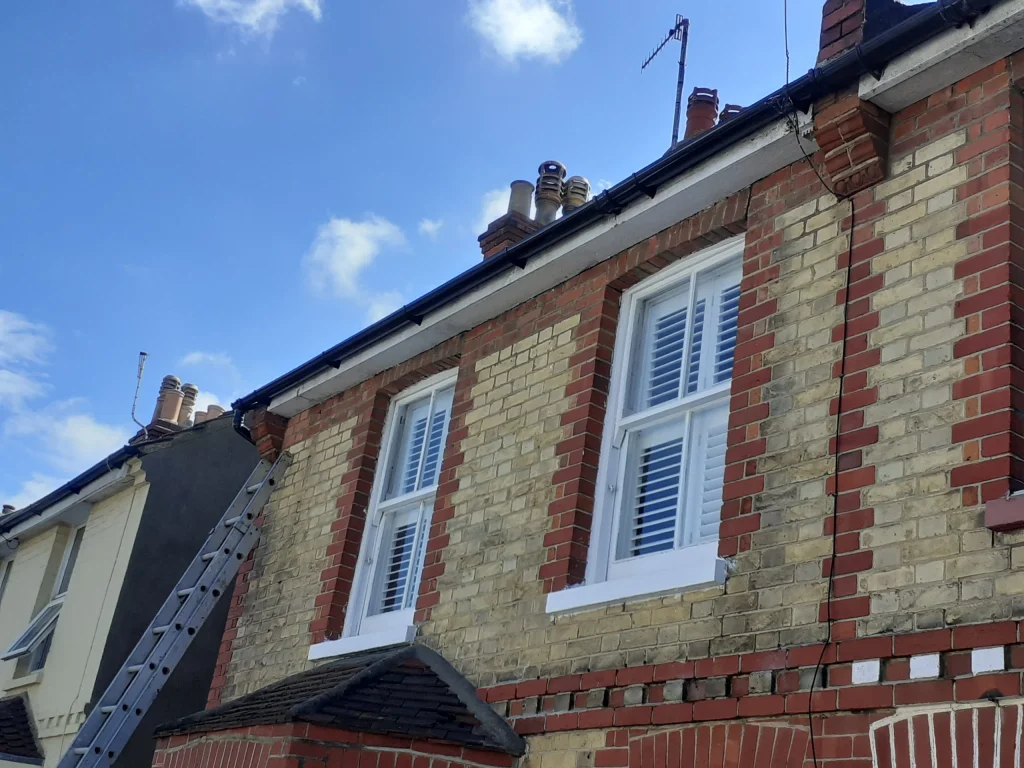
I regularly carry out guttering fascia maintenance and installations across the Sussex coast, including Hove and Worthing, because these two components of the roofline almost always fail together. Many homeowners focus only on leaking channels, but in reality, the fascia board behind the drainage is often where the actual problem starts.
When I inspect rooflines, I frequently find brackets pulling away not because the fixings failed, but because years of trapped moisture have weakened the timber underneath. This is especially common on older properties where wooden boards have been exposed to decades of rain, coastal wind, and inconsistent upkeep.
What Is Guttering Fascia?
The term guttering fascia usually refers to the fascia board and the drainage system working together as one cohesive structure. When installing a new rainwater system, it is vital to ensure both parts are in good condition to prevent future damp issues.
The fascia board sits directly under the roof edge and provides the fixing point for rainwater downpipes and bracketry. The channel itself then collects water and safely directs it away from the external walls.
Without a strong fascia board, even high-quality components will eventually start sagging, leaking, or pulling away from the eaves.
Guttering Fascia Maintenance I Commonly Carry Out
Not every roofline problem needs a full replacement. In many situations, proactive maintenance can significantly extend the lifespan of both the timber and the drainage components.
Typical maintenance work I regularly carry out includes:
- Cleaning blocked channels and downpipes
- Refixing loose support brackets
- Replacing leaking joints and seals
- Correcting poor drainage falls
- Repairing isolated fascia deterioration
- Removing moss build-up causing overflow
- Checking for hidden moisture ingress behind the boards
One thing I often explain to homeowners is that overflowing water is not always caused by blockages. In some cases, water is actually running behind the boards because brackets have loosened or the timber itself has started deteriorating.
If drainage problems keep returning, I often recommend reviewing the complete drainage setup to make sure rainwater is being removed correctly from the property.
When Fascia and Guttering Installation Makes More Sense
Sometimes maintenance simply becomes uneconomical. If I see multiple leaking sections, soft timber, or repeated overflow, a full upgrade is often the better long-term option.
I usually recommend new fascia and drainage installation when:
- Timber fascia boards feel soft or rotten
- Channels repeatedly leak despite repairs
- Brackets no longer hold securely in the wood
- Paint keeps peeling near the roof edge
- Water is causing staining on external walls
- Older systems no longer cope with heavy rainfall
Modern uPVC systems generally require far less maintenance than older timber boards and are much better suited to the local weather conditions. Salt-heavy coastal air and strong winds can gradually shorten the life of poorly maintained wooden rooflines.
Why Proper Installation Matters
I often repair systems that technically look new but were poorly installed from the start. Common mistakes I see include incorrect falls causing standing water, brackets fixed into weak timber, or improper sealing around joints.
Even small errors can eventually cause moisture ingress, damp walls, or structural deterioration. Where I suspect hidden damage or internal damp linked to drainage problems, I usually recommend a professional diagnostic site visit so I can properly identify the root cause before unnecessary work is carried out.
My Approach to Guttering Fascia Work
I always try to repair first where it makes financial sense. Sometimes a few bracket adjustments, a thorough clean, or replacing isolated sections solves the issue completely.
But when a roofline has reached the point where maintenance becomes a cycle of repeat repairs, I will usually recommend replacement because it often works out cheaper long term.
Many homeowners also use my online calculator to estimate installation costs in around 30 seconds before arranging a visit, which makes budgeting far easier.