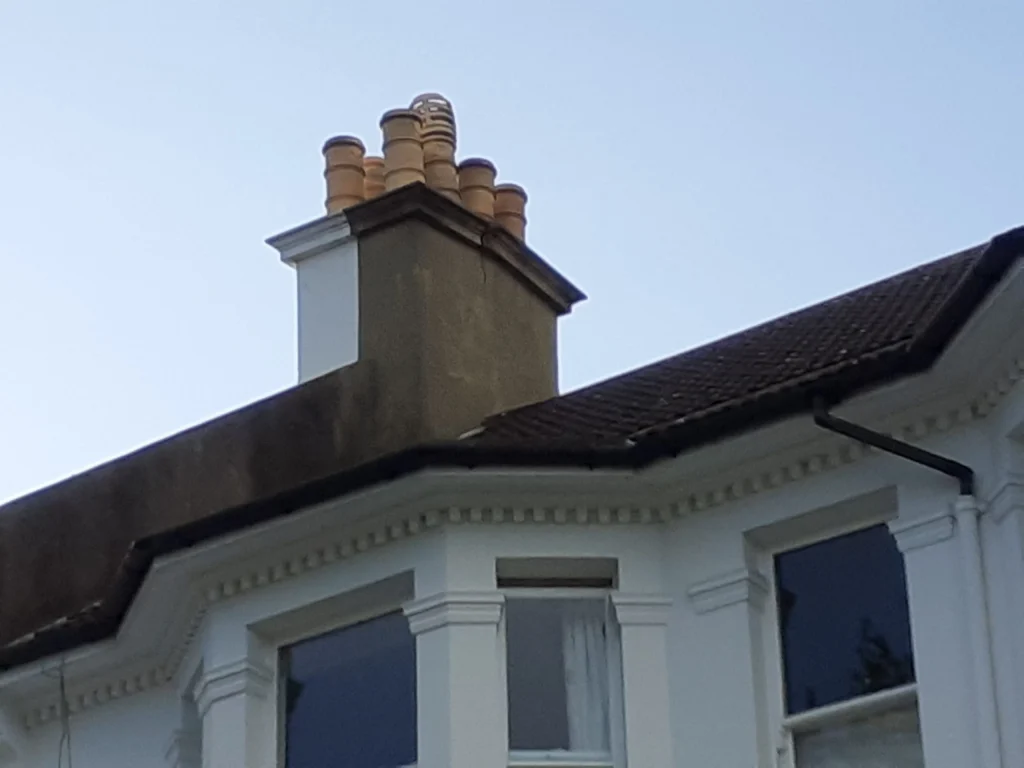
Architectural Guttering Challenges on Brighton’s Period Homes
Walking down any terraced street in Hove or Brighton, you will see a fascinating mix of architectural details—and an equally complex array of drainage setups. From ornate cast iron on Victorian fronts to poorly retrofitted plastic running along shared boundaries, our local roofline systems are rarely straightforward. In my 18 years of working on Sussex properties, I have found that standard off-the-shelf components often fail here because they do not account for the architectural realities of our historical housing stock.
Unlike modern estates with uniform rooflines, our local properties feature decorative corbels, projecting masonry, and shared boundaries that require tailored water management paths. When these systems are ignored or badly installed, rainwater does not just spill over; it actively attacks the soft lime mortar and old brickwork of these classic buildings.
Cast Iron vs. uPVC: Making the Right Local Choice
Many property owners assume that replacing old, heavy cast iron with lightweight plastic is always the sensible choice. While modern uPVC is highly cost-effective and low-maintenance, it behaves very differently under coastal conditions. In highly exposed areas of the city where coastal rainwater management is a priority, strong sea winds can cause long runs of lightweight plastic to flex and rattle, eventually weakening the bracket mountings.
Furthermore, cast iron expands and contracts far less than plastic. When uPVC is installed on a long, unbroken run of terraced houses, the thermal movement can pull joints apart if the installer has not allowed sufficient room for expansion within the fittings. For listed buildings or properties in strict conservation areas, I often install modern cast aluminium systems. It provides the traditional aesthetic and rigidity of cast iron but is entirely rust-resistant, protecting the structure against coastal salt corrosion.
The Problem with Shared Valley and Boundary Gutters
In many of the Victorian and Edwardian terraces across Sussex, drainage is a shared responsibility. Properties are frequently joined by central valley channels or rear parapet gullies. When water pools in these shared areas, finding the source of a damp problem requires looking at the horizontal roofing systems as a complete unit rather than an isolated property.
If you share a boundary wall, a blocked or sagging section of pipework on your neighbour’s side can easily cause dampness to travel through the shared brickwork into your own ceilings or plaster. When I assess these complex setups during maintenance of sloping structures on local period homes, my first step is always to trace how water moves across the entire boundary to ensure a repair actually solves the issue permanently.
Overlooked Fixings: The Brickwork Factor
One of the most common reasons I see channels sagging or pulling away from the wall is a failure of the fixings rather than the material itself. Brighton’s historical yellow and red brickwork is relatively soft and porous. Over decades, moisture from small leaks can soften the brick and wash out the mortar joints behind the brackets.
Standard plastic rawlplugs screwed directly into this aged masonry will eventually lose their grip under the weight of a heavy winter downpour. To prevent this, brackets must be anchored securely using specialized heavy-duty fixings, or anchored directly into solid structural timbers where possible, ensuring the entire system can support the weight of wet snow and heavy rainfall without bowing.
Designing Drainage for Heavy Coastal Downpours
With our coastal weather bringing intense, concentrated storms off the Channel, standard sizing is frequently overwhelmed. Simply replacing like-for-like is often a missed opportunity to future-proof your home. When undertaking upgrading your home’s external pipework, it is critical to evaluate the catchment area of the roof and calculate whether additional downpipes or high-capacity running outlets are required to move water away from the property as fast as possible.
If you are planning to update your home’s exterior drainage and want to estimate potential costs, I have built several transparent pricing tools across my website where you can estimate costs in about 30 seconds. For an honest, hands-on assessment of your property’s specific drainage needs, feel free to contact me directly.