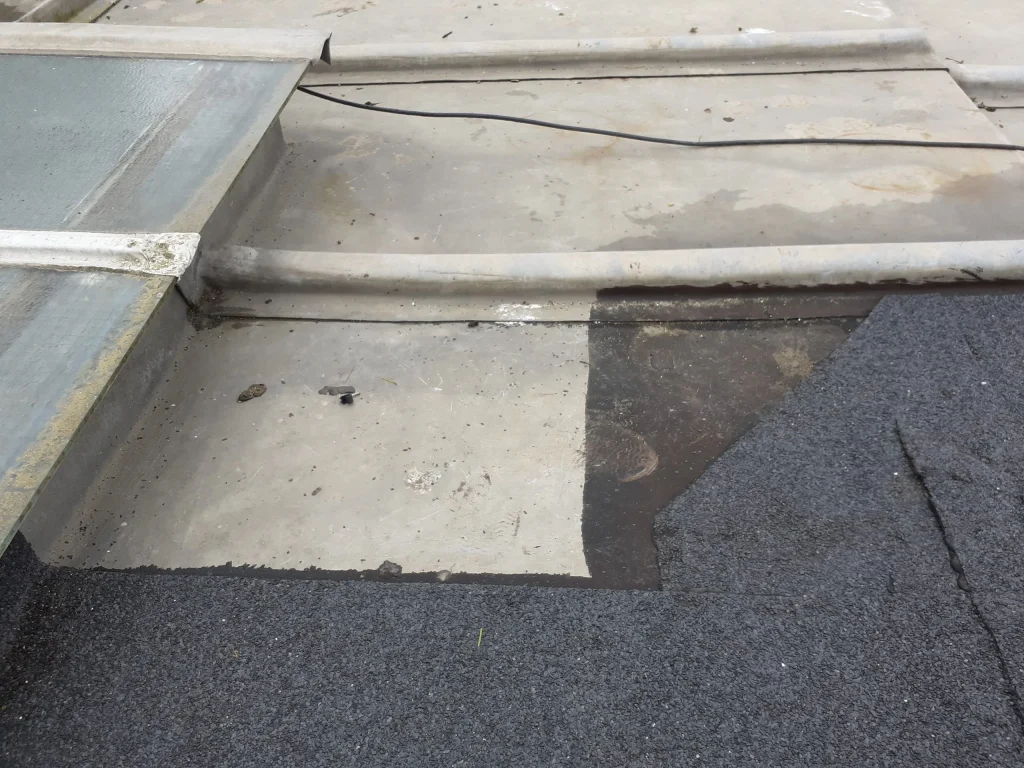
Why Ventilation is Critical for Sussex Homes
In my 18 years of roofing experience, I have seen countless horizontal roofing systems fail not because the membrane was breached, but because the internal airflow was neglected. In the Brighton and Hove area, our coastal humidity makes understanding the technical requirements for a sturdy timber sub-structure even more vital. Without proper airflow, warm, moist air from your home rises and hits the cold underside of the roof deck. This leads to interstitial condensation, which eventually rots the timber structure and creates damp patches on your ceilings.
The Distinction Between Cold and Warm Roofs
The ventilation strategy I implement depends entirely on the design of your property. In a traditional ‘cold roof’ setup, the insulation sits between the joists. To meet UK building regulations, I must ensure there is a minimum 50mm clear air gap above the insulation, with adequate vents at the eaves or through the roof surface to allow cross-ventilation. If you are considering a complete roofing overhaul in Brighton, I will always verify that these air paths are unobstructed.
Conversely, a ‘warm roof’ design typically removes the need for ventilation. In this configuration, I install rigid insulation boards on top of the structural deck, keeping the entire roof structure at a temperature similar to the interior of the house. This is a highly efficient solution that I frequently recommend when weatherproofing a home addition to ensure maximum energy efficiency and zero risk of condensation within the joist space.
Common Pitfalls in Flat Roof Ventilation
The most frequent error I encounter in Sussex properties is ‘over-insulating’ without adjusting the ventilation. Property owners often add extra mineral wool between joists, inadvertently blocking the 50mm gap required for airflow. This traps moisture, leading to ‘sweating’ that can be mistaken for a leak. My approach is to ensure that your roof ‘breathes’ correctly, protecting the structural integrity of your home for the long term.
Technical Compliance and My Process
Every project I undertake in Brighton, Worthing, or Hove is designed to meet or exceed BS 5250, which is the code of practice for the control of condensation in buildings. I don’t believe in cutting corners on technical details like ventilation, as it is the foundation of a durable roof. My process is built on transparency; I offer an online calculator on my website where you can generate an instant, no-commitment estimate for your roofing project in just 30 seconds. Following that, I provide a fixed-price quote after a personal site survey, and we manage all communication and progress photos through a dedicated client portal.