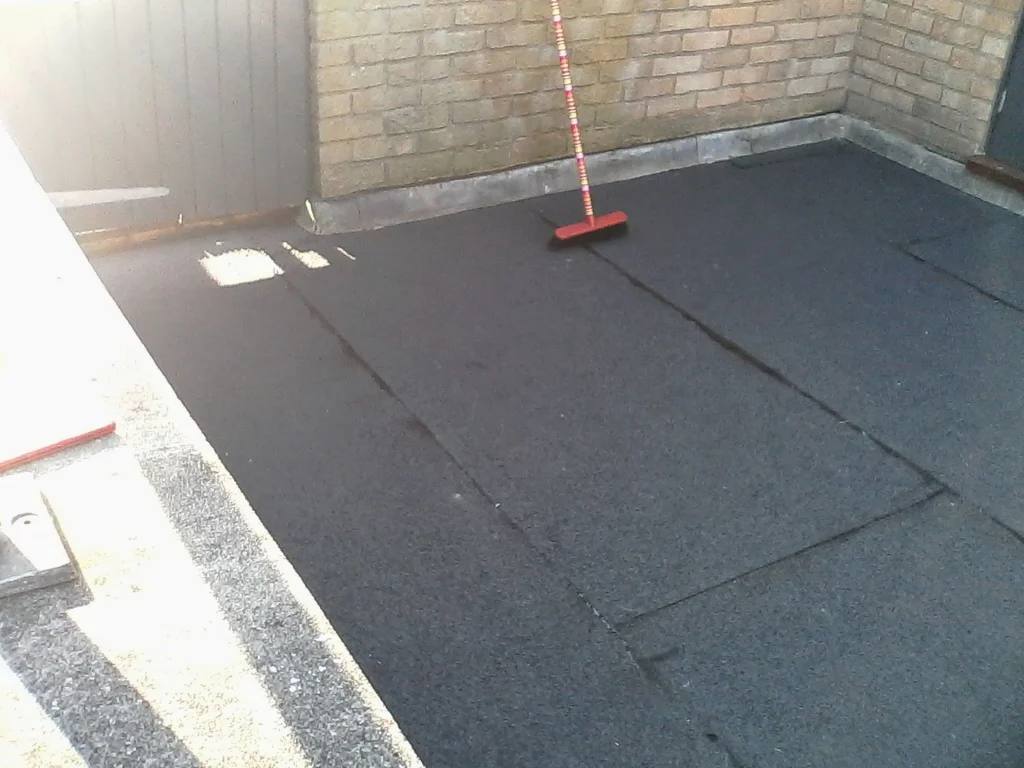
A good flat roof specialist should not only know how to lay felt neatly. The real skill is understanding why a low-slope roof covering has failed in the first place. When I inspect flat roofs across Brighton, Hove, Worthing and nearby Sussex areas, I am usually looking at the full roof system: the deck, drainage, insulation, flashings, wall junctions, ventilation and the way water actually travels through the hidden route behind the damp patch.
Modern SBS bitumen membrane work can look simple from the ground because it appears to be one continuous surface. In reality, most failures happen at the details people barely notice: corners, outlets, parapet walls, door thresholds, upstands, lead flashing and edges exposed to coastal wind. That is where experience matters.
What makes a flat roof specialist different from a general roofer
A general roofer may be very good with tiles, slates, ridges and pitched roof repairs, but flat roofing needs a different way of thinking. Water does not run away quickly like it does on a pitched roof. It sits longer, moves sideways, finds weak laps and can track behind details before appearing inside the building.
As a flat roof specialist, I pay close attention to:
- Falls: whether water is actually draining or sitting in low spots.
- Deck condition: whether the boards are firm, dry and suitable for a new membrane.
- Membrane choice: whether SBS torch-on felt, EPDM or a liquid system suits the roof.
- Edge detailing: whether trims, drips and upstands can resist wind-driven rain.
- Wall junctions: whether lead flashing, brickwork and mortar joints are sound.
- Condensation risk: whether damp is caused by rainwater or warm moist air inside the roof build-up.
Those checks decide whether a repair will last or whether the same leak will return after the next spell of heavy rain.
The first thing I want to know: leak, condensation or hidden masonry problem?
One of the most common mistakes with flat roofs is assuming every damp patch means the waterproofing membrane has failed. Sometimes that is true. Other times the problem is condensation, a cracked parapet wall, failed lead flashing, blocked drainage or water entering through porous brickwork above the roof.
Condensation often appears in cold weather and may create damp across a wider ceiling area. A genuine rainwater entry problem usually follows rainfall and often tracks from a specific weak point. Parapet wall moisture can be more deceptive because water soaks into the masonry, travels downward and shows inside the room as if the flat roof itself has failed.
This is why I prefer diagnosis before giving strong opinions. A flat roof can look tired but still be repairable. Another roof can look reasonably tidy on top while the deck underneath is soft and wet.
SBS torch-on felt and why preparation matters
SBS torch-on felt is one of the flat roofing systems I use regularly because it suits many domestic roofs in Sussex when installed properly. It has flexibility, good weather resistance and works well on garages, extensions, dormers, porches and bay roofs.
But the felt is only as good as the surface below it. If new felt is torched over damp boards, loose old material, cracked asphalt or a deck that moves underfoot, the finished roof may look acceptable for a short time but fail early. The preparation is not the glamorous part of the job, but it is usually the part that determines lifespan.
For a proper felt roof, I want the deck to be stable, dry and suitable for bonding. I also want the laps, edges, outlets and upstands formed correctly. A flat roof does not usually fail across the middle first. It fails where water is allowed to creep under the system.
Why ponding water should not be ignored
Small amounts of water after rain are normal on some flat roofs, but persistent ponding is different. If water sits for days, it usually means there is not enough fall, the deck has deflected, or the outlet is positioned too high.
Ponding water adds weight, keeps the membrane wet, encourages dirt build-up and increases stress during freeze-thaw weather. Over time, it can accelerate blistering, soften older bitumen and expose weaknesses around seams or outlet details.
A proper flat roof specialist should not simply cover over the problem. The cause of the ponding needs to be considered. Sometimes the answer is tapered insulation, sometimes local deck correction, and sometimes a better drainage arrangement.
Flat roofs on older Sussex properties
Brighton, Hove and Worthing have many Victorian and Edwardian properties with rear extensions, dormers, bay windows, parapet walls and altered rooflines. These roofs often have a mixture of old brickwork and newer flat roofing systems. That combination can be tricky.
Coastal wind can push rain into weak junctions. Salt air can speed up corrosion on fixings and metal trims. Old mortar joints can absorb moisture. Parapet walls can hold damp long after the rain has stopped. If the flat roof is replaced but the surrounding wall details are ignored, the property can still leak.
When I deal with these buildings, I look beyond the flat surface. I check how the roof connects to the old structure, whether the upstands are high enough, whether the lead flashing is properly chased into the wall, and whether the brickwork above the roof is contributing to the damp.
When a flat roof repair is enough
Not every flat roof needs replacing. A repair may be perfectly reasonable if the roof covering is still flexible, the deck is sound and the defect is isolated. Examples include a small puncture, a split near an outlet, a lifted edge trim or a short length of failed flashing.
For active water ingress where moisture is already entering the property, a careful inspection and temporary weatherproofing may be needed before a permanent repair is planned. In that situation, a priority diagnostic visit for active water ingress can help identify whether the fault is localised or part of a wider failure.
The important point is not to patch blindly. A patch over the visible split may stop water for a while, but if water is getting behind the roof from a wall junction or blocked outlet, the problem will usually return.
When replacement becomes the better option
Replacement becomes more sensible when the roof has widespread cracking, repeated patches, soft decking, long-term ponding, open laps, failed insulation or several moisture entry points. At that stage, small repairs can become false economy because each new patch is only dealing with one symptom.
A full replacement gives the chance to correct the roof properly. That may include renewing the deck, improving falls, upgrading insulation, replacing trims, reworking the outlet and improving the wall junctions. On heated rooms, it may also be the right time to consider a warm roof system to reduce condensation risk.
For homeowners comparing proper replacement options, my page on SBS membrane build-ups and replacement specifications for Sussex homes gives a more detailed starting point for domestic flat roofing work.
Warning signs I would not ignore
Some flat roof problems can wait for a planned repair. Others should be checked sooner because they suggest moisture is already affecting the structure below.
- Damp patches that grow after every rainfall.
- Water sitting on the roof several days after rain.
- Soft or springy areas underfoot.
- Blisters, splits or open felt laps.
- Repeated patch repairs in different areas.
- Cracked lead flashing where the roof meets a wall.
- Rotting fascia boards near the roof edge.
- Mould or damp that appears mainly during cold weather.
The last point is important because mould and damp in cold weather can suggest condensation rather than a straightforward rainwater defect. Treating condensation as an external waterproofing failure can lead to unnecessary work if the roof build-up is not understood properly.
What I expect from a proper flat roof installation
A proper flat roof installation should be built as a complete waterproofing system. It should not rely on surface sealant, rushed edge trims or mastic around complicated details.
On a typical flat roof, I want to see a sound deck, correct preparation, suitable membrane, secure edges, properly formed outlets, well-dressed upstands and compatible flashing details. If insulation is needed, it should be considered before the roof is finished, not treated as an afterthought.
The roof should also be designed for the property. A small porch roof has different demands from a rear extension covering. A garage structure is different from a warm roof over a kitchen. A roof terrace or balcony needs a different waterproofing approach again because foot traffic changes everything.
Questions to ask before hiring a flat roof specialist
Before choosing someone for flat roofing work, I would ask practical questions. The answers usually show whether the person has properly assessed the roof or is only pricing the visible surface.
- Is the existing roof being stripped or overlaid?
- How will rotten or soft decking be handled?
- What membrane system is being recommended and why?
- How will water drain from the roof?
- Will the upstands and flashings be renewed or reused?
- Could condensation be part of the problem?
- Are parapet walls, outlets and edge trims included in the assessment?
A flat roof specialist should be able to explain these points clearly without making the job sound more complicated than it is. Homeowners do not need trade jargon. They need a clear explanation of what has failed and what will prevent it failing again.
My practical view
The best flat roofing work is usually quiet work. It does not depend on dramatic claims or unnecessary replacement. It depends on careful diagnosis, dry preparation, correct detailing and choosing a system that suits the roof.
If a flat roof is still structurally sound, a targeted repair may be enough. If the roof has reached the end of its life, replacement should deal with the reason it failed, not just cover it with a new surface. Around Sussex, that often means paying attention to wind exposure, drainage, old brickwork, parapet walls and condensation risk.
If you are comparing likely costs, an online calculator can give a rough idea in around 30 seconds. For the final decision, the roof itself needs to be assessed properly, especially around the outlets, edges, upstands and wall junctions.