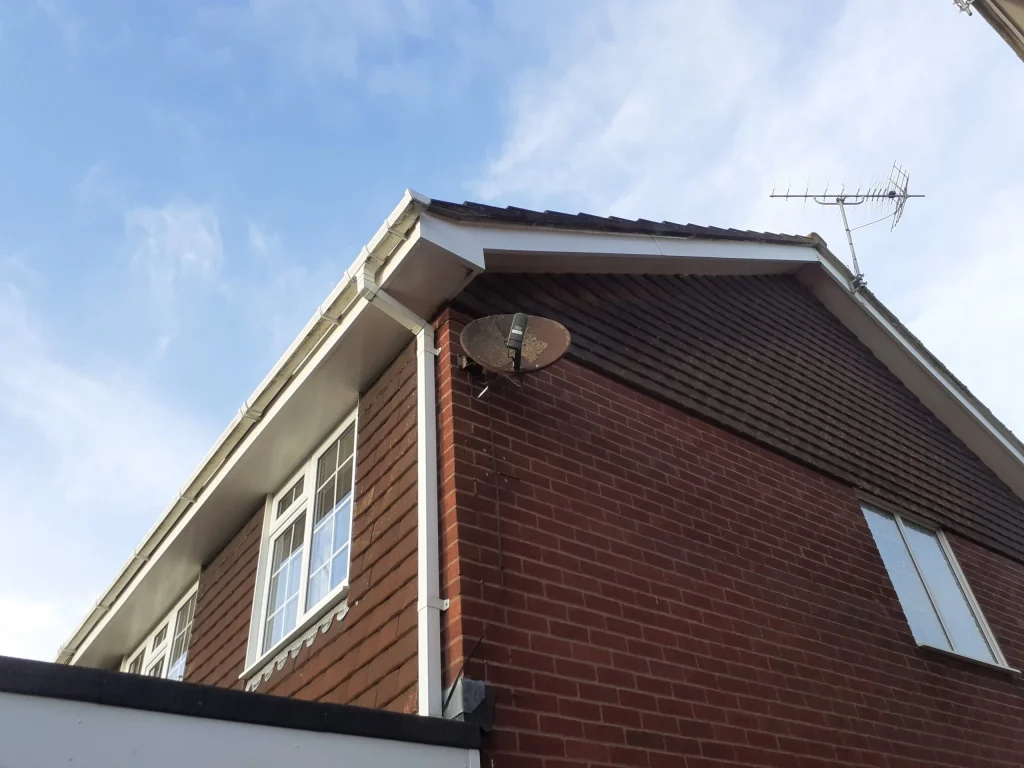
Beyond the Leaves: The Reality of Gutter Cleaning in Brighton
Whenever I’m up on a ladder in Kemptown or Hove after a heavy south-westerly gale, I see the same thing. Homeowners call me because their gutters are overflowing, thinking it’s just a few autumn leaves. In Brighton, it’s rarely that simple. After 18 years of clearing and repairing rooflines across Sussex, I’ve realized that our coastal environment creates a very specific type of drainage failure that a simple ‘scoop and clear’ job often misses.
The ‘Seagull Factor’ and Coastal Sludge
One of the first things I notice when I inspect a roof in the city is that our gutters don’t just collect leaves; they collect Brighton. Our local seagulls are notorious for dropping debris, nesting materials, and food waste into narrow Victorian gutters. When you mix that organic matter with the fine salt spray from the Channel, it creates a heavy, acidic sludge. This isn’t just a blockage—it’s a corrosive paste that accelerates the deterioration of original cast iron brackets and eats through the seals of modern uPVC systems.
In my experience, if this sludge is left to sit, it keeps the fascia and soffit boards permanently damp. Even if you clear the muck later, the timber behind has often already started to rot because the water couldn’t escape. This is why I always check the integrity of the brackets while I’m up there; salt-corroded fixings are often the reason a gutter starts to sag, leading to ‘lost fall’ where water just sits and stagnates instead of flowing away.
Hidden Dangers in Victorian Parapet Gutters
Many of the terraced houses I work on in Brighton and Hove feature parapet gutters—these are the ‘hidden’ channels behind a small brick wall at the front or rear of the house. These are the most dangerous types of gutters to ignore. Because you can’t see them from the street, you won’t know they are blocked until you see a damp patch on your bedroom ceiling.
When these internal gutters overflow, the water has nowhere to go but into the core of the parapet wall or directly into the roof timbers. If I find that a gutter has been neglected for years, I often have to discuss parapet wall waterproofing options because the masonry has become so saturated that it’s started to pull moisture into the house through capillary action.
Why Cleaning Alone Isn’t Always the Answer
I often tell my clients that cleaning is only half the battle. When I carry out an inspection, I’m looking for mechanical failures that no amount of cleaning will fix:
- Joint Separation: The thermal expansion of plastic gutters in the summer sun, followed by cold coastal winters, often pulls joints apart.
- Back-Edge Overflow: If the gutter was installed poorly, it might be tilted slightly backward. This means when it rains heavily, the water spills over the back (into your wall) rather than the front.
- Substrate Movement: Old Brighton houses shift. A slight movement in the building can ruin the ‘fall’ of your guttering, making it useless even when it’s perfectly clean.
If your drainage is consistently failing despite being cleared, it might be time to look at a more permanent solution. You can check the costs for a professional guttering and downpipe installation using the calculator on my site; it takes about 30 seconds to get a realistic estimate for your property.
My Practical Advice for Brighton Homeowners
Don’t wait for the ‘waterfall’ over your front door to act. If you see green algae growth on your brickwork or white salt ‘efflorescence’ stains on your walls, water is likely escaping from your gutters and soaking into the masonry. These are early warning signs that the moisture ingress is already happening.
In our climate, a quick visual check during a heavy downpour is the best diagnostic tool you have. Watch the downpipes; if they aren’t gushing water while the gutters are overflowing, you have a vertical blockage that’s likely compacted into a solid plug. Getting this sorted before the winter freeze-thaw cycle begins can save you thousands in avoided masonry repairs and internal damp treatments.