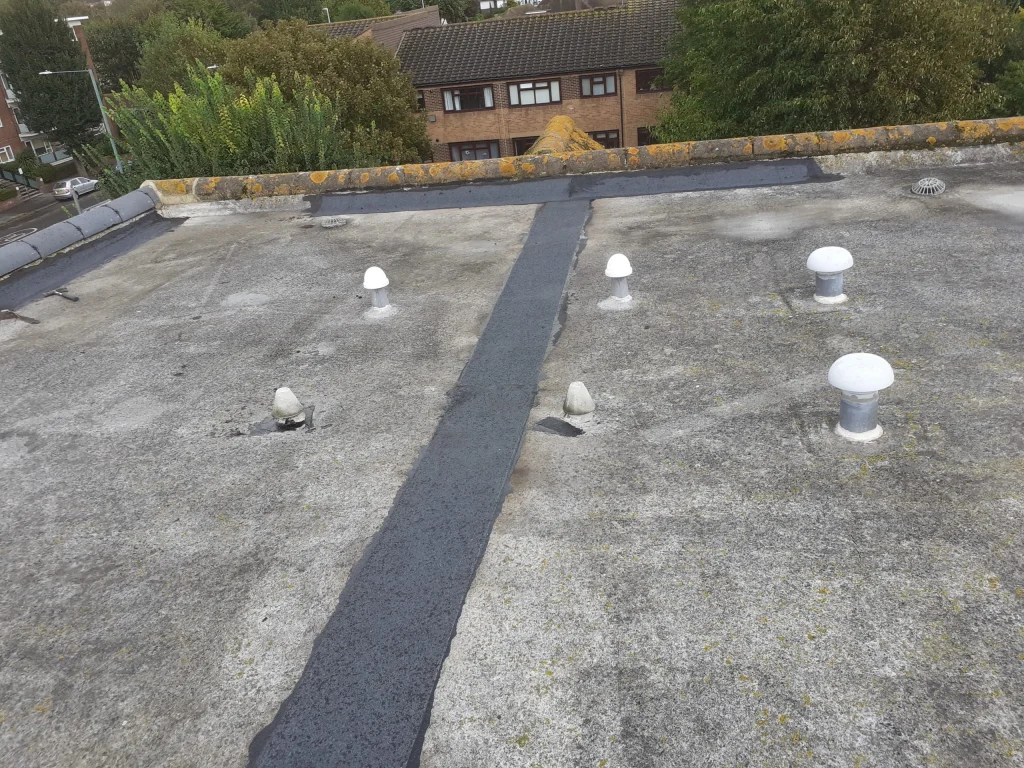
Cost to Fix a Roof in Hove
One of the first questions people ask me is simple: “How much will it cost to fix my roof in Hove?” The honest answer is that repair costs depend far more on what has actually failed and how safely I can access it than on the size of the stain on the ceiling.
In my experience, many local roof problems are smaller than homeowners fear. A slipped tile, failed lead flashing, split seam on a small felt area, or a leaking rainwater detail can often be repaired without turning the job into a major project. Where older tiled coverings are involved, it can also help to understand when existing tiles can sensibly be reused rather than assuming every issue means a complete renewal.
For problems around the roofline, a small drip is not always coming from the main covering. Sometimes the issue is a failed seal, movement in the rainwater run, or a leaking joint in the drainage line that is sending water back toward the wall.
But sometimes what looks minor from inside the house turns out to involve hidden moisture ingress, rotten decking, or long-term structural deterioration underneath.
What Usually Affects Roof Repair Costs in Hove?
When I inspect roofs across Hove, there are a few factors that almost always influence the final repair cost. For maintenance issues around the edge of the roof, my guide to clearing roofline drainage in Hove explains when a simple clean may be enough and when the problem may need a closer look.
- Roof type: flat coverings, slate roofs, tiled pitched roofs, dormers, and bay roofs all fail differently.
- Access: ladder access is usually much faster and cheaper than scaffolding.
- Extent of damage: one failed detail is very different from widespread deterioration.
- Age of the roof: older coverings often hide multiple weak points.
- Water damage underneath: leaks sometimes damage battens, insulation, underlay, or decking before they become visible indoors.
What many homeowners do not realise is that the visible leak is often only the symptom rather than the real problem.
Small Repairs Are Often More Straightforward Than Expected
I regularly come across homeowners assuming they need a full roof renewal when they actually need a focused repair.
Some of the repairs I commonly deal with include:
- replacing slipped or cracked roof tiles
- repairing lead flashing around chimneys
- stopping water entry around parapet walls
- repairing split felt on small flat areas
- fixing loose ridge tiles
- replacing damaged rainwater sections causing overflow
- repairing localised storm damage
If the problem is accessible and localised, I can often deal with it during one visit rather than turning it into a large project.
Flat Roof Repairs vs Pitched Roof Repairs
The type of roof makes a big difference to cost.
With pitched roofs, repairs often involve slipped tiles, ridge movement, chimney flashing, or hidden water paths travelling underneath the underlay before appearing inside.
Flat roofs behave differently. Water tends to spread sideways underneath failed felt joints or weak edge details, particularly around outlets, parapet walls, or poorly formed falls.
Because flat roofing is the main part of my work, I spend much of my time repairing and replacing SBS torch-on felt systems across Hove and Brighton. If your problem involves a felt-covered extension, garage, dormer, or similar area, my SBS felt system estimate page can usually give a realistic guide price in around 30 seconds.
Why Access Often Changes the Price
People often expect roofing costs to be based purely on materials, but access frequently becomes the deciding factor.
A repair that I can safely complete using ladders is naturally quicker and simpler than a repair requiring scaffolding, cherry pickers, or specialist safety access.
For example:
- a slipped tile near the eaves may be a straightforward repair
- a chimney flashing defect high above a rear extension may require more preparation
- roofs above conservatories often become more complicated
- tight rear access on terraced houses can increase labour time
I always prefer being realistic about access rather than pretending every roof can be repaired quickly and cheaply.
Why Roof Leaks Sometimes Cost More Than Expected
One mistake I see repeatedly is homeowners waiting too long.
Water rarely stays in one place. Through capillary action and moisture movement, leaks can slowly travel underneath coverings, into insulation, timbers, and plasterwork.
By the time a ceiling stain appears, the problem may already have existed for months.
Typical signs that a repair may be more involved include:
- persistent damp smells
- multiple historic repair attempts
- soft roof decking
- visible sagging
- repeated leaking after heavy rain
- moss growth trapping moisture
That does not automatically mean replacement is needed, but it usually means proper diagnosis matters more than guessing.
If the source of the problem is unclear, a technical on-site assessment in Brighton and Hove often saves money long term by identifying what genuinely needs fixing and what does not.
My Practical View on Roof Repair Costs in Hove
There is no honest fixed price for roof repairs because every roof fails differently. Two houses with the same ceiling stain may need completely different solutions.
Sometimes it is a simple ladder repair completed quickly. Sometimes the roof has hidden moisture damage that only becomes obvious during inspection.
My approach is usually straightforward: identify the real cause, explain what is realistically repairable, and avoid turning a manageable roofing problem into unnecessary work.