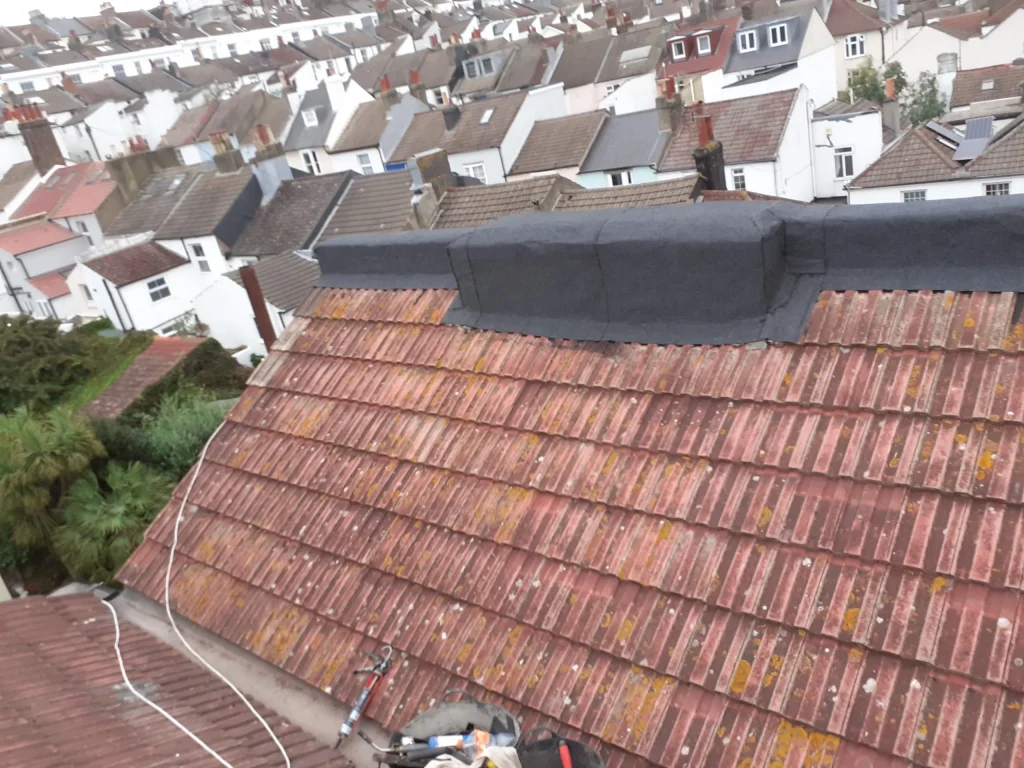
Can You Re-Use Your Old Roof Tiles? A Sussex Roofer’s Honest Guide
When I inspect pitched roofs across Brighton—especially around the Victorian terraces of Hanover or the Edwardian properties in Hove—homeowners often ask me if they can keep their original tiles. The logic makes sense: you preserve the historic character of your property, and you hope to save some money on materials. But re roofing with existing tiles Brighton is not a simple yes-or-no decision.
In my 18 years of roofing, I have found that salvaging existing tiles depends heavily on the material they are made of, how they have coped with our coastal climate, and whether the physical labor of sorting them outweighs the cost of buying new ones. Here is how I realistically evaluate whether your old tiles are fit for a second lifespan.
The Impact of Brighton’s Coastal Climate on Old Tiles
Our roofs in Sussex work exceptionally hard. The salt air, strong winds off the channel, and heavy, wind-driven rain can wear down roofing materials much faster than they would inland. When I assess tiles for potential reuse, I look for specific signs of environmental wear:
- Spalling: This is very common in older red clay tiles. Moisture gets absorbed into the porous clay, and when the temperature drops, the water freezes and expands. This causes the face of the tile to flake off, weakening its structural integrity.
- Salt Corrosion: Constant exposure to salt-laden wind can gradually degrade the surface glaze of clay tiles and accelerate the erosion of older concrete tiles.
- Nail Sickness: On older roofs, the tiles are often held in place by ferrous nails that rust away over time. While the tiles themselves might be intact, the nail holes can become enlarged or damaged when the old fixings fail.
Clay vs. Concrete: Which Can Actually Be Reused?
The type of tile on your roof is the biggest deciding factor in whether a strip and relay is practical.
Handmade Clay Tiles
Older clay peg tiles or clay interlocking tiles are often highly durable. Many Victorian properties in Brighton feature quality clay that actually hardens with age. If the clay has not become porous or brittle, these tiles are excellent candidates for reuse. They have a natural variation in shape and color that is incredibly difficult to replicate with modern alternatives.
Concrete Tiles
If your property has mid-20th-century concrete tiles, my advice is usually different. Older concrete tiles tend to lose their protective aggregate layer over several decades, making them rough, heavy, and highly porous. When concrete tiles reach this stage, they absorb water like a sponge, adding unnecessary weight to your roof timber structure. It is rarely cost-effective or safe to reuse old concrete tiles.
The Reality of the ‘Salvage Rate’
When we carefully strip a roof, we never get a 100% success rate. Even with the gentlest handling, a percentage of tiles will break during the removal and sorting process. In my experience on Brighton roofs, I typically anticipate a breakage rate of 20% to 30% for older clay tiles—and sometimes higher if they were originally bedded heavily in mortar.
This means we have to source matching reclaimed tiles from local architectural salvage yards to bridge the gap. Finding a clean match for size, weathered color, and thickness is vital to ensure the finished roof looks uniform and prevents gaps that could allow rain to creep in through capillary action.
If you are unsure whether your current tiles are stable enough to be salvaged, I can help you assess your roof’s condition in person to give you an honest appraisal of your salvage rate.
What Happens Below the Tiles Matters More
Even if we reuse every single tile on your roof, the system underneath must be entirely modern. The main reason roofs fail in Sussex is rarely the tiles themselves; it is the failure of the underlying layers. When we perform a strip and relay, we renew everything underneath:
- The Underlay: Old, torn bitumen felt is replaced with a modern, breathable roofing membrane. This allows moisture from inside the home to escape while preventing wind-driven rain from entering.
- The Battens: We install new, treated timber battens set to the correct gauge. This ensures the tiles have a secure, straight fixing line.
- The Leadwork: Reusing old, thin, or cracked lead flashing is a common mistake. I always recommend replacing lead flashing around chimneys and valleys to prevent leaks.
- Ventilation: Older roofs often lack adequate airflow. Introducing proper roof ventilation helps prevent condensation from rotting your rafters from the inside out.
For terraced properties where roofs connect with neighboring homes, managing these hidden details is critical. My guide on pitched roof repairs for terraced homes explains how we handle these shared boundaries and complex structural junctions safely.
The Labor vs. Material Cost Balance
It is a common myth that re-using existing tiles is always the cheapest option. While you save money on purchasing new tiles, the labor involved in salvaging is much higher. We must carefully remove each tile, scrape off old mortar, pull out rusted nails, sort them by quality, stack them safely, and then relay them. This takes significantly more time than laying brand new tiles straight from a pallet.
If you are working with standard concrete tiles, buying new is often more economical because the material cost is relatively low. However, if you have historic clay tiles or slates, salvaging them makes perfect sense because high-quality reclaimed clay tiles are expensive to buy outright, and retaining the original character adds genuine value to your property.
A Practical Way Forward
If your roof is showing signs of age, don’t assume you automatically need to buy thousands of new tiles. An honest assessment of your existing materials is the best starting point. I always prefer to reuse what is salvageable, protecting both the character of your home and your budget.
To help you plan, I have built quick estimation tools across my website where you can get a clearer idea of roofing costs in about 30 seconds. For a precise assessment of your tiles’ lifespan and structural health, a physical inspection will always give you the most accurate path forward.</