Why Speed Matters When Your Roof Starts Leaking
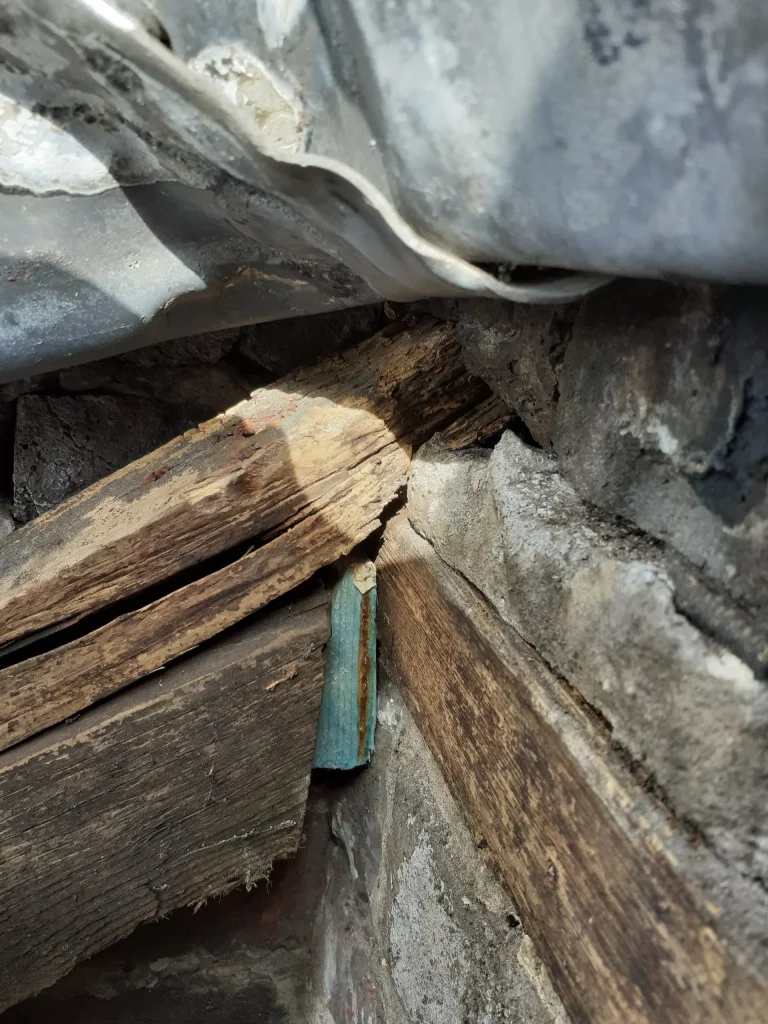
Water does not wait. The moment it gets past your external covering, it starts saturating timber decking, soaking into insulation, and tracking along joists into places you cannot see. Within 24 to 48 hours, structural timbers can begin absorbing moisture. Within a week, you may be dealing with early rot risk and damaged plasterwork below. That is why I offer a dedicated rapid response call-out for active leaks alongside targeted water-ingress repair work—because the difference between a straightforward patch and a much larger remediation job often comes down to how quickly you act.
How My Half-Day and Full-Day Repair Slots Work
When you contact me about an active leak, I do not schedule a consultation for the following week. I offer dedicated repair slots—either a half-day or full-day booking—specifically designed to fix the problem on the first visit where access is safe and practical. This is not a quick look followed by a separate price estimate for simpler outbuilding work. I arrive with the materials, tools, and technical experience needed to carry out the repair there and then.
What Gets Fixed in a Half-Day Slot
- Failed lead flashing around chimneys, soil pipes, and abutments
- Localised splits or blisters in low-slope felt coverings
- Cracked or slipped slates and tiles on pitched coverings
- Deteriorated mortar fillets and pointing at roof-to-wall junctions
- Blocked or overflowing rainwater channels causing water ingress
When You Need a Full-Day Booking
More extensive damage—such as multiple failure points, significant felt degradation, or complex flashing repairs around dormers and bay windows—requires a full-day slot. This gives me time to trace the leak path properly, prepare the substrate, and apply a lasting fix rather than a short-term patch.
The Access Factor: When Ladders Aren’t Enough
Here is something I am always transparent about: not every property can be reached safely with standard equipment. Victorian terraces with narrow rear returns, properties with overhead cables, or buildings over three storeys may require scaffolding or specialist access equipment.
If I arrive and determine that safe, proper access is not achievable with my roof ladders and cat ladders, I treat the visit as a diagnostic consultation only. I will still assess what I can see from ground level and accessible windows, explain exactly what is needed, and provide a clear price for the repair once appropriate access is arranged. You will not be charged a full repair fee for a consultation—I price this transparently from the outset.
Why First-Visit Repairs Are the Fastest Solution
The traditional approach—survey, then quote, then schedule, then repair—can drag out over two to three weeks. Meanwhile, every rainfall event can cause further damage. My approach compresses this timeline dramatically:
- Day 1: You book your slot online or by phone
- Day 2-3: I arrive with repair materials, diagnose the exact failure point, and carry out the fix
- Same day: Your property is watertight again where the defect is safely accessible
This is not about cutting corners. It is about having the diagnostic experience to identify common failure modes quickly and the technical skill to implement proper repairs on site. After 12 years working on Brighton and Hove properties, I have seen the same failure patterns hundreds of times—capillary action at lead flashings, thermal splitting in old mineral felt, debonded torch-on laps, and cracked fillet mortar. I know what I am looking at, and I know how to fix it properly.
Common Emergency Repairs I Handle
Flat Roof Failures
Older mineral felt systems become brittle through UV exposure and thermal cycling. Splits typically occur at stress points such as internal corners, upstands, and penetrations. I carry SBS-modified bitumen repair materials that bond securely to existing coverings when properly torched, providing a lasting repair rather than a temporary seal.
Pitched Roof Leaks
Slipped or cracked slates, failed cement fillets, and degraded lead soakers are common issues on Sussex’s Victorian and Edwardian housing stock. These can often be repaired in a half-day slot when access is straightforward.
Parapet and Firewall Ingress
Shared party walls are notorious for persistent damp. The brick coping absorbs rainwater, which then migrates down through porous mortar joints. If your leak traces back to a parapet or firewall, I can discuss a permanent solution involving waterproof capping for exposed masonry to stop water absorption at the source.
What to Do Right Now If You Have an Active Leak
First, contain the water ingress internally with buckets, towels, and by moving valuables away from the affected area. Then arrange a priority leak-response visit as soon as possible. The sooner I can inspect the affected area, the less secondary damage you are likely to face.
Once you understand what is actually causing your leak—whether it is thermal movement, failed adhesion, poor detailing, or simple mechanical damage—you will also understand why speed matters. My online calculator lets you get an instant price estimate for repair materials and labour in about 30 seconds, so you know what to expect before I arrive.