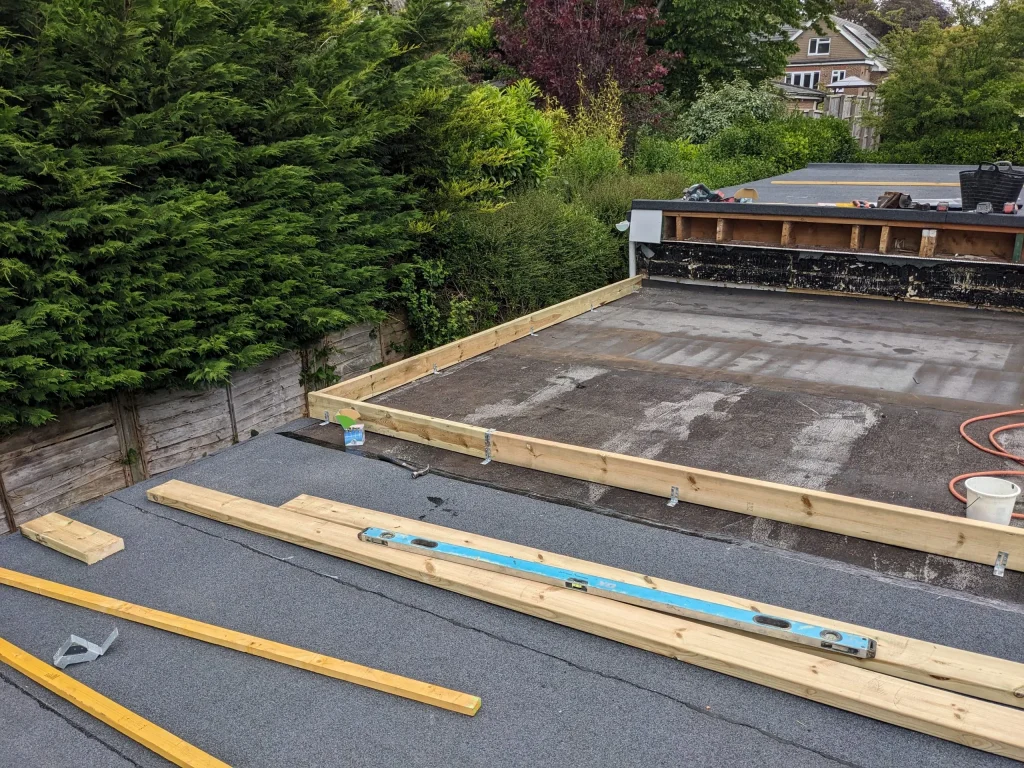
Is Roof Rubber the Best Choice for Your Sussex Property?
When I inspect properties in Brighton, Hove, or Worthing, homeowners frequently ask about EPDM, commonly known as roof rubber. It is a popular material because it is relatively quick to install and comes in large single sheets. However, after years of installing and maintaining various systems across Sussex, I have found that while rubber has its benefits, it often lacks the long-term durability provided by high-performance bitumen solutions like Tecnatorch SBS Torch-On Mineral felt.
In our local coastal environment, a building needs to withstand more than just occasional rain; it faces intense UV exposure and significant wind uplift. My priority is always to provide a solution that lasts for decades, which is why I want to explain why I typically recommend SBS-modified systems over standard rubber membranes.
The Vulnerabilities of EPDM Roof Rubber
EPDM is essentially a single-ply membrane. While it is flexible, its primary weakness lies in the seams and the way it is bonded to the structure. In my experience, most failures with this material are not in the centre of the sheet, but at the edges and joins. If the adhesive fails due to the salt-heavy air in Brighton, the entire integrity of the installation can be compromised.
Furthermore, EPDM is quite thin—usually only 1.2mm to 1.5mm. It is susceptible to mechanical damage; a dropped tool or even a sharp bird beak can cause a puncture that leads to an immediate leak. Because it is a single layer, there is no backup protection if that membrane is breached.
Why I Prefer Tecnatorch SBS Torch-On Systems
When providing professional felt roofing services in Hove and Brighton, I prefer using the Tecnatorch SBS system. Unlike a single sheet of rubber, this is a multi-layer approach consisting of a reinforced base layer and a thick, mineral-surfaced top layer. Here is why this outperforms other materials in the Sussex climate:
- Puncture Resistance: The combined thickness of a torch-on system is significantly greater than EPDM, making it much harder to damage.
- Superior Adhesion: Because the bitumen is melted directly onto the substrate, it creates a permanent, fused bond that is far more resistant to wind uplift than cold-applied rubber adhesives.
- UV Protection: The mineral slate finish on Tecnatorch provides a natural shield against the sun, preventing the material from becoming brittle over time.
- Redundancy: With multiple layers, even if the top surface is slightly damaged, the underlay provides a secondary waterproof barrier.
Suitability for Extensions and Dormers
If you are considering a newly built rear extension, the choice of material is even more critical. Extensions are often used as living spaces, kitchens, or home offices where a leak can cause thousands of pounds in internal damage. I find that the robust nature of SBS felt provides my clients with much greater peace of mind than a single-ply membrane.
My process ensures that every detail, from the firewall transitions to the rainwater drainage systems, is handled with precision. I personally manage every installation to ensure the torch-on application is flawless, creating a monolithic waterproof envelope that simply cannot be matched for longevity.
Conclusion: Making the Right Investment
While rubber might seem like a modern, simple solution, the technical reality is that a high-performance SBS torch-on system like Tecnatorch offers superior protection for the specific challenges we face in Sussex. It is a heavier-duty, more resilient material that handles our coastal weather with ease.
I believe in complete transparency when it comes to costs. You do not have to wait for a site visit to get an idea of the investment required. I have developed an online calculator on my website where you can calculate the price for your project yourself in just 30 seconds. Once you have your estimate, I would be happy to visit your property, provide a fixed quote, and discuss why a reinforced bitumen system is the right choice for your home.