I Need a Roofer: What to Check First
If you are searching I need a roofer, you are probably dealing with one of three situations: active water ingress, visible damage, or warning signs such as staining, slipped tiles, rotten boards at the eaves, or damp around a chimney breast. The priority is not simply finding someone available. It is finding someone who can identify whether the fault is coming from the external covering, flashing, drainage, ventilation, condensation, or the structure underneath. For homeowners comparing local help, my local fault-finding support explains how I approach these problems before recommending any work.
I have worked on roofs for 18 years, with 12 years specifically around Brighton, Hove, Worthing, and the Sussex coast. Around here, defects are rarely isolated. Salt air accelerates corrosion, wind-driven rain gets under weak laps, and older Victorian and Edwardian houses often have shared party walls, tired timbers, and previous patch repairs hiding the real fault.
When You Need a Roofer Urgently
If water is actively entering the building, the first job is to limit damage and trace the path of water properly. Water rarely appears directly below the failure point. It can run along rafters, membrane laps, plasterboard, pipework, or ceiling joists before showing as a stain indoors. In that situation, you need an experienced local specialist who can assess the whole water path rather than guessing from the room below.
For sudden leaks, I look for immediate failure points such as cracked tiles, lifted ridge mortar, failed lead flashing, blocked outlets, split waterproofing layers, or water being pushed uphill by wind pressure and capillary action. If the leak is active, my priority is emergency mitigation first, then targeted leak tracing and remedial work once the area is safe and dry enough to assess. For active water ingress, I would usually recommend a rapid water-ingress visit around Brighton and Hove so the source is traced before ceiling boards, insulation, or structural timber start absorbing moisture.
Common Reasons Property Owners Need a Roofer
1. Slipped, Cracked, or Missing Tiles
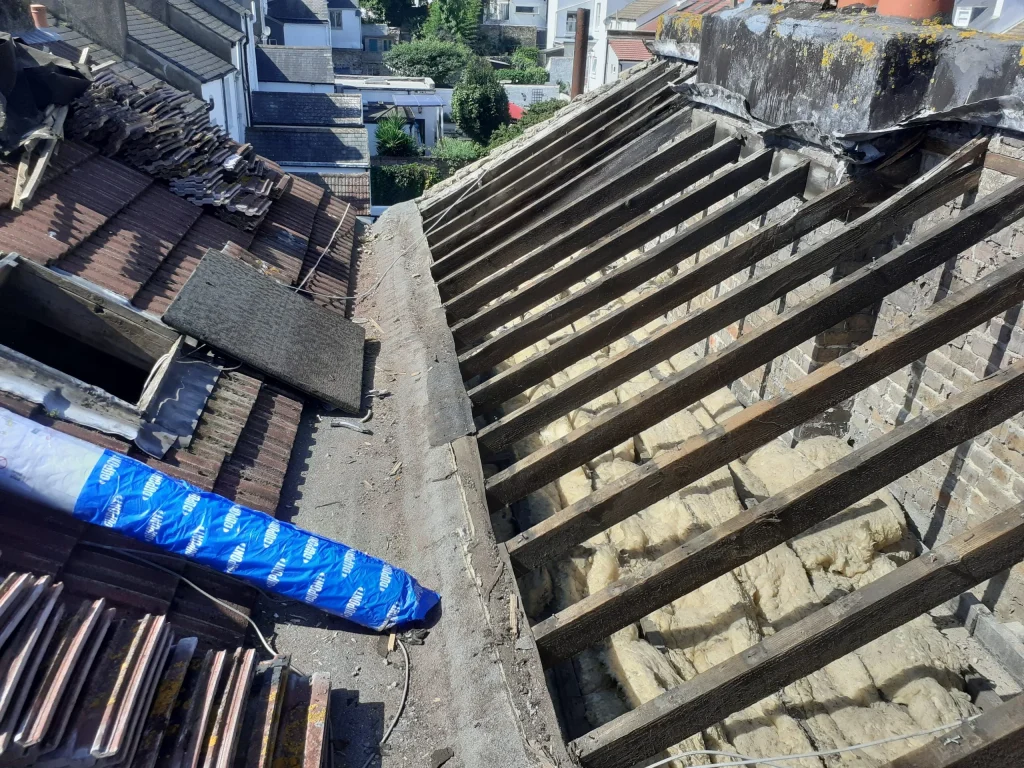
On pitched roofs, one missing tile can expose the underlay and battens to repeated wetting. Modern breathable membranes can tolerate some moisture, but they are not designed to act as the main weather barrier for months. On older roofs, the underlay may already be brittle or torn, so water can pass straight into the loft void.
2. Failed Lead Flashing
Lead flashing around chimneys, abutments, dormers, and bay roofs fails through poor fixing, thermal movement, fatigue cracks, or bad cement pointing. Lead expands and contracts with temperature changes. If it has been trapped in rigid mortar without proper cover, clips, or stepped detailing, it eventually splits or pulls away from the brickwork.
3. Flat Roof Blistering or Ponding
Flat roofs fail when water sits too long, laps open, decking flexes, or the covering becomes brittle. Old bitumen systems often crack because they lose flexibility. A properly installed SBS-modified torch-on system is different: it has reinforced layers, better elasticity, and stronger resistance to thermal movement. The key is still the preparation underneath. Rotten decking, poor falls, and trapped moisture must be corrected before a new covering goes down.
If the problem is a general failure on a low-slope area, I normally assess the deck, outlets, edge trims, upstands, ventilation, and insulation before recommending replacement. My cost guide for low-slope waterproofing systems explains how I price and specify these projects properly.
4. Chimney, Firewall, or Parapet Damp
Damp near a party wall or chimney breast is often blamed on roof tiles, but the source can be porous brickwork, failed render, open coping joints, or a defective lead tray. In Brighton and Hove terraces, I often see water entering through parapet walls and travelling sideways before showing inside the property. This is why diagnosis matters. Replacing tiles will not solve a wall saturation problem.
5. Gutter and Downpipe Defects
Blocked or undersized rainwater goods can make a roof look like it is leaking. When rainwater overshoots the eaves or backs up under them, it can soak fascia boards, rafter feet, brickwork, and internal plaster. Coastal storms make this worse because wind drives water sideways across the roofline.
How I Diagnose a Roofing Problem Properly
A proper inspection is not just looking from the pavement and guessing. I check how water is supposed to leave the roof, then look for where that system is breaking down. The defect might be above the stain, but it might also be three metres away.
My inspection usually includes:
- Roof covering assessment: I check tiles, slates, membrane layers, laps, ridges, valleys, hips, and verge details.
- Flashing inspection: I examine leadwork, soakers, cover flashings, sealant joints, and mortar fillets.
- Drainage check: I look at gutters, downpipes, outlets, falls, and overflow marks on brickwork.
- Decking and timber condition: On flat roofs, I check whether the deck is soft, delaminated, wet, or structurally weak.
- Condensation separation: I identify whether staining is from external water ingress or internal moisture caused by poor ventilation and thermal bridging.
- Local exposure: I account for salt corrosion, wind uplift, and wind-driven rain, especially on exposed Sussex elevations.
Why a Cheap Patch Repair Often Fails
A patch repair fails when it treats the visible symptom rather than the roof mechanism. For example, smearing sealant over cracked lead might stop water for a few weeks, but it does not solve thermal expansion. Adding a new waterproofing layer over rotten decking traps moisture. Repointing a chimney without checking the lead trays and soakers can leave the same damp route open.
The correct repair depends on the failure mode. A split lap needs a different solution from ponding caused by poor falls. A damp chimney breast needs a different solution from condensation in a cold loft. A slipped slate on a period terrace may indicate nail fatigue, batten decay, or wider ageing rather than a single loose slate.
What a Good Roofer Should Tell You
When you need a roofer, you should expect clear technical answers, not vague phrases like “it needs doing” or “the whole roof is gone”. A competent roofer should be able to explain:
- Where the water is entering: The likely entry point should be identified, not guessed.
- Why the material failed: Age, movement, poor detailing, blocked drainage, corrosion, or structural movement should be discussed.
- What needs replacing: The quote should separate covering, timber, insulation, flashings, trims, gutters, and access where relevant.
- What can stay: Not every roof needs stripping. Good diagnosis can save money when the structure is sound.
- How the repair will perform long-term: The method should account for ventilation, water flow, wind exposure, and material compatibility.
The Proper Process: From Inspection to Fixed Quote
My process is built around transparency. First, I give homeowners a way to get an instant online estimate so they understand the likely cost range before arranging anything. Then I inspect the roof in person, confirm the actual defect, and provide a fixed quote based on the build-up, materials, access, and labour required.
For larger jobs, I use a secure client portal with daily photo logs, progress tracking, and warranty information. That matters because roofing work is often hidden once finished. Photos of the deck, underlay, battens, insulation, flashings, and finished detailing give you evidence of what was actually done.
When You Need Repair, Replacement, or Just Better Diagnosis
You do not always need a new roof. Sometimes you need a targeted repair to lead flashing, a cleaned and corrected drainage route, a section of new waterproofing, or a few properly replaced tiles. But if the system has reached the end of its service life, repeated patching becomes false economy.
As a rule, replacement becomes more sensible when the covering is brittle across large areas, the decking is soft, the battens are failing, the insulation is wet, or multiple previous repairs are now leaking through different routes. On coastal Sussex properties, I also factor in wind uplift and salt exposure because weak fixings and corroded metalwork can shorten the life of a repair.
Final Technical Takeaway
If you are thinking I need a roofer, the real question is: do you need emergency leak control, a targeted technical repair, or a full roof system replacement? The answer should come from diagnosis, not guesswork. A roof works as a system: covering, structure, ventilation, drainage, flashing, and insulation all have to be read together.
Once you understand the likely cause, the next practical step is to use my free online calculator. In about 30 seconds, you can get a clear instant estimate for the materials and labour involved, without waiting days for a vague quote or dealing with hidden pricing.