Understanding Flat Roof Tile Installation in the UK
Over my 18 years as a roofer, with the last 12 spent working directly with homeowners in Brighton, Hove, and Worthing, I frequently get asked about flat roof tile installation. Usually, this request comes from property owners looking to either replace a shallow-pitched extension roof or create a walkable surface over an existing flat roof.
It is important to clarify a fundamental roofing rule: traditional overlapping roof tiles cannot be installed on a genuinely flat surface (anything under 10 degrees). Without sufficient pitch, rainwater will simply pool and blow back up underneath the tiles, leading to inevitable leaks. However, there are two distinct, professional solutions depending on what you are trying to achieve.
Solution 1: Low-Pitch Tiles for Shallow Extensions
If you have a shallow rear extension roof that looks almost flat from the ground, standard concrete or clay tiles will not suffice. For these structures, we must use specialized low-pitch interlocking tiles.
- Minimum Pitch Requirements: Modern low-pitch tiles can be installed on roofs with a slope as low as 10 to 12.5 degrees.
- Weatherproofing: These tiles feature specialized interlocking channels and weather bars designed to prevent capillary action and wind-driven rain penetration, which is absolutely crucial here on the Sussex coast.
- Sub-layer Importance: Even with high-quality low-pitch tiles, the breathable membrane underneath must be installed impeccably, often with tighter overlaps to guarantee watertightness against coastal storms.
Solution 2: Promenade Tiles Over a Flat Roof Membrane
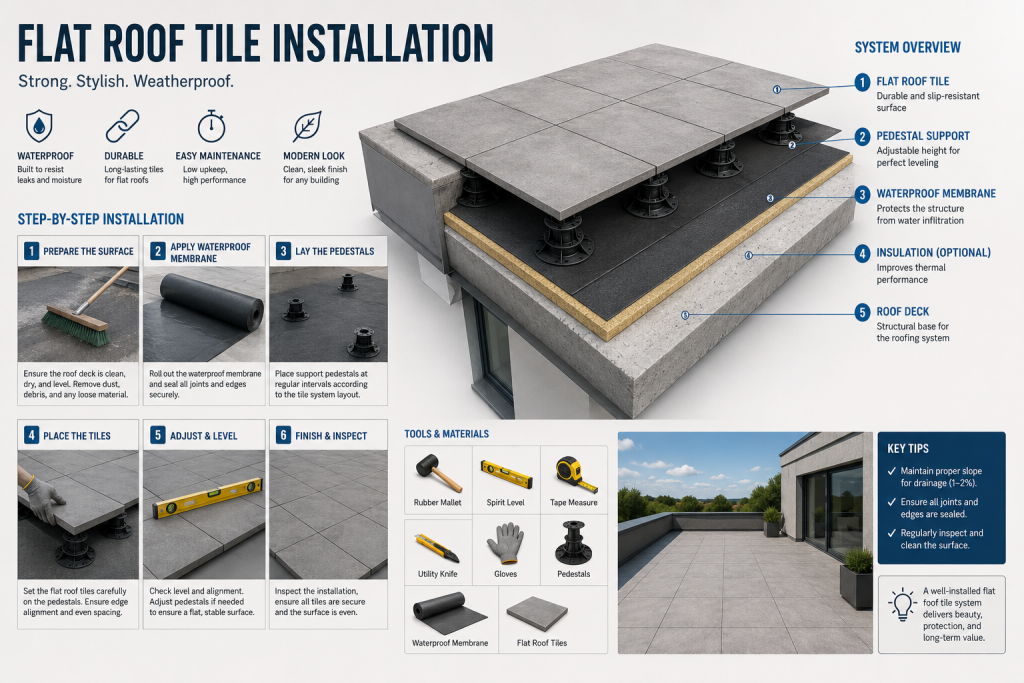
If your goal is to transform a completely flat roof into a usable outdoor space, the approach changes entirely. In this scenario, flat roof tile installation refers to laying promenade tiles or paving slabs over a fully waterproofed flat roof system.
Before any tiles are laid, I must assess the structural integrity of the roof deck to ensure it can safely bear the significant added weight of foot traffic and heavy tiles. Once structurally sound, I install a high-performance, multi-layer SBS torch-on felt system. This creates a completely watertight, durable base.
We then lay the tiles using specialized rubber support pads. This elevates the tiles slightly off the felt, allowing rainwater to drain freely underneath and protecting the waterproof membrane from physical abrasion. If you are considering this type of upgrade, you can learn more about how I handle the technical requirements of a roof terrace or balcony installation to ensure a leak-free finish.
Why the Underlying Waterproofing Matters Most
Whether you are dealing with a low-pitch tiled roof or laying promenade tiles over a flat roof deck, the visible tile is only the secondary line of defence. The primary protection comes from the underlay or the torch-on felt membrane beneath it.
In coastal areas like Brighton and Worthing, driving rain will eventually find its way past surface materials. My focus is always on ensuring the decking, insulation, and the structural waterproofing layers are flawlessly integrated with your property’s existing brickwork and lead flashing.
Transparent Pricing for Your Next Roofing Project
Every property is different, and deciding on the right approach for your flat or low-pitch roof requires professional assessment. I believe in complete transparency from the very beginning. That is why I provide an online calculator on my website where you can easily calculate a free, no-commitment price estimate yourself in just 30 seconds.
Once you have your estimate and are ready to proceed, I conduct a free on-site survey to inspect your roof’s structure and provide a formal, fixed-price quote. When you choose to work with me, you will get access to a secure client portal to track our schedule, view daily photo logs of the progress, and easily manage your invoices and warranties. My goal is to deliver top-tier workmanship and clear communication, without the traditional industry delays or hidden fees.