Choosing the Right Flat Roof for Your Home Extension
Planning a new extension for your property in Sussex is an exciting prospect. However, one of the most critical decisions you’ll make is the specification for its flat roof. A poorly installed or low-quality roof can lead to persistent leaks, damp, and costly repairs, undermining your entire investment. With over 14 years of experience roofing homes in Brighton and Hove, I understand that a new extension roof must be built to last, providing decades of reliable protection.
My approach is straightforward: use proven, high-performance materials and install them with meticulous attention to detail. This ensures the roof can withstand everything the Sussex coastal weather throws at it, from intense summer sun to winter storms.
My Preferred System: Tecnatorch SBS Torch-On Felt
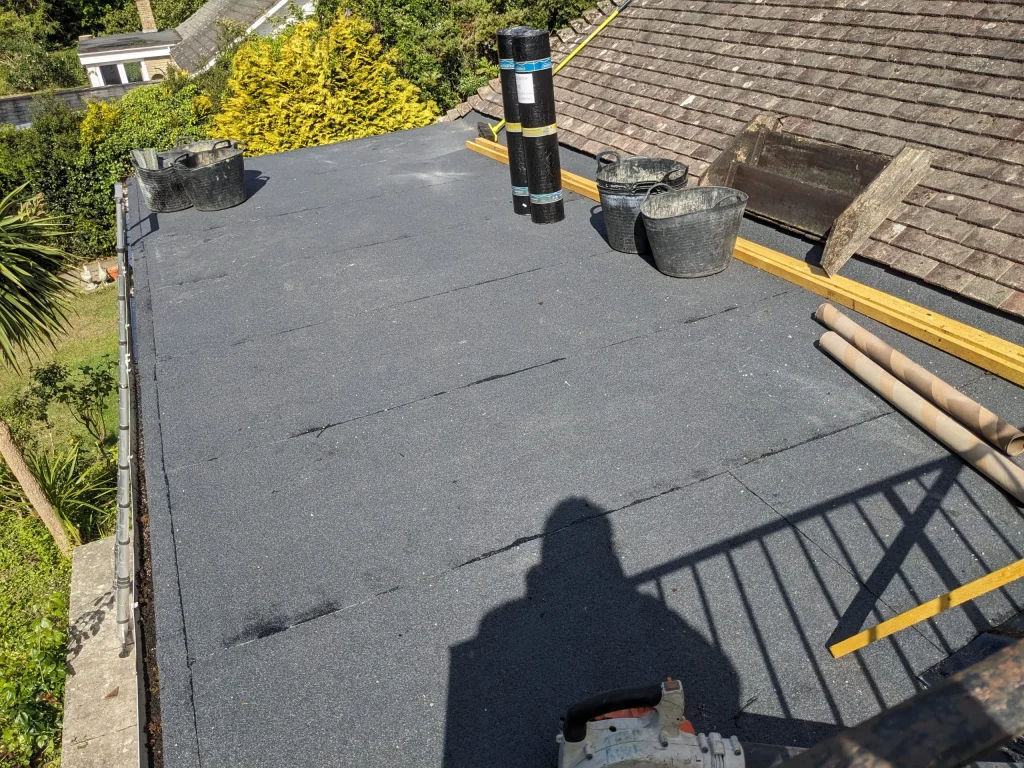
When it comes to flat roofing for extensions, I exclusively use high-performance SBS-modified torch-on felt. Specifically, I rely on Tecnatorch SBS Torch-On Mineral Felt in a charcoal finish. This isn’t just standard roofing felt; it’s a modern, engineered material designed for superior durability and flexibility.
The ‘SBS’ (Styrene-Butadiene-Styrene) refers to the synthetic rubber used to modify the bitumen. This modification gives the felt exceptional elasticity, allowing it to expand and contract with temperature changes without cracking or becoming brittle. This is a crucial feature for the UK’s variable climate and makes it far superior to older, more rigid felt systems.
The Power of a Two-Layer System
A single layer is never enough for a primary dwelling. I install a robust, two-layer system to create a completely seamless and monolithic waterproof membrane. The process involves:
- The Underlay: A primary layer of SBS-modified felt is bonded directly to the roof deck. This forms the first line of defence.
- The Cap Sheet: A second, thicker layer of mineral-finished SBS felt is then torched over the underlay. The layers are fused together using a high-temperature gas torch, creating a single, impenetrable membrane with no weak points. The dense mineral finish on the cap sheet provides excellent protection against UV radiation, further extending the roof’s lifespan.
This belt-and-braces approach ensures a watertight seal that I can confidently guarantee for years to come.
More Than Just Waterproofing: The ‘Warm Roof’ Advantage
While the waterproof membrane is vital, modern building regulations and a focus on energy efficiency mean we should also consider the insulation. For new extensions, a ‘Warm Roof’ construction is the superior method. This involves placing high-performance insulation boards on top of the structural roof deck, with the waterproof felt system installed over the insulation.
This method keeps the roof structure ‘warm’ and dry, eliminating the risk of condensation and significantly reducing heat loss through the roof. I specialise in designing and installing these high-performance ‘Warm Roof’ systems for rear extensions, ensuring your new space is comfortable and energy-efficient year-round.
Planning Your Extension Roof Project
Choosing the right materials and installation method is essential for the long-term success of your home extension. A professionally installed two-layer SBS torch-on felt system provides a durable, reliable, and cost-effective solution tailored for the Sussex climate.
If you are in the planning stages of a new extension, I encourage you to do your research. For many of my services, you can get a clear idea of costs by using the online calculators on my website, which provide an instant estimate in around 30 seconds. For a formal, fixed-price quote for your specific project, please get in touch to arrange a free site visit.