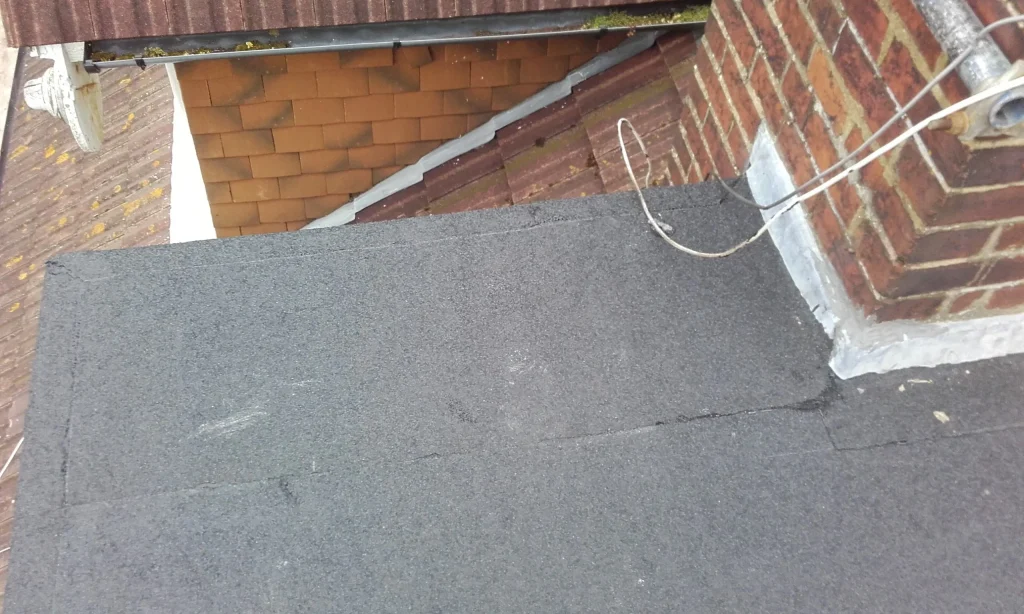
Cost to Fix Leaking Flat Roof Brighton: Honest Local Repair Advice
When customers ask me about the Cost to fix leaking flat roof Brighton, my first answer is always the same: the price depends on where the water is getting in, how long the roof has been leaking, and whether the timber underneath is still solid. A small leak on a flat roof in Brighton can look simple from inside the house, but the real cause is often hidden around an edge, wall junction, outlet, old patch, or weak felt lap. I work across Brighton, Hove, Worthing, and nearby Sussex, and Brighton has its own roofing problems. Properties around Hanover, Seven Dials, Preston Park, Kemptown, Queen’s Park, London Road, Lewes Road, Elm Grove, Dyke Road, Western Road, and the Hove seafront are often exposed to wind-driven rain, narrow access, older brickwork, awkward rear extensions, and roof details that have been repaired more than once over the years. In my 18 years on the roof, I have noticed that many Brighton flat roof leaks do not start in the middle of the roof. They usually start where the roof has to do something difficult. That might be where the felt turns up against a wall, where a trim meets a corner, where water should run into an outlet, or where an old repair has been added over a previous repair. From the room below, you might only see a stain on the ceiling, bubbling paint, a damp patch, or a slow drip during heavy rain. On the roof itself, the problem can be much smaller but more technical. Brighton terraces can make leak repairs especially awkward. Around Hanover and Elm Grove, rear flat roofs are often reached through tight paths, small gardens, or narrow stairways. Around Kemptown and Queen’s Park, older buildings can have a mixture of rendered walls, brickwork, parapets, and different roof levels. Near the seafront and in parts of Hove, the wind can push rain sideways into details that would not be tested so hard in a sheltered inland street. That is why I do not like giving a blind promise over the phone. I can usually give you a sensible starting idea, but I need to understand whether the leak is a simple local defect or a sign that the roof system is failing. A small split in sound felt is one thing. A flat roof with soft decking, trapped moisture, loose edges, and several old patches is a different job completely. If you ask me, I will tell you straight. Sometimes a targeted repair is enough. Sometimes a temporary repair can stop active water damage while you plan the proper work. And sometimes another patch would only waste your money because the roof has already reached the point where it needs more than a surface repair. The useful first step is to look at the leak honestly. Where is the stain inside? Does it happen only in heavy rain, or every time it rains? Is the flat roof over a bay window, dormer, porch, garage, rear extension, or small side return? Has the roof already been patched before? These details help me judge whether the repair is likely to be straightforward or whether the hidden damage may be more serious.
How I judge whether a leaking Brighton flat roof can be repaired
Here is my honest advice: a flat roof repair only makes sense when the main roof is still firm, dry enough, and worth saving. If the problem is limited to one weak detail, I can often repair that area without turning the job into something bigger than it needs to be. But if the deck feels soft, the felt has split in several places, or water has been trapped under old layers for a long time, a small patch may only hide the problem for a short while. On Brighton houses, I often find the leak by following the shape of the building rather than just staring at the wet patch inside. A damp mark in the ceiling may appear in one corner of the room, but the water may have entered higher up, travelled along the deck, and then dropped through a joint or light fitting. That is why I look at the roof edges, corners, outlets, wall upstands, flashing lines, and any old repair marks before I decide what the sensible repair should be. Rear extensions in Hanover, Southover Street, Islingword Road, and around Elm Grove can be especially awkward because many of them sit behind older terraced houses with tight access. The roof might be small, but the details are not always simple. A narrow side return, a rendered wall, a soil pipe, a low window sill, or an old felt upstand can all affect how the repair should be done. In Kemptown, Queen’s Park, and parts of Brighton closer to the seafront, wind exposure can make small defects worse. Rain does not always fall politely straight down. It can be pushed into weak edges, under loose trims, or behind tired flashing. I have seen roofs where the surface looked acceptable from a distance, but the water was getting in through one badly sealed junction that only failed during heavy wind and rain. Bay window flat roofs around Fiveways, Preston Park, and older Brighton streets can also leak from details rather than from the main surface. These roofs are small, but they are often connected to brickwork, render, sash windows, lead, or decorative features. If the timber below is still strong, a careful local repair can sometimes be enough. If the board has gone soft, the repair becomes more than just sealing a crack. If water is actively coming into the house, the priority is to limit the damage first. In that situation, you can use my urgent flat roof leak repair booking page so I can understand the problem quickly and decide whether a targeted repair or temporary protection is the right first step. I also look at the history of the roof. One old patch does not automatically mean the roof is finished. Several patches in different places usually tell a different story. If each repair has only lasted a short time, the problem may not be one isolated hole. It may be movement in the roof, poor drainage, a weak deck, or a waterproofing system that has reached the end of its useful life. Small structures need the same basic roofing logic as larger ones. Whether I am looking at a rear extension, porch, dormer, garage, or a small outbuilding roof, I still want to see a solid deck, reliable edges, proper drainage, and a waterproof covering that suits the job. The scale changes, but the cause of a leak is still usually found in the weakest detail. My rule is simple. If a repair gives you a realistic chance of stopping the leak properly, I will say so. If the roof is too far gone and a patch would only buy a little time, I will explain that clearly before you spend money in the wrong place.
How I explain the repair cost before any work starts
When I look at a leaking flat roof in Brighton, I try to make the next step as clear as possible. I do not want you guessing whether you need a small repair, a temporary weatherproofing measure, or a larger replacement. My job is to explain what I can see, what I suspect may be hidden underneath, and what I think is the most sensible way forward. The lowest-cost repair is usually a local fix where the roof is otherwise sound. That might mean repairing a split, resealing a weak edge, improving a small detail, or dealing with one obvious point where water is entering. If the roof surface is stable and the timber below still feels firm, this can be a practical option. A more involved repair may be needed when the leak has affected more than one area. For example, if a flat roof over a rear room near Lewes Road, Hanover, or Preston Park has several old patches, loose felt, and damp marks in more than one place, I need to be careful. In that situation, simply sealing the most visible crack may not solve the real problem. The most expensive outcome is usually when the leak has been ignored for too long and the roof deck has started to fail. Once water reaches the boards below the waterproof layer, the job can change quickly. Wet or soft decking cannot be trusted in the same way as a solid roof structure. I will always explain this before recommending bigger work, because I know nobody wants surprise costs halfway through a job. Before arranging a visit, you can use my flat roof repair and replacement calculator to get a useful starting point. I treat that as a guide, not a final quote. It helps you understand the likely budget range before I check the actual roof condition, access, details, and level of damage. If the online estimate looks sensible and you want to move forward, I can carry out a site survey and then give you a formal fixed-price quote. That is important to me. I do not like vague pricing, hidden extras, or pressure selling. If the job is small, I will say it is small. If the roof is too far gone for a meaningful patch, I will explain why. I also give my clients access to a secure online portal where they can follow the schedule, view photo updates, and download invoices or warranty documents. For leaking flat roof work, photos are especially useful because they show what was found, what was repaired, and why a particular approach was chosen. My honest advice is not to wait until a small ceiling stain becomes a damaged ceiling, wet insulation, or rotten decking. Brighton weather can expose weak flat roof details quickly, especially on older properties and exposed streets. If your flat roof is leaking in Brighton, Hove, Worthing, or nearby Sussex, the best time to deal with it is before the water has had time to spread through the structure. If you contact me, I will look at the problem practically, explain the options clearly, and help you decide whether a repair is worth doing or whether a better long-term solution is needed. That is how I prefer to work: straight advice, clear pricing, and no unnecessary drama.