Auditing the administrative architecture of trade directories
While Checkatrade serves as a preliminary screening tool for business legitimacy in East Sussex, it functions primarily as a database of administrative standing rather than a technical regulatory body. For a property owner, a “verified” status confirms public liability insurance and identity, but it does not evaluate a contractor’s specific mastery of complex residential geometries. When utilizing these platforms, the objective should be to transition from a passive searcher to a technical auditor of the member’s operational history.
Logistical accountability within the BN1 and BN2 corridors
A critical factor in the digital trade market is the geographical density of the business headquarters. The platform’s radius tools often capture firms based 30+ miles away, capturing leads across the Brighton corridor. In the roofing sector, this creates a “response-lag” risk. A firm located outside the immediate BN postcode area may be operationally disincentivized to return for minor post-installation adjustments or warranty inspections. Prioritizing firms with a verifiable, permanent workshop within the immediate city limits ensures a shorter chain of accountability for your roof replacement.
Quantifying “Soft” vs “Hard” data in user feedback
An aggregate star rating (e.g., 9.8 out of 10) is a measure of customer service sentiment, not necessarily engineering precision. To differentiate between candidates, homeowners should perform a “Technical Milestone Audit” of the feedback history. Seek out specific indicators in the reviews:
- Regulatory Documentation: Feedback referencing the successful issuance of Building Control compliance certificates.
- Sequence Management: Client comments describing the protection of the internal structure during the “exposure phase” of the project.
- Component Integration: Mention of precise detailing around high-exposure junctions and modern waterproofing layers.
Forensic portfolio auditing: Beyond the finished surface
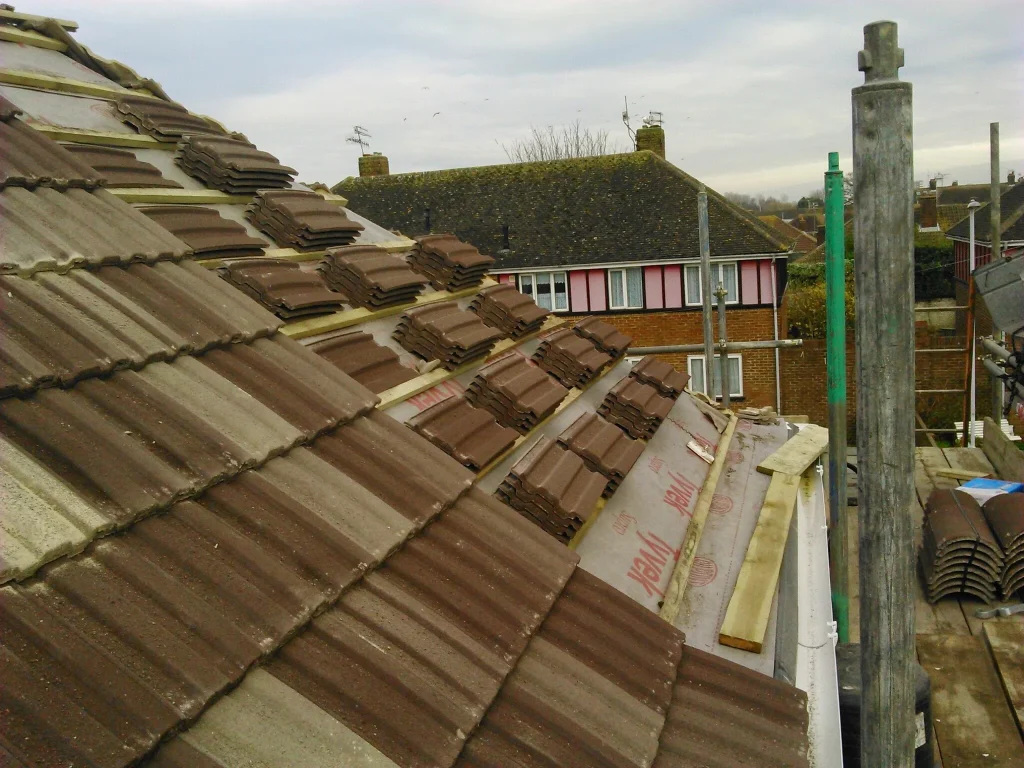
A contractor’s uploaded media on a trade portal should be treated as a chronological record of their operational standards. Avoid profiles that exclusively display wide-angle, completed shots. A high-competency profile should document the stages that are hidden once the project is finished:
- Substrate Stability: Images showing the removal of old layers and the condition of the timber frame or decking.
- Junction Precision: High-resolution photography of detailing around parapet walls and chimney abutments—the primary failure points in maritime environments.
- Ventilation Standards: Visual evidence of the correct installation of airflow systems as per current British Standards.
Synchronizing calculator data with platform bids
The most frequent cause of project friction is “bid variance”—the gap between an initial online estimate and the final technical requirement. To mitigate this, establish an independent data baseline before initiating a dialogue on a trade platform. Utilizing a pitched roof calculation tool for terraced houses allows you to generate objective dimensions and material requirements. Presenting this data to a vetted firm transforms the interaction from a vague inquiry into a professional consultation, ensuring any bid received is grounded in structural reality rather than lead-generation marketing.