Hove Flat Roofing Specialists
Flat roofs are the main type of roofing work I specialise in across Hove, Brighton, and the surrounding Sussex area. I also deal with pitched roof repairs, rainwater problems, and water ingress, but most of my day-to-day work is focused on flat roofing systems — especially high-performance torch-on felt installations designed to cope with coastal weather and long-term exposure.
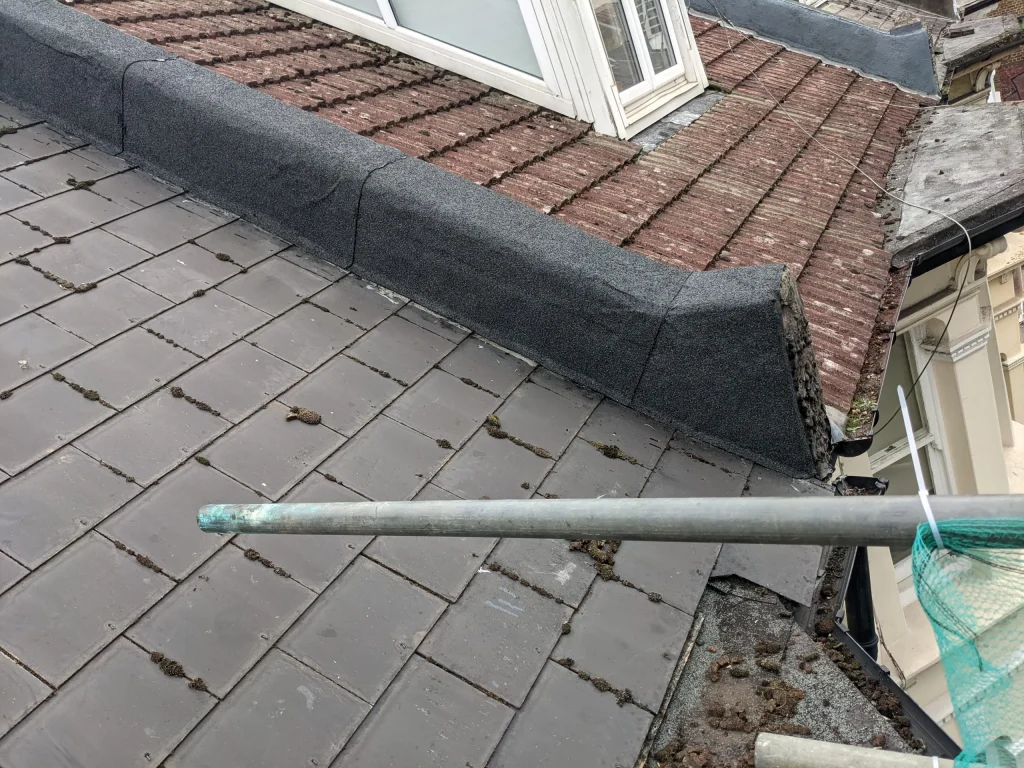
The system I mainly install and recommend is Tecnatorch SBS Torch-On Mineral Felt Charcoal, a professional-grade two-layer roofing system applied using a gas torch. In my experience, this type of long-term waterproofing specification performs far better than many cheaper felt systems that can start failing after only a few years.
Why I mainly focus on flat roofs
After years working across local properties in Hove and nearby areas, I found that flat roofing problems are often misunderstood. Many homeowners are told they need a complete replacement when the issue is actually repairable. Others have had temporary patch repairs repeated several times until the roof becomes more expensive to put right than it should have been. For a broader view of how I approach different local roofing issues, see my page on practical roofing diagnosis around Hove.
Because of this, flat roofing became my main area of work. I spend most of my time dealing with:
- garage flat roofs
- rear extension roofs
- bay window roofs
- dormer roofs
- balcony waterproofing
- small residential flat roofs
- flat roof water-entry checks around rainwater joints
- failed felt systems
In Hove especially, coastal weather, strong winds, and ageing roof structures often accelerate problems that homeowners cannot see from ground level.
Why I use Tecnatorch SBS Torch-On Mineral Felt Charcoal
I am selective about roofing materials because I prefer installing systems I trust long term. The main felt system I use is Tecnatorch SBS Torch-On Mineral Felt Charcoal, installed as a two-layer torch-applied system using a gas burner.
There is a reason I work with this system so often.
The lower layer acts as the waterproof base membrane, while the mineral-finished charcoal cap sheet forms the weather-resistant outer layer. When installed correctly, the layers bond together through heat welding rather than relying on adhesives or temporary sealants.
In simple terms, this creates a much stronger waterproof system than many low-cost felt roofs that simply sit on top of the deck with minimal bonding.
Why SBS felt performs better in Sussex weather
One issue I regularly see in Hove is movement caused by changing temperatures and strong coastal exposure. Cheaper felt systems often become brittle, crack, or split at joints after years of expansion and contraction.
SBS-modified felt behaves differently.
Because it remains more flexible, it handles movement far better, especially on roofs exposed to wind uplift, heavy rain, and fluctuating temperatures.
I particularly recommend SBS torch-on systems for:
- garage roofs
- kitchen extensions
- bay roofs
- dormers
- older flat roofs suffering repeated leaks
- properties exposed to strong coastal weather
On many older Hove properties, particularly Victorian and Edwardian housing, roof movement over time can place stress on weaker materials. This is exactly where better-quality felt systems make a noticeable difference.
When a flat roof can be repaired instead of replaced
One thing I always try to explain honestly is that not every flat roof needs replacing.
If the structure underneath is still solid, I can often repair:
- split felt seams
- localised storm damage
- small leaks around flashing details
- minor ponding water defects
- edge failures around trims
- isolated membrane lifting
However, replacement usually becomes the better long-term option if I find soft decking, widespread membrane failure, trapped moisture, or repeated historic patch repairs that are no longer working.
If you are trying to understand likely costs, my SBS felt estimate page can usually provide a realistic guide price in around 30 seconds.
Most flat roof failures start small
Many leaks begin with something relatively minor — a small split seam, failed flashing, or localised weakness around outlets or parapet details. The problem is that flat roof leaks rarely stay small.
Water can slowly spread underneath the membrane through capillary action and begin damaging timber decking without obvious warning signs indoors.
By the time staining appears inside the property, moisture may already have travelled much further than expected.
That is why I usually recommend proper diagnosis rather than simply applying roof sealants over the visible symptom.
If the source of the leak is unclear, an on-site diagnostic visit is often the quickest way to understand whether repair or replacement makes more sense.
My practical approach to flat roofing in Hove
I prefer straightforward, practical roofing work rather than overcomplicated sales talk. Flat roofs are my main speciality, and most of my projects involve SBS torch-on felt systems because I know how they behave over time and what actually lasts in Sussex weather.
My goal is usually simple: diagnose the real problem, explain what is realistically repairable, and install systems I would be comfortable putting on my own property.