Replacement Roof Cost: What Actually Affects the Price?
One of the first questions homeowners ask me is simple: how much does a replacement roof cost? The honest answer is that roofing prices vary more than people expect because no two properties fail in exactly the same way.
Two houses that look similar from the street can have completely different costs depending on hidden structural issues, access, materials, drainage, and the condition underneath the existing covering. In some cases, problems that look like water ingress are actually linked to thermal design and insulation issues in low-slope coverings.
Before anyone spends money, I always prefer understanding why the covering is being renewed in the first place. The wider full renewal cost factors matter just as much as the visible surface. Sometimes a complete replacement is necessary; other times, correcting rainwater drainage problems still makes far more financial sense.
When Does Roof Replacement Usually Become Necessary?
I rarely recommend replacing a roof simply because it looks old.
In my experience, replacement normally becomes worthwhile when:
- Leaks are happening in multiple areas.
- Roof repairs are becoming frequent and repetitive.
- The roof deck or supporting timbers are deteriorating.
- Moisture ingress has spread beneath waterproof layers.
- Older roofing materials have reached the end of their lifespan.
On flat roofs especially, I often see situations where years of patch repairs eventually cost more than renewing the waterproof system properly.
What Increases the Cost of a Replacement Roof?
Homeowners are often surprised by how many separate factors affect pricing.
1. Roof Type
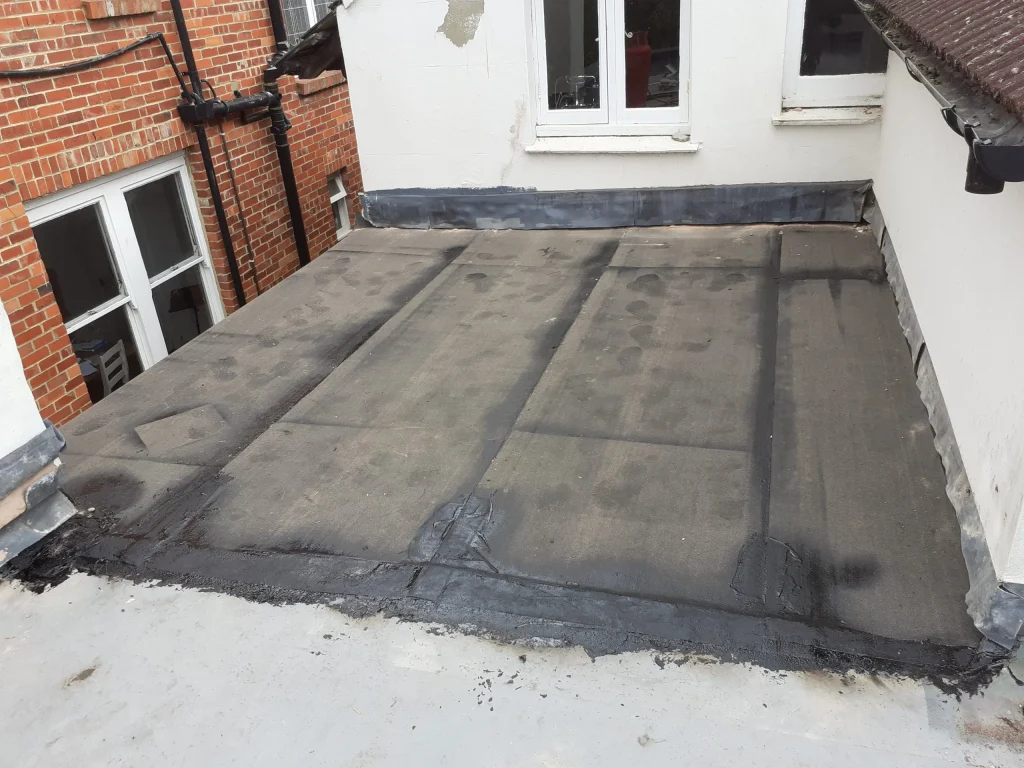
A pitched slate roof and a low-slope felt-covered area are completely different projects.
Flat roofs tend to involve:
- Waterproof membrane replacement.
- Checking the roof deck condition.
- Improving insulation where needed.
- Correct drainage falls to prevent ponding water.
Pitched roofs often involve more labour because of scaffolding, tile removal, ridge work, lead flashing and structural access.
2. Hidden Structural Damage
Sometimes what initially looks like a waterproofing problem turns out to involve rotting timber, trapped moisture, or weakened decking underneath.
Older roofs around Brighton and Hove regularly hide problems caused by years of slow water ingress.
3. Access to the Roof
Victorian terraced housing in Sussex often creates difficult access. Shared rooflines, narrow rear access and conservatories below working areas can increase labour time significantly.
4. Roofing Materials
Material choice makes a major difference.
For flat roofs, I generally prefer SBS torch-on felt systems because they cope much better with thermal movement and repeated Sussex weather exposure than older felt systems.
If you are comparing options, many homeowners first use an online SBS covering estimate to understand realistic budgeting before deciding whether repair or replacement makes more sense.
Roof Replacement vs Repair: A Question I Get Constantly
I regularly inspect roofs where homeowners assume replacement is unavoidable, when the actual problem only involves isolated defects.
Repairs often still make sense if:
- The damage is localised.
- The surrounding structure remains dry and stable.
- The roof still has reasonable remaining lifespan.
- Drainage or flashing problems can be corrected.
Where the diagnosis is unclear, I normally recommend starting with a technical on-site diagnosis to avoid paying for unnecessary work.
Why Sussex Roofs Sometimes Cost More to Replace
Roofs near the Sussex coast naturally experience harsher conditions. Wind uplift, salt-heavy air, repeated rain exposure and ageing Victorian construction all affect how roofing systems deteriorate.
I often find roofs in Brighton and Hove suffering from hidden flashing failures, parapet wall moisture ingress, or structural movement that quietly developed over decades.
These hidden defects are often what change pricing more than the visible roof surface itself.
Final Thoughts
If you are researching replacement roof cost, my advice is not to focus only on the cheapest quote. Understanding why the roof needs replacing matters just as much as the price itself.
In many cases, an experienced inspection can quickly reveal whether repair is still worthwhile or if replacement genuinely makes better long-term financial sense. Many homeowners also use the online calculators available on the website to get a rough estimate in around 30 seconds before arranging a survey.