Fixing a Roof Leak: Why I Never Start With the Visible Damage
When homeowners search for ways to fix a roof leak, their first instinct is usually to stop the dripping water as quickly as possible. I completely understand that urgency. A damp stain spreading across the ceiling or water dripping onto your floor feels like a crisis that needs an immediate patch.
However, after years of working on properties across Brighton, Hove, and Worthing, I can honestly say that the place where water appears inside is often quite far from where the moisture actually enters the building.
Trying to address the visible symptom without identifying the root cause often leads to recurring issues and wasted investment. Before starting any work, I recommend evaluating the typical roof repair costs in Hove to see how different factors like access and material choice affect the final price.
What Usually Causes Roof Leaks?
Roof leaks are rarely random occurrences. In my experience, most problems stem from specific weak points that slowly deteriorate over time due to weather exposure or poor previous workmanship.
The most common issues I investigate include:
- Failed lead flashing around chimneys or wall junctions.
- Slipped or cracked tiles following strong winds.
- Blocked drainage systems causing water to back up under the covering.
- Splits or punctures in flat membranes.
- Open joints or cracked pointing around parapet walls.
- Damaged valleys that struggle to channel heavy rainfall.
- Old, temporary repairs finally reaching the end of their lifespan.
In Sussex, strong coastal winds often exacerbate these issues, particularly on the older Victorian and Edwardian properties common in our area.
Why DIY Roof Leak Fixes Often Fail
I frequently inspect properties where a homeowner or a general handyman has already tried using sealant, bitumen paint, expanding foam, or temporary patches. While well-intentioned, these rarely provide a long-term solution.
The problem is that water rarely behaves predictably once it gets past the primary outer layer.
For example, I regularly see situations where:
- A chimney flashing failure causes a leak that appears several metres away in a bedroom ceiling.
- Water enters through cracked pointing but travels along internal timbers before dripping.
- Ponding water on a flat surface exposes hidden weaknesses in the membrane seams.
- Internal condensation is mistaken for an external water ingress issue.
What seems like a quick fix often only masks the symptom temporarily while moisture continues to damage the internal structure underneath.
Flat Roof Leaks vs Pitched Roof Leaks
Different types of construction fail in very different ways, requiring specific diagnostic approaches.
Flat Roof Leaks
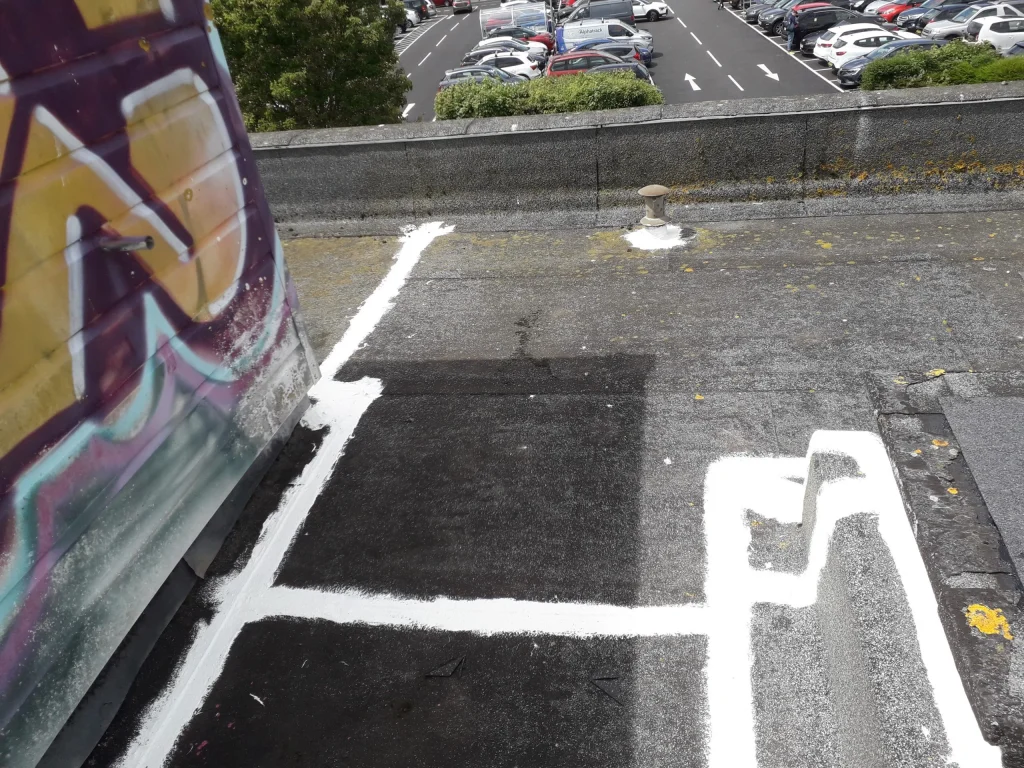
Flat surfaces usually leak because the waterproof systems begin to weaken at joints, edges, or drainage points. Because water can sit on these surfaces for longer, any small hole becomes a major entry point.
I often check for:
- Splits in ageing felt layers.
- Ponding water stressing the waterproof integrity.
- Movement around parapet upstands and edge trims.
- Failed flashing details where the covering meets a wall.
If your current covering is reaching the end of its life, you can use an online estimate tool for SBS felt systems to understand whether a professional repair or a full renewal makes the most financial sense.
Pitched Roof Leaks
On pitched structures, the issues are more likely to be mechanical or related to the shedding of water.
- Broken, porous, or slipped tiles.
- Lead flashing defects around valleys or dormers.
- Ridge mortar failure allowing rain to blow in.
- Valley deterioration.
- Wind-driven rain entering through small gaps during storms.
Older terraced houses around Brighton often develop these leaks slowly due to decades of subtle structural movement and coastal weathering.
When a Roof Leak Needs Urgent Attention
Not every leak is an emergency, but certain signs indicate that you should not wait for a sunny day to call a professional.
I recommend acting quickly if:
- Water is actively dripping or flowing indoors.
- The leak is located near electrical fittings or lights.
- Ceilings begin to sag or show signs of structural bulging.
- Damp patches spread rapidly immediately after rainfall.
- Strong storms have recently caused visible external damage.
When active water ingress is threatening your home, booking a professional emergency assessment is the best way to prevent much larger and more expensive internal damage.
My Honest Advice About Roof Leaks
If you need to fix a roof leak, my advice is simple: focus on a professional diagnosis first, not just a quick patch. A patch might stop the drip today, but it won’t stop the rot that happens when water is trapped behind a repair.
Most leaks can be repaired effectively when caught early. The most expensive situations I see are normally the ones left untreated for months, allowing water to quietly damage insulation, plasterwork, and structural timbers.
A proper inspection early on usually costs far less than repairing the hidden damage that accumulates over time.